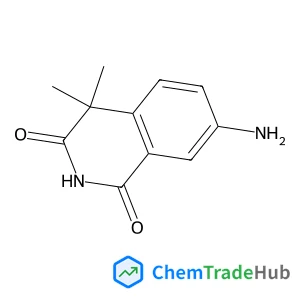
1,3(2H,4H)-Isoquinolinedione, 7-amino-4,4-dimethyl-
CAS Number:
14576-22-8
Molecular Formula:
C11H12N2O2
Steffen Bornemann, Marius Herzog, Roland Winter
Trivalent yttrium cations are able to mimic the behavior of Ca2+ in many important biochemical processes, and their application in medicinal chemistry has increased in recent years. While the effect of mono- and divalent salts on lipid membranes has been studied extensively, the effect of trivalent cations, such as Y3+, on the structure and phase behavior of lipid bilayers is largely unknown. Here, we studied the effect of YCl3 on the structure, phase behavior and thermodynamic parameters of zwitterionic DPPC, 20% anionic DPPC/DPPG (80/20) and 10% anionic DOPC/DOPG/DPPC/DPPG/cholesterol (20/5/45/5/25) model biomembrane systems using Fourier-transform infrared spectroscopy, differential scanning calorimetry, Laurdan fluorescence spectroscopy, confocal fluorescence microscopy, zeta potential measurements and atomic force microscopy, covering a wide range of salt concentrations, temperature and pressure. Y3+ ions penetrate deep into the lipid headgroup region and are coordinated to the phosphate groups, resulting in a stronger lipid packing and partial dehydration of the headgroup region. Increasing Y3+ concentration leads to a pronounced increase of the gel-to-fluid phase transition temperature of the phospholipid bilayers, owing to an increased lateral compression pressure, particularly for anionic lipid membranes. Increased lipid chain order and phase segregation of anionic membranes is fostered at high salt concentrations owing to lipid sorting. The fluid-to-gel phase transition pressure decreases significantly with the concentration of the trivalent ion, most pronounced for the negatively charged lipid vesicles. Remarkably, the Y3+-induced ordering effect is much stronger than a hydrostatic pressure-induced ordering of the lipid chains.
Sean T. Holmes, Wei D. Wang, Guangjin Hou, Cecil Dybowski, Wei Wang
DOI: 10.1039/C8CP07673A
Yamil J. Colón, Randall Q. Snurr
DOI: 10.1039/C9CP00754G
G. Opletal, B. Sun, T. C. Petersen, S. P. Russo, A. S. Barnard
DOI: 10.1039/C8CP06649C
Vytautas Grivickas, Patrik Ščajev, Vitalijus Bikbajevas, Olga V. Korolik, Alexander V. Mazanik
DOI: 10.1039/C8CP06209A
Mark E. Wolf, Boyi Zhang, Justin M. Turney, Henry F. Schaefer, III
DOI: 10.1039/C9CP00422J
Swetlana Jungblut, Jan-Ole Joswig, Alexander Eychmüller
DOI: 10.1039/C9CP00549H
Boris Kharkov, Xueyou Duan, Emily S. Tovar, James W. Canary, Alexej Jerschow
DOI: 10.1039/C8CP06883F
Tanjin He
DOI: 10.1039/C8CP07308B
Anagh Bhaumik, Jagdish Narayan
DOI: 10.1039/C8CP04592E
Yoshihiro Yamakita, Nanae Yokoyama, Bing Xue, Naoyuki Shiokawa, Satoshi Maeda
DOI: 10.1039/C8CP06405A
4-Nitrophenyl phosphate disodium salt hexahydrate is primarily used as a substra...
2-(Trifluoromethyl)-1,3-oxazole-4-carboxylic Acid (CAS: 1060816-01-4) is widely ...
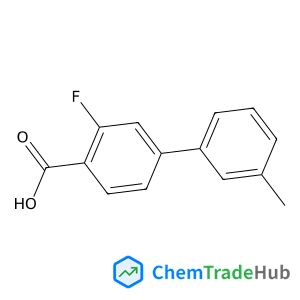
2-Fluoro-4-biphenylcarboxylic acid should be stored in a cool, dry place at room...
Prednisolone-21-Carboxylic Acid is primarily used in the pharmaceutical industry...
4-(Hydrazinomethyl)-1,2,3-benzenetriol (CAS: 3614-72-0) should be stored in a co...
4-Amino-1-methyl-1H-pyrazole-5-carboxylic acid hydrochloride (CAS: 92534-70-8) i...
Dehydropachymic acid (CAS: 77012-31-8) is regulated by various agencies. It fall...
The market and research trends for 6-[(2,2-Dimethylpropanoyl)amino]nicotinic aci...
1,10-Phenanthroline-2,9-dicarbaldehyde should be stored in a cool, dry place awa...
5-Carbamoyl-11-oxo-10,11-dihydro-5H-dibenzo[b,f]azepin-10-yl acetate can be synt...

Physical Chemistry Chemical Physics (PCCP) is an international journal co-owned by 19 physical chemistry and physics societies from around the world. This journal publishes original, cutting-edge research in physical chemistry, chemical physics and biophysical chemistry. To be suitable for publication in PCCP, articles must include significant innovation and/or insight into physical chemistry; this is the most important criterion that reviewers and Editors will judge against when evaluating submissions. The journal has a broad scope and welcomes contributions spanning experiment, theory, computation and data science. Topical coverage includes spectroscopy, dynamics, kinetics, statistical mechanics, thermodynamics, electrochemistry, catalysis, surface science, quantum mechanics, quantum computing and machine learning. Interdisciplinary research areas such as polymers and soft matter, materials, nanoscience, energy, surfaces/interfaces, and biophysical chemistry are welcomed if they demonstrate significant innovation and/or insight into physical chemistry. Joined experimental/theoretical studies are particularly appreciated when complementary and based on up-to-date approaches.