


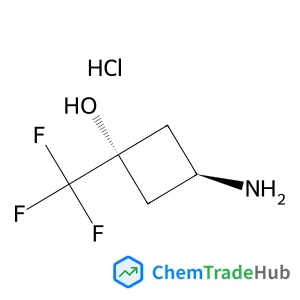
cis-3-Amino-1-(trifluoromethyl)cyclobutanol hydrochloride (1:1)
CAS Number:
1408075-16-0
Molecular Formula:
C5H9ClF3NO
Guangbao Wu, Jiyu Zhou, Rui Meng, Baoda Xue, Huiqiong Zhou, Zhiyong Tang, Yuan Zhang
Here based on integral microcrystal (IMC) thin films of halide perovskites containing formamidinium (FA)/methylammonium (MA) mixed cations, afforded by a facile approach combining an anti-solvent and inverse temperature crystallization, we investigate the impact of the addition of MAPbBr3 on the phase, thermal and environmental stabilities as well as the opto-electronic properties in FA-based IMC films. By single-crystal XRD, FA based IMCs have been found to possess a perfect cubic structure showing a slight lattice contraction compared to pristine FAPbI3 crystals. In conjunction with optical and electrical analyses, the essential role of the introduced MA and Br ions in stabilizing the black phase in FA-based IMCs has been clarified, which explains the observed enhancement of photoluminescence and reduced trap densities. We also achieve stable pure FAPbI3 crystals that do not exhibit a yellow-phase transition after one month in air. By utilizing (FAPbI3)1−x(MAPbBr3)x IMCs as the photo-absorber, we realize highly photo-responsive photodiodes with a satisfactory stability in air and thermal stability upon heating. Of interest, the best photoresponsivity exceeding 300 A W−1 is achieved upon appropriate air-exposure, which is among the highest values reported for FA-based perovskite photodetectors. The air-modified optoelectronic behaviour can be related to the trap passivation through the surface physisorption of the environmental O2, leading to reduced trap densities and resultant harmful SRH recombination.

Current Opinion in Solid State & Materials Science

Russian Journal of Organic Chemistry

Nature Medicine

Journal of Saudi Chemical Society

Russian Journal of General Chemistry

Saudi Pharmaceutical Journal

Russian Chemical Bulletin

Journal of Peptide Science

Russian Journal of Coordination Chemistry

Journal of Natural Medicines
Tadeusz Talik, Konstantin G. Tokhadze, Zofia Mielke
DOI: 10.1039/B004161K
X. H. Xia, L. Nagle, R. Schuster, O. M. Magnussen, R. J. Behm
DOI: 10.1039/B003585H
DOI: 10.1039/A901016E
DOI: 10.1039/A808614A
T. J. Schmidt, B. N. Grgur, R. J. Behm, N. M. Markovic, P. N. Ross, Jr.
DOI: 10.1039/B003767M
Christopher Breen, Jeffrey Forsyth, Jack Yarwood, Trevor Hughes
DOI: 10.1039/B003587O
John P. Camplin, Jemimah K. Eve, Elaine M. McCash
DOI: 10.1039/B004344N
4-Nitrophenyl phosphate disodium salt hexahydrate is primarily used as a substra...
2-(Trifluoromethyl)-1,3-oxazole-4-carboxylic Acid (CAS: 1060816-01-4) is widely ...
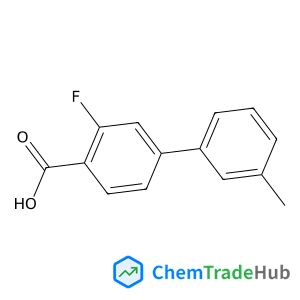
2-Fluoro-4-biphenylcarboxylic acid should be stored in a cool, dry place at room...
Prednisolone-21-Carboxylic Acid is primarily used in the pharmaceutical industry...
4-(Hydrazinomethyl)-1,2,3-benzenetriol (CAS: 3614-72-0) should be stored in a co...
4-Amino-1-methyl-1H-pyrazole-5-carboxylic acid hydrochloride (CAS: 92534-70-8) i...
Dehydropachymic acid (CAS: 77012-31-8) is regulated by various agencies. It fall...
The market and research trends for 6-[(2,2-Dimethylpropanoyl)amino]nicotinic aci...
1,10-Phenanthroline-2,9-dicarbaldehyde should be stored in a cool, dry place awa...
5-Carbamoyl-11-oxo-10,11-dihydro-5H-dibenzo[b,f]azepin-10-yl acetate can be synt...

Physical Chemistry Chemical Physics (PCCP) is an international journal co-owned by 19 physical chemistry and physics societies from around the world. This journal publishes original, cutting-edge research in physical chemistry, chemical physics and biophysical chemistry. To be suitable for publication in PCCP, articles must include significant innovation and/or insight into physical chemistry; this is the most important criterion that reviewers and Editors will judge against when evaluating submissions. The journal has a broad scope and welcomes contributions spanning experiment, theory, computation and data science. Topical coverage includes spectroscopy, dynamics, kinetics, statistical mechanics, thermodynamics, electrochemistry, catalysis, surface science, quantum mechanics, quantum computing and machine learning. Interdisciplinary research areas such as polymers and soft matter, materials, nanoscience, energy, surfaces/interfaces, and biophysical chemistry are welcomed if they demonstrate significant innovation and/or insight into physical chemistry. Joined experimental/theoretical studies are particularly appreciated when complementary and based on up-to-date approaches.
![S-[2,3-Bis(palmitoyloxy)propyl]-N-[(9H-fluoren-9-ylmethoxy)(hydroxy)methylene]cysteine structure](https://static.chemtradehub.com/structs/210/210532-98-2-f6a7.webp "S-[2,3-Bis(palmitoyloxy)propyl]-N-[(9H-fluoren-9-ylmethoxy)(hydroxy)methylene]cysteine structure")
![N-[2-(4-Hydroxyphenoxy)-4-nitrophenyl]methanesulfonamide structure](https://static.chemtradehub.com/structs/109/109032-22-6-7c88.webp "N-[2-(4-Hydroxyphenoxy)-4-nitrophenyl]methanesulfonamide structure")




