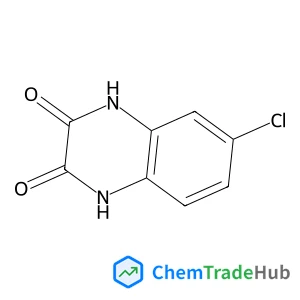
6-CHLORO-2,3-DIOXO-1,2,3,4-TETRAHYDROQUINOXALINE, 97
CAS Number:
169-14-2
Molecular Formula:
C8H5ClN2O2
Roman Bertoni, Eric Collet, Hervé Cailleau, Marie-Laure Boillot, Antoine Tissot, Jérôme Laisney, Cristian Enachescu, Maciej Lorenc
We present a study of a molecular material, [FeIII(3-MeO-SalEen)2]PF6, undergoing cooperative reversible photo-induced transition between low-spin state and high-spin state. By using temporally multiscale pump–probe laser spectroscopy, we explore the key parameters that influence the low-spin to high-spin conversion efficiency through long range elastic intermolecular interactions during the so-called elastic step, where crystalline volume expansion takes place. We rationalize our findings using Monte Carlo simulations, and a mechano-elastic model. The experimental results and the simulations support the existence of a fast mechanism by which molecules cooperatively switch through coupling to the lattice strain. The efficiency of the coupling process is shown to depend on several parameters including the initial thermal population and the instantaneous photo-induced population among others. Far below the crossover temperature, the elastic self-amplification occurs above a threshold photo-excitation. On approaching the thermal crossover, the threshold disappears and the photo-elastic conversion increases.

Saudi Pharmaceutical Journal

Current Opinion in Solid State & Materials Science

Organic Process Research & Development

Chemistry Education Research and Practice

Drug Discovery Today

Journal of Natural Medicines

Russian Journal of Organic Chemistry

Russian Chemical Bulletin

Acta Materialia

Crystallography Reports
Wolfgang F. Hölderich, Nadja Röhrlich, Peter Bartl, Laurent Chassot
DOI: 10.1039/B003425H
DOI: 10.1039/A808605B
DOI: 10.1039/B004184J
DOI: 10.1039/A901061K
Chunhai Fan, Xiaocheng Chen, Genxi Li, Jianqin Zhu, Dexu Zhu, Hugo Scheer
DOI: 10.1039/B005527L
Serafim Kalliadasis, John H. Merkin
DOI: 10.1039/B004552G
DOI: 10.1039/A807847E
DOI: 10.1039/A808619B
4-Nitrophenyl phosphate disodium salt hexahydrate is primarily used as a substra...
2-(Trifluoromethyl)-1,3-oxazole-4-carboxylic Acid (CAS: 1060816-01-4) is widely ...
2-Fluoro-4-biphenylcarboxylic acid should be stored in a cool, dry place at room...
Prednisolone-21-Carboxylic Acid is primarily used in the pharmaceutical industry...
4-(Hydrazinomethyl)-1,2,3-benzenetriol (CAS: 3614-72-0) should be stored in a co...
4-Amino-1-methyl-1H-pyrazole-5-carboxylic acid hydrochloride (CAS: 92534-70-8) i...
Dehydropachymic acid (CAS: 77012-31-8) is regulated by various agencies. It fall...
The market and research trends for 6-[(2,2-Dimethylpropanoyl)amino]nicotinic aci...
1,10-Phenanthroline-2,9-dicarbaldehyde should be stored in a cool, dry place awa...
5-Carbamoyl-11-oxo-10,11-dihydro-5H-dibenzo[b,f]azepin-10-yl acetate can be synt...

Physical Chemistry Chemical Physics (PCCP) is an international journal co-owned by 19 physical chemistry and physics societies from around the world. This journal publishes original, cutting-edge research in physical chemistry, chemical physics and biophysical chemistry. To be suitable for publication in PCCP, articles must include significant innovation and/or insight into physical chemistry; this is the most important criterion that reviewers and Editors will judge against when evaluating submissions. The journal has a broad scope and welcomes contributions spanning experiment, theory, computation and data science. Topical coverage includes spectroscopy, dynamics, kinetics, statistical mechanics, thermodynamics, electrochemistry, catalysis, surface science, quantum mechanics, quantum computing and machine learning. Interdisciplinary research areas such as polymers and soft matter, materials, nanoscience, energy, surfaces/interfaces, and biophysical chemistry are welcomed if they demonstrate significant innovation and/or insight into physical chemistry. Joined experimental/theoretical studies are particularly appreciated when complementary and based on up-to-date approaches.