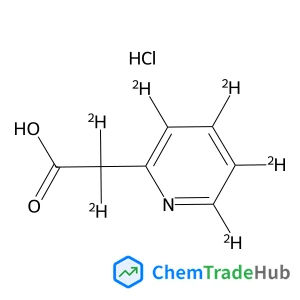
2,2-dideuterio-2-(3,4,5,6-tetradeuterio-2-pyridyl)acetic acid;hydrochloride
CAS Number:
1329799-67-8
Molecular Formula:
C7H2ClD6NO2
Boris Kharkov, Xueyou Duan, Emily S. Tovar, James W. Canary, Alexej Jerschow
The examination and optimized preparation of nuclear spin singlet order has enabled the development of new types of applications that rely on potentially long-term polarization storage. Lifetimes several orders of magnitude longer than T1 have been observed. The efficient creation of such states relies on special pulse sequences. The extreme cases of very large and very small magnetic equivalence received primary attention, while relatively little effort has been directed towards studying singlet relaxation in the intermediate regime. The intermediate case is of interest as it is relevant for many spin systems, and would also apply to heteronuclear systems in very low magnetic fields. Experimental evidence for singlet–triplet leakage in the intermediate regime is sparse. Here we describe a pulse sequence for efficiently creating singlets in the intermediate regime in a broad-band fashion. Singlet lifetimes are studied with a specially synthesized molecule over a wide range of magnetic fields using a home-built sample-lift apparatus. The experimental results are supplemented with spin simulations using parameters obtained from ab initio calculations. This work indicates that the chemical shift anisotropy (CSA) mechanism is relatively weak compared to singlet–triplet leakage for the proton system observed over a large magnetic field range. These experiments provide a mechanism for expanding the scope of singlet NMR to a larger class of molecules, and provide new insights into singlet lifetime limiting factors.

Current Opinion in Solid State & Materials Science

Russian Journal of Applied Chemistry

Nature Medicine

Journal of Saudi Chemical Society

Organic Process Research & Development

New Journal of Chemistry

Journal of Peptide Science

Chemistry Education Research and Practice

Crystallography Reports

Current Opinion in Colloid & Interface Science
DOI: 10.1039/A901061K
Daniel R. Tackley, Geoffrey Dent, W. Ewen Smith
DOI: 10.1039/B005091L
K. Hildenbrand, S. Naumov
DOI: 10.1039/B004617P
Luis A. M. M. Barbosa, Georgii M. Zhidomirov, Rutger A. van Santen
DOI: 10.1039/B004090H
Chunhai Fan, Xiaocheng Chen, Genxi Li, Jianqin Zhu, Dexu Zhu, Hugo Scheer
DOI: 10.1039/B005527L
DOI: 10.1039/A901016E
DOI: 10.1039/A808610I
4-Nitrophenyl phosphate disodium salt hexahydrate is primarily used as a substra...
2-(Trifluoromethyl)-1,3-oxazole-4-carboxylic Acid (CAS: 1060816-01-4) is widely ...
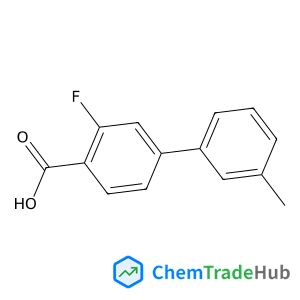
2-Fluoro-4-biphenylcarboxylic acid should be stored in a cool, dry place at room...
Prednisolone-21-Carboxylic Acid is primarily used in the pharmaceutical industry...
4-(Hydrazinomethyl)-1,2,3-benzenetriol (CAS: 3614-72-0) should be stored in a co...
4-Amino-1-methyl-1H-pyrazole-5-carboxylic acid hydrochloride (CAS: 92534-70-8) i...
Dehydropachymic acid (CAS: 77012-31-8) is regulated by various agencies. It fall...
The market and research trends for 6-[(2,2-Dimethylpropanoyl)amino]nicotinic aci...
1,10-Phenanthroline-2,9-dicarbaldehyde should be stored in a cool, dry place awa...
5-Carbamoyl-11-oxo-10,11-dihydro-5H-dibenzo[b,f]azepin-10-yl acetate can be synt...

Physical Chemistry Chemical Physics (PCCP) is an international journal co-owned by 19 physical chemistry and physics societies from around the world. This journal publishes original, cutting-edge research in physical chemistry, chemical physics and biophysical chemistry. To be suitable for publication in PCCP, articles must include significant innovation and/or insight into physical chemistry; this is the most important criterion that reviewers and Editors will judge against when evaluating submissions. The journal has a broad scope and welcomes contributions spanning experiment, theory, computation and data science. Topical coverage includes spectroscopy, dynamics, kinetics, statistical mechanics, thermodynamics, electrochemistry, catalysis, surface science, quantum mechanics, quantum computing and machine learning. Interdisciplinary research areas such as polymers and soft matter, materials, nanoscience, energy, surfaces/interfaces, and biophysical chemistry are welcomed if they demonstrate significant innovation and/or insight into physical chemistry. Joined experimental/theoretical studies are particularly appreciated when complementary and based on up-to-date approaches.