



The influence of nanoparticles on the excitation energies of the photochromic dihydroazulene/vinylheptafulvene system
Literature Information
Publication Date
2019-02-22
DOI
10.1039/C8CP06539J
Impact Factor
3.676
Authors
Andreas Erbs Hillers-Bendtsen, Mia Harring Hansen, Kurt V. Mikkelsen
View Original
Abstract
This paper studies how nanoparticles affect photochromic systems, focusing on the influence of gold nanoparticles on the optical properties of the dihydroazulene/vinylheptafulvene (DHA/VHF) system. This investigation is done using a combined quantum mechanical/molecular mechanical approach treating the photochromic system quantum mechanically. The gold nanoparticle is described as gold atoms with atomic polarizabilities using molecular mechanics, thus leaving out excitations of the gold nanoparticle. The photochromic molecule is described by density functional theory using the long-range corrected functional CAM-B3LYP and the correlation consistent basis set aug-cc-pVDZ. The results show that the optical properties of the photochromic system are affected by the presence of the nanoparticle. The vinylheptafulvene molecule is especially influenced, when increasing the interaction between the molecule and the gold nanoparticle. We observe that the optical properties of the photochromic system are influenced strongly by conformational changes, relative orientation compared to the gold nanoparticle, and the molecule–cluster distance. We observe that the different molecules are affected differently by the nanoparticle. Furthermore, we suggest that experiments should be carried out to investigate how the molecules coordinate to the nanoparticle.
Recommended Journals

Acta Materialia

Current Opinion in Solid State & Materials Science

Organic Process Research & Development

Crystallography Reports

Nature Medicine

Russian Journal of Applied Chemistry

Current Opinion in Colloid & Interface Science

Russian Journal of Bioorganic Chemistry

Saudi Pharmaceutical Journal

New Journal of Chemistry
Related Literature
Effects of carboxylic acid adsorbates on CO adsorption and crotonaldehyde hydrogenation over Cu/Al2O3 catalyst
Halim A. Abdullah, Colin H. Rochester, James A. Anderson, Jillian E. Bailie, Neville V. Richardson, Graham J. Hutchings
2000-08-04
Paper
DOI: 10.1039/B003429K
Production, characterization and scattering of a sulfur atom beam: Interatomic potentials for the rare-gas sulfides, RS (R=Ne, Ar, Kr, Xe)
Vincenzo Aquilanti, Daniela Ascenzi, Elisabetta Braca
2000-05-17
Paper
DOI: 10.1039/B001696I
Evaluation of vibrational partition functions for polyatomic systems: quantum ersus classical methods for H2O and Ar···CN
Antonio Riganelli, Frederico V. Prudente, António J. C. Varandas
2000-05-18
Paper
DOI: 10.1039/B001746I
Thermal desorption–degradation of cyclohexylamine over Ni2+- and Al3+-exchanged bentonite studied using evolved gas analysis (TG-EGA) and diffuse reflectance spectroscopy (DRIFTS)
Christopher Breen, Jeffrey Forsyth, Jack Yarwood, Trevor Hughes
2000-08-01
Paper
DOI: 10.1039/B003587O
Excited state proton and electron transfer reactions of acridinedione dyes with amines
Paper
DOI: 10.1039/A809070J
Single crystal Raman microscopic study of the asbestos mineral chrysotile
Paper
DOI: 10.1039/A809238I
The structure of the water–hydrogen peroxide complex. A matrix isolation study
Anders Engdahl, Bengt Nelander
2000-08-29
Paper
DOI: 10.1039/B005861K
You might also like
Compound Q&A
What are the main uses of 4-Nitrophenyl phosphate disodium salt hexahydrate (CAS: 333338-18-4)?
4-Nitrophenyl phosphate disodium salt hexahydrate is primarily used as a substra...
333338-18-44-Nitrophenyl phosph...
Compound Q&A
What are the main uses of 2-(Trifluoromethyl)-1,3-oxazole-4-carboxylic Acid (CAS: 1060816-01-4)?
2-(Trifluoromethyl)-1,3-oxazole-4-carboxylic Acid (CAS: 1060816-01-4) is widely ...
1060816-01-42-(Trifluoromethyl)-...
Compound Q&A
How should 2-Fluoro-4-biphenylcarboxylic acid (CAS: 137045-30-8) be stored?
2-Fluoro-4-biphenylcarboxylic acid should be stored in a cool, dry place at room...
137045-30-82-Fluoro-4-biphenylc...
Compound Q&A
What industries use Prednisolone-21-Carboxylic Acid (CAS: 61549-70-0)?
Prednisolone-21-Carboxylic Acid is primarily used in the pharmaceutical industry...
61549-70-0Prednisolone-21-Carb...
Compound Q&A
How should 4-(Hydrazinomethyl)-1,2,3-benzenetriol (CAS: 3614-72-0) be stored?
4-(Hydrazinomethyl)-1,2,3-benzenetriol (CAS: 3614-72-0) should be stored in a co...
3614-72-04-(Hydrazinomethyl)-...
Compound Q&A
What industries use 4-Amino-1-methyl-1H-pyrazole-5-carboxylic acid hydrochloride (CAS: 92534-70-8)?
4-Amino-1-methyl-1H-pyrazole-5-carboxylic acid hydrochloride (CAS: 92534-70-8) i...
92534-70-84-Amino-1-methyl-1H-...
Compound Q&A
What regulatory guidelines apply to dehydropachymic acid (CAS: 77012-31-8)?
Dehydropachymic acid (CAS: 77012-31-8) is regulated by various agencies. It fall...
77012-31-8Dehydropachymic acid
Compound Q&A
What is the market or research trend for 6-[(2,2-Dimethylpropanoyl)amino]nicotinic acid (CAS: 898561-66-5)?
The market and research trends for 6-[(2,2-Dimethylpropanoyl)amino]nicotinic aci...
898561-66-56-[(2,2-Dimethylprop...
Compound Q&A
How should 1,10-Phenanthroline-2,9-dicarbaldehyde (CAS: 57709-62-3) be stored?
1,10-Phenanthroline-2,9-dicarbaldehyde should be stored in a cool, dry place awa...
57709-62-31,10-Phenanthroline-...
Compound Q&A
How is 5-Carbamoyl-11-oxo-10,11-dihydro-5H-dibenzo[b,f]azepin-10-yl acetate (CAS: 113952-21-9) typically synthesized?
5-Carbamoyl-11-oxo-10,11-dihydro-5H-dibenzo[b,f]azepin-10-yl acetate can be synt...
113952-21-95-Carbamoyl-11-oxo-1...
Source Journal
Physical Chemistry Chemical Physics

CiteScore:
5.5
Self-citation Rate:
10.3%
Articles per Year:
3036
Physical Chemistry Chemical Physics (PCCP) is an international journal co-owned by 19 physical chemistry and physics societies from around the world. This journal publishes original, cutting-edge research in physical chemistry, chemical physics and biophysical chemistry. To be suitable for publication in PCCP, articles must include significant innovation and/or insight into physical chemistry; this is the most important criterion that reviewers and Editors will judge against when evaluating submissions. The journal has a broad scope and welcomes contributions spanning experiment, theory, computation and data science. Topical coverage includes spectroscopy, dynamics, kinetics, statistical mechanics, thermodynamics, electrochemistry, catalysis, surface science, quantum mechanics, quantum computing and machine learning. Interdisciplinary research areas such as polymers and soft matter, materials, nanoscience, energy, surfaces/interfaces, and biophysical chemistry are welcomed if they demonstrate significant innovation and/or insight into physical chemistry. Joined experimental/theoretical studies are particularly appreciated when complementary and based on up-to-date approaches.
Recommended Compounds

phosphoryl}methyl 4-methylbenzenesulfonate structure](https://static.chemtradehub.com/structs/864/864068-45-1-ba7c.webp "{[3-(Hexadecyloxy)propoxy](hydroxy)phosphoryl}methyl 4-methylbenzenesulfonate structure")
{[3-(Hexadecyloxy)propoxy](hydroxy)phosphoryl}methyl 4-methylbenzenesulfonate
CAS Number:
864068-45-1
Molecular Formula:
C27H49O7PS
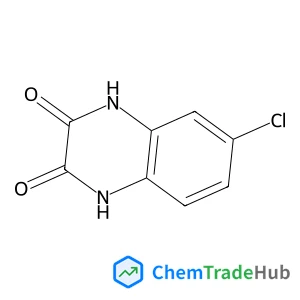
6-CHLORO-2,3-DIOXO-1,2,3,4-TETRAHYDROQUINOXALINE, 97
CAS Number:
169-14-2
Molecular Formula:
C8H5ClN2O2
Recommended Suppliers




Disclaimer
This page provides academic journal information for reference and research purposes only. We are not affiliated with any journal publishers and do not handle publication submissions. For publication-related inquiries, please contact the respective journal publishers directly.
If you notice any inaccuracies in the information displayed, please contact us at support@chemtradehub.com. We will promptly review and address your concerns.