












Excited state dynamics of aniline homoclusters
Literature Information
Publication Date
2019-01-14
DOI
10.1039/C8CP06416D
Impact Factor
3.676
Authors
Raúl Montero, Iker Lamas, Iker León, José A. Fernández, Asier Longarte
View Original
Abstract
We have investigated the relaxation, following excitation in the 290–235 nm region, of neutral aniline homoclusters (An)n formed in a supersonic expansion by femtosecond time resolved ionization. The applied method permits isolation of the dynamics of the dimer from that originated in bigger species of the generated distribution. Interestingly, and differently from the monomer and (An)n≥3 clusters, the dimer does not present a N–H dissociative 1πσ* channel. This fact can be explained in terms of the symmetric structure adopted, in which each molecule establishes two N–H⋯π interactions, destabilizing the H dissociation channel. The observations permit relating the photophysics to the interactions established by the aniline units and confirming previous observations and theoretical predictions on the structure of aniline aggregates.
Recommended Journals
Related Literature
Selective adsorption of bismuth telluride nanoplatelets through electrostatic attraction
2014-04-23
Paper
DOI: 10.1039/C4CP00690A
Intermolecular network analysis of the liquid and vapor interfaces of pentane and water: microsolvation does not trend with interfacial properties
Yasaman Ghadar, Aurora E. Clark
2014-05-01
Paper
DOI: 10.1039/C4CP00602J
Clusters in the adsorbates of vapours and gases: Zeta isotherm approach
Seyed Hadi Zandavi, Charles A. Ward
2014-04-17
Paper
DOI: 10.1039/C4CP00843J
Enhancing photo-induced ultrafast charge transfer across heterojunctions of CdS and laser-sintered TiO2 nanocrystals
Bryan T. Spann, S. Venkataprasad Bhat, Qiong Nian, Kelly M. Rickey, Gary J. Cheng, Xiulin Ruan, Xianfan Xu
2014-04-14
Paper
DOI: 10.1039/C4CP01298D
Improving BiVO4 photoanodes for solar water splitting through surface passivation
Yongqi Liang, Johannes Messinger
2014-05-01
Paper
DOI: 10.1039/C4CP00674G
Theoretical study of thermoelectric properties of few-layer MoS2 and WSe2
Wen Huang, Chee Kwan Gan, Gengchiau Liang
2014-04-14
Paper
DOI: 10.1039/C4CP00487F
Adsorption of linear aliphatic α,ω-dithiols on plasmonic metal nanoparticles: a structural study based on surface-enhanced Raman spectra
I. Izquierdo-Lorenzo, S. Sanchez-Cortes
2014-04-15
Paper
DOI: 10.1039/C4CP00424H
Development of high power and energy density microsphere silicon carbide–MnO2 nanoneedles and thermally oxidized activated carbon asymmetric electrochemical supercapacitors
Myeongjin Kim, Jooheon Kim
2014-04-30
Paper
DOI: 10.1039/C4CP01141D
Carbon dioxide reduction via light activation of a ruthenium–Ni(cyclam) complex
Christian Herrero, Annamaria Quaranta, Sanae El Ghachtouli, Winfried Leibl
2014-02-11
Paper
DOI: 10.1039/C3CP54946A
Insight into the structure and the mechanism of the slow proton transfer in the GFP double mutant T203V/S205A
Ron Simkovitch, Shay Shomer, Rinat Gepshtein, Dan Huppert, Mari Saif, Karen Kallio, S. James Remington
2014-04-14
Paper
DOI: 10.1039/C4CP00311J
You might also like
Compound Q&A
What precautions should be taken when handling 4-Methyl-6-(trifluoromethyl)quinoline (CAS: 40716-16-3)?
When handling 4-Methyl-6-(trifluoromethyl)quinoline (CAS: 40716-16-3), safety go...
40716-16-34-Methyl-6-(trifluor...
Compound Q&A
What is 4-(3,5-Difluorophenyl)aniline (CAS: 405058-00-6)?
4-(3,5-Difluorophenyl)aniline is an aromatic organic compound with the CAS numbe...
405058-00-64-(3,5-Difluoropheny...
Compound Q&A
How is 5-{[4-(Trifluoromethyl)phenyl]sulfanyl}-1,2,3-thiadiazole-4-carboxylic acid (CAS: 338982-07-3) typically synthesized?
5-{[4-(Trifluoromethyl)phenyl]sulfanyl}-1,2,3-thiadiazole-4-carboxylic acid can ...
338982-07-35-{[4-(Trifluorometh...
Compound Q&A
What is the market or research trend for 4-Benzylaniline hydrochloride (CAS: 6317-57-3)?
The market for 4-Benzylaniline hydrochloride (CAS: 6317-57-3) is steadily growin...
6317-57-34-Benzylaniline hydr...
Compound Q&A
Is [3-(Diethylsulfamoyl)phenyl]boronic acid (CAS: 871329-58-7) safe?
[3-(Diethylsulfamoyl)phenyl]boronic acid is generally considered safe when handl...
871329-58-7[3-(Diethylsulfamoyl...
Compound Q&A
What are the main uses of 3-Bromo-2,5-dimethoxyaniline (CAS: 115929-62-9)?
3-Bromo-2,5-dimethoxyaniline is mainly used in the pharmaceutical and chemical i...
115929-62-93-Bromo-2,5-dimethox...
Compound Q&A
What regulatory guidelines apply to N-Methyl-1-(5-methyl-1H-indol-3-yl)methanamine (CAS: 915922-67-7)?
N-Methyl-1-(5-methyl-1H-indol-3-yl)methanamine (CAS: 915922-67-7) is subject to ...
915922-67-7N-Methyl-1-(5-methyl...
Compound Q&A
What industries use Carbamic acid, N-[(5S)-5,6-diamino-6-oxohexyl]-, 1,1-dimethylethyl ester (CAS: 24828-96-4)?
This compound is primarily used in the pharmaceutical industry for the synthesis...
24828-96-4Carbamic acid, N-[(5...
Compound Q&A
How should 2-Methyl-2-propanyl [(1S,3R)-3-aminocyclohexyl]carbamate (CAS: 1298101-47-9) be stored?
2-Methyl-2-propanyl [(1S,3R)-3-aminocyclohexyl]carbamate (CAS: 1298101-47-9) sho...
1298101-47-92-Methyl-2-propanyl ...
Compound Q&A
What industries use Ethyl 2-bromo-4,4,4-trifluorobutanoate (CAS: 367-33-9)?
Ethyl 2-bromo-4,4,4-trifluorobutanoate (CAS: 367-33-9) is utilized in the pharma...
367-33-9Ethyl 2-bromo-4,4,4-...
Source Journal
Physical Chemistry Chemical Physics

CiteScore:
5.5
Self-citation Rate:
10.3%
Articles per Year:
3036
Physical Chemistry Chemical Physics (PCCP) is an international journal co-owned by 19 physical chemistry and physics societies from around the world. This journal publishes original, cutting-edge research in physical chemistry, chemical physics and biophysical chemistry. To be suitable for publication in PCCP, articles must include significant innovation and/or insight into physical chemistry; this is the most important criterion that reviewers and Editors will judge against when evaluating submissions. The journal has a broad scope and welcomes contributions spanning experiment, theory, computation and data science. Topical coverage includes spectroscopy, dynamics, kinetics, statistical mechanics, thermodynamics, electrochemistry, catalysis, surface science, quantum mechanics, quantum computing and machine learning. Interdisciplinary research areas such as polymers and soft matter, materials, nanoscience, energy, surfaces/interfaces, and biophysical chemistry are welcomed if they demonstrate significant innovation and/or insight into physical chemistry. Joined experimental/theoretical studies are particularly appreciated when complementary and based on up-to-date approaches.
Recommended Compounds

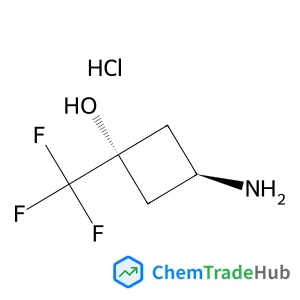
cis-3-Amino-1-(trifluoromethyl)cyclobutanol hydrochloride (1:1)
CAS Number:
1408075-16-0
Molecular Formula:
C5H9ClF3NO
![(3R,5R)-1-[(Benzyloxy)carbonyl]-5-methyl-3-piperidinecarboxylic acid structure](https://static.chemtradehub.com/structs/126/1269757-29-0-c552.webp "(3R,5R)-1-[(Benzyloxy)carbonyl]-5-methyl-3-piperidinecarboxylic acid structure")
(3R,5R)-1-[(Benzyloxy)carbonyl]-5-methyl-3-piperidinecarboxylic acid
CAS Number:
1269757-29-0
Molecular Formula:
C15H19NO4
Recommended Suppliers



Disclaimer
This page provides academic journal information for reference and research purposes only. We are not affiliated with any journal publishers and do not handle publication submissions. For publication-related inquiries, please contact the respective journal publishers directly.
If you notice any inaccuracies in the information displayed, please contact us at support@chemtradehub.com. We will promptly review and address your concerns.