


Rate constants for collision-induced emission of O2(a1Δg) with He, Ne, Ar, Kr, N2, CO2 and SF6 as collisional partners
Literature Information
Publication Date
2018-11-15
DOI
10.1039/C8CP06231E
Impact Factor
3.676
Authors
View Original
Abstract
Rate constants for singlet oxygen collision induced emission of the a1Δg–X3Σ−g transition at 1.27 μm were measured for CO2, N2, SF6, and rare gases as collisional partners. Photolysis of ozone by 266 nm laser radiation produced singlet oxygen. We performed direct measurements of pressure dependences of the 1.27 μm emission intensity for partner gases. The measured rate constants kMa–X in the units of 10−24 cm3 s−1 are as follows: CO2 – 10 ± 2; N2 – 3.2 ± 0.6; SF6 – 7 ± 1; He – 1.1 ± 0.3; Ne – 1.3 ± 0.3; Ar – 2.8 ± 0.6; Kr – 6 ± 1. The measured values of kMa–X are close to the values calculated from absorption measurements. Considering the known rate constants kMb–a for the b1Σg+–a1Δg transition in the gas phase we found that the ratio kMa–X/kMb–a was constant and independent of a collisional partner according to the “spin–orbit based” mechanism of intensity borrowing proposed by Minaev (THEOCHEM, 1989, 183, 207). However, this ratio amounted to (1.3 ± 0.2) × 10−4, which is considerably lower than the theoretically predicted value of (3–6) × 10−4.
Recommended Journals

Russian Journal of Organic Chemistry

Current Opinion in Colloid & Interface Science

Journal of Saudi Chemical Society

New Journal of Chemistry

Russian Journal of Bioorganic Chemistry

Journal of Natural Medicines

Chemical Communications

Current Opinion in Solid State & Materials Science

Acta Materialia

Saudi Pharmaceutical Journal
Related Literature
Growing polymers from peptides and proteins: a biomedical perspective
Yizhi Qi
2013-10-11
Review Article
DOI: 10.1039/C3PY01089A
Scalable synthesis and derivation of functional polyesters bearing ene and epoxide side chains
Yunfeng Yan, Daniel J. Siegwart
2013-11-13
Paper
DOI: 10.1039/C3PY01474F
Micellar-cluster association of ureidopyrimidone functionalized monochelic polybutadiene
Sachin Laxman Bobade, Thomas Malmgren
2013-09-09
Paper
DOI: 10.1039/C3PY01002C
Polymerization-Induced Self-Assembly (PISA) – control over the morphology of nanoparticles for drug delivery applications
Bunyamin Karagoz, Hien T. Duong, Johan S. Basuki, Cyrille Boyer
2013-10-22
Communication
DOI: 10.1039/C3PY01306E
Anomalous high photovoltages observed in shish kebab-like organic p–n junction nanostructures
Daniel L. Jacobs, Benjamin R. Bunes, Helin Huang, Xiaomei Yang, Ling Zang
2013-08-30
Communication
DOI: 10.1039/C3PY01026K
Direct synthesis of poly(p-phenyleneethynylene)s from calcium carbide
Nopparat Thavornsin, Mongkol Sukwattanasinitt, Sumrit Wacharasindhu
2013-08-12
Communication
DOI: 10.1039/C3PY01068F
Acetyl protected thiol methacrylic polymers as effective ligands to keep quantum dots in luminescent standby mode
Marta Liras, Isabel Quijada-Garrido, Marta Palacios-Cuesta, Sonia Muñoz-Durieux, Olga García
2013-08-30
Paper
DOI: 10.1039/C3PY00987D
Synthesis of well-defined amphiphilic branched polyethylene-graft-poly (N-isopropylacrylamide) copolymers by coordination copolymerization in tandem with RAFT polymerization and their self-assembled vesicles
Ye Zhao, Haiyang Gao, Guodong Liang, Fangming Zhu, Qing Wu
2013-09-27
Paper
DOI: 10.1039/C3PY01289A
Biohybrid structures consisting of biotinylated glycodendrimers and proteins: influence of the biotin ligand's number and chemical nature on the biotin–avidin conjugation
Susanne Boye, Mihaela Cernescu, Hartmut Komber, Bernhard Brutschy, Dietmar Appelhans
2013-10-17
Paper
DOI: 10.1039/C3PY01152F
You might also like
Compound Q&A
What are the main uses of 4-Nitrophenyl phosphate disodium salt hexahydrate (CAS: 333338-18-4)?
4-Nitrophenyl phosphate disodium salt hexahydrate is primarily used as a substra...
333338-18-44-Nitrophenyl phosph...
Compound Q&A
What are the main uses of 2-(Trifluoromethyl)-1,3-oxazole-4-carboxylic Acid (CAS: 1060816-01-4)?
2-(Trifluoromethyl)-1,3-oxazole-4-carboxylic Acid (CAS: 1060816-01-4) is widely ...
1060816-01-42-(Trifluoromethyl)-...
Compound Q&A
How should 2-Fluoro-4-biphenylcarboxylic acid (CAS: 137045-30-8) be stored?
2-Fluoro-4-biphenylcarboxylic acid should be stored in a cool, dry place at room...
137045-30-82-Fluoro-4-biphenylc...
Compound Q&A
What industries use Prednisolone-21-Carboxylic Acid (CAS: 61549-70-0)?
Prednisolone-21-Carboxylic Acid is primarily used in the pharmaceutical industry...
61549-70-0Prednisolone-21-Carb...
Compound Q&A
How should 4-(Hydrazinomethyl)-1,2,3-benzenetriol (CAS: 3614-72-0) be stored?
4-(Hydrazinomethyl)-1,2,3-benzenetriol (CAS: 3614-72-0) should be stored in a co...
3614-72-04-(Hydrazinomethyl)-...
Compound Q&A
What industries use 4-Amino-1-methyl-1H-pyrazole-5-carboxylic acid hydrochloride (CAS: 92534-70-8)?
4-Amino-1-methyl-1H-pyrazole-5-carboxylic acid hydrochloride (CAS: 92534-70-8) i...
92534-70-84-Amino-1-methyl-1H-...
Compound Q&A
What regulatory guidelines apply to dehydropachymic acid (CAS: 77012-31-8)?
Dehydropachymic acid (CAS: 77012-31-8) is regulated by various agencies. It fall...
77012-31-8Dehydropachymic acid
Compound Q&A
What is the market or research trend for 6-[(2,2-Dimethylpropanoyl)amino]nicotinic acid (CAS: 898561-66-5)?
The market and research trends for 6-[(2,2-Dimethylpropanoyl)amino]nicotinic aci...
898561-66-56-[(2,2-Dimethylprop...
Compound Q&A
How should 1,10-Phenanthroline-2,9-dicarbaldehyde (CAS: 57709-62-3) be stored?
1,10-Phenanthroline-2,9-dicarbaldehyde should be stored in a cool, dry place awa...
57709-62-31,10-Phenanthroline-...
Compound Q&A
How is 5-Carbamoyl-11-oxo-10,11-dihydro-5H-dibenzo[b,f]azepin-10-yl acetate (CAS: 113952-21-9) typically synthesized?
5-Carbamoyl-11-oxo-10,11-dihydro-5H-dibenzo[b,f]azepin-10-yl acetate can be synt...
113952-21-95-Carbamoyl-11-oxo-1...
Source Journal
Physical Chemistry Chemical Physics

CiteScore:
5.5
Self-citation Rate:
10.3%
Articles per Year:
3036
Physical Chemistry Chemical Physics (PCCP) is an international journal co-owned by 19 physical chemistry and physics societies from around the world. This journal publishes original, cutting-edge research in physical chemistry, chemical physics and biophysical chemistry. To be suitable for publication in PCCP, articles must include significant innovation and/or insight into physical chemistry; this is the most important criterion that reviewers and Editors will judge against when evaluating submissions. The journal has a broad scope and welcomes contributions spanning experiment, theory, computation and data science. Topical coverage includes spectroscopy, dynamics, kinetics, statistical mechanics, thermodynamics, electrochemistry, catalysis, surface science, quantum mechanics, quantum computing and machine learning. Interdisciplinary research areas such as polymers and soft matter, materials, nanoscience, energy, surfaces/interfaces, and biophysical chemistry are welcomed if they demonstrate significant innovation and/or insight into physical chemistry. Joined experimental/theoretical studies are particularly appreciated when complementary and based on up-to-date approaches.
Recommended Compounds
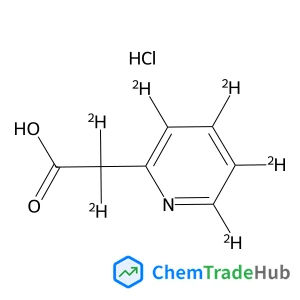
2,2-dideuterio-2-(3,4,5,6-tetradeuterio-2-pyridyl)acetic acid;hydrochloride
CAS Number:
1329799-67-8
Molecular Formula:
C7H2ClD6NO2

4-Methyl-3-morpholinecarboxylic acid hydrochloride (1:1)
CAS Number:
1240518-90-4
Molecular Formula:
C6H12ClNO3
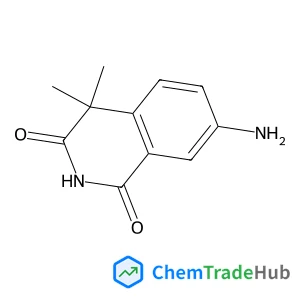
1,3(2H,4H)-Isoquinolinedione, 7-amino-4,4-dimethyl-
CAS Number:
14576-22-8
Molecular Formula:
C11H12N2O2
Recommended Suppliers





Disclaimer
This page provides academic journal information for reference and research purposes only. We are not affiliated with any journal publishers and do not handle publication submissions. For publication-related inquiries, please contact the respective journal publishers directly.
If you notice any inaccuracies in the information displayed, please contact us at support@chemtradehub.com. We will promptly review and address your concerns.