


How intermolecular interactions influence electronic absorption spectra: insights from the molecular packing of uracil in condensed phases
Literature Information
Publication Date
2019-01-16
DOI
10.1039/C8CP06152A
Impact Factor
3.676
Authors
Fangjia Fu, Kang Liao, Jing Ma, Zheng Cheng, Dong Zheng, Liuzhou Gao, Chungen Liu, Shuhua Li, Wei Li
View Original
Abstract
The photoexcitation mechanism in photochemistry and photophysics is a key to understanding the photostability and photoreaction of nucleobases. Using a combination of the generalized energy-based fragmentation (GEBF) and quantum mechanical and molecular mechanical (GEBF-QM/MM) approach and the QM/MM approach, we have investigated the electronic absorption spectra for the π–π* transition of uracil in aqueous solution, amorphous solid, and crystal. Our results indicate that the intermolecular interactions in terms of molecular packing are crucial for the investigation of the absorption spectra of uracil in different environments. There is a large red-shift (relative to uracil in the gas-phase) for uracil in the amorphous phase, which arises from hydrogen-bonding (HB) and close π–π stacking interactions. In contrast, the relatively smaller red-shift of uracil in aqueous solution can be attributed to the cooperative HB and long-range electrostatic and polarization interactions. Due to the HB and weak π–π interactions, the red-shift of the crystal is smaller than that of amorphous uracil. Furthermore, the results suggest that a large system is required to obtain the accurate absorption spectra of solutions, whereas small electrostatically embedded cluster models could be used to obtain the corresponding results for amorphous solids and molecular crystals.
Recommended Journals

Journal of Saudi Chemical Society

Russian Journal of Organic Chemistry

Organic Process Research & Development

Acta Materialia

Current Opinion in Colloid & Interface Science

Russian Journal of Applied Chemistry

Chemistry Education Research and Practice

Journal of Natural Medicines

Crystallography Reports

New Journal of Chemistry
Related Literature
Molecular modeling of highly peripheral substituted Mg- and Zn-porphyrins
L. A. Poveda, J. M. García de la Vega, R. H. González-Jonte
2000-08-31
Paper
DOI: 10.1039/B003132L
Direct electrochemical characterization of the interaction between haemoglobin and nitric oxide
Chunhai Fan, Xiaocheng Chen, Genxi Li, Jianqin Zhu, Dexu Zhu, Hugo Scheer
2000-09-07
Paper
DOI: 10.1039/B005527L
Thermal desorption–degradation of cyclohexylamine over Ni2+- and Al3+-exchanged bentonite studied using evolved gas analysis (TG-EGA) and diffuse reflectance spectroscopy (DRIFTS)
Christopher Breen, Jeffrey Forsyth, Jack Yarwood, Trevor Hughes
2000-08-01
Paper
DOI: 10.1039/B003587O
Benzene cation radical in mesoporous silicate: EPR detection of unusually stabilized Jahn–Teller distortion
Paper
DOI: 10.1039/A901061K
Reactivity of pyrrhotite (Fe9S10) surfaces: Spectroscopic studies
Yuri Mikhlin, Vladimir Varnek, Igor Asanov, Yevgeni Tomashevich, Alexander Okotrub, Alexander Livshits, Gennady Selyutin, Gennady Pashkov
2000-09-14
Paper
DOI: 10.1039/B005372O
Electron paramagnetic resonance and electron spin echo study of supported and unsupported vanadium oxides
Paper
DOI: 10.1039/A900119K
You might also like
Compound Q&A
What are the main uses of 4-Nitrophenyl phosphate disodium salt hexahydrate (CAS: 333338-18-4)?
4-Nitrophenyl phosphate disodium salt hexahydrate is primarily used as a substra...
333338-18-44-Nitrophenyl phosph...
Compound Q&A
What are the main uses of 2-(Trifluoromethyl)-1,3-oxazole-4-carboxylic Acid (CAS: 1060816-01-4)?
2-(Trifluoromethyl)-1,3-oxazole-4-carboxylic Acid (CAS: 1060816-01-4) is widely ...
1060816-01-42-(Trifluoromethyl)-...
Compound Q&A
How should 2-Fluoro-4-biphenylcarboxylic acid (CAS: 137045-30-8) be stored?
2-Fluoro-4-biphenylcarboxylic acid should be stored in a cool, dry place at room...
137045-30-82-Fluoro-4-biphenylc...
Compound Q&A
What industries use Prednisolone-21-Carboxylic Acid (CAS: 61549-70-0)?
Prednisolone-21-Carboxylic Acid is primarily used in the pharmaceutical industry...
61549-70-0Prednisolone-21-Carb...
Compound Q&A
How should 4-(Hydrazinomethyl)-1,2,3-benzenetriol (CAS: 3614-72-0) be stored?
4-(Hydrazinomethyl)-1,2,3-benzenetriol (CAS: 3614-72-0) should be stored in a co...
3614-72-04-(Hydrazinomethyl)-...
Compound Q&A
What industries use 4-Amino-1-methyl-1H-pyrazole-5-carboxylic acid hydrochloride (CAS: 92534-70-8)?
4-Amino-1-methyl-1H-pyrazole-5-carboxylic acid hydrochloride (CAS: 92534-70-8) i...
92534-70-84-Amino-1-methyl-1H-...
Compound Q&A
What regulatory guidelines apply to dehydropachymic acid (CAS: 77012-31-8)?
Dehydropachymic acid (CAS: 77012-31-8) is regulated by various agencies. It fall...
77012-31-8Dehydropachymic acid
Compound Q&A
What is the market or research trend for 6-[(2,2-Dimethylpropanoyl)amino]nicotinic acid (CAS: 898561-66-5)?
The market and research trends for 6-[(2,2-Dimethylpropanoyl)amino]nicotinic aci...
898561-66-56-[(2,2-Dimethylprop...
Compound Q&A
How should 1,10-Phenanthroline-2,9-dicarbaldehyde (CAS: 57709-62-3) be stored?
1,10-Phenanthroline-2,9-dicarbaldehyde should be stored in a cool, dry place awa...
57709-62-31,10-Phenanthroline-...
Compound Q&A
How is 5-Carbamoyl-11-oxo-10,11-dihydro-5H-dibenzo[b,f]azepin-10-yl acetate (CAS: 113952-21-9) typically synthesized?
5-Carbamoyl-11-oxo-10,11-dihydro-5H-dibenzo[b,f]azepin-10-yl acetate can be synt...
113952-21-95-Carbamoyl-11-oxo-1...
Source Journal
Physical Chemistry Chemical Physics

CiteScore:
5.5
Self-citation Rate:
10.3%
Articles per Year:
3036
Physical Chemistry Chemical Physics (PCCP) is an international journal co-owned by 19 physical chemistry and physics societies from around the world. This journal publishes original, cutting-edge research in physical chemistry, chemical physics and biophysical chemistry. To be suitable for publication in PCCP, articles must include significant innovation and/or insight into physical chemistry; this is the most important criterion that reviewers and Editors will judge against when evaluating submissions. The journal has a broad scope and welcomes contributions spanning experiment, theory, computation and data science. Topical coverage includes spectroscopy, dynamics, kinetics, statistical mechanics, thermodynamics, electrochemistry, catalysis, surface science, quantum mechanics, quantum computing and machine learning. Interdisciplinary research areas such as polymers and soft matter, materials, nanoscience, energy, surfaces/interfaces, and biophysical chemistry are welcomed if they demonstrate significant innovation and/or insight into physical chemistry. Joined experimental/theoretical studies are particularly appreciated when complementary and based on up-to-date approaches.
Recommended Compounds
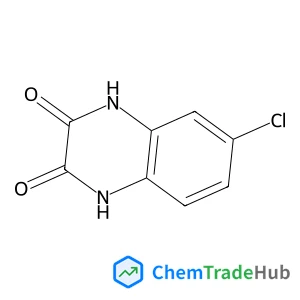
6-CHLORO-2,3-DIOXO-1,2,3,4-TETRAHYDROQUINOXALINE, 97
CAS Number:
169-14-2
Molecular Formula:
C8H5ClN2O2
Recommended Suppliers






Disclaimer
This page provides academic journal information for reference and research purposes only. We are not affiliated with any journal publishers and do not handle publication submissions. For publication-related inquiries, please contact the respective journal publishers directly.
If you notice any inaccuracies in the information displayed, please contact us at support@chemtradehub.com. We will promptly review and address your concerns.