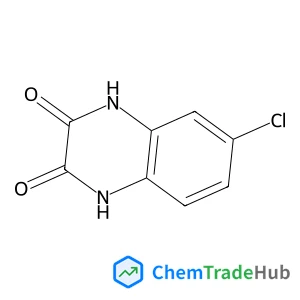
6-CHLORO-2,3-DIOXO-1,2,3,4-TETRAHYDROQUINOXALINE, 97
CAS Number:
169-14-2
Molecular Formula:
C8H5ClN2O2
Yusaku I. Kurokawa, Hiroyuki Nakashima, Hiroshi Nakatsuji
The Schrödinger equation of hydrogen molecules was solved essentially exactly and systematically for calculating the potential energy curves of the electronic ground and excited states of the 1Σg, 1Σu, 3Σg, and 3Σu symmetries. The basic theory is the variational free complement theory, which is an exact general theory for solving the Schrödinger equation of atoms and molecules. The results are essentially exact with the absolute energies being correct beyond μ-hartree digits. Furthermore, all of the present wave functions satisfy correct orthogonalities and Hamiltonian-orthogonalities to each other at every nuclear distance along the potential curve, which makes systematic analyses and discussions possible among all the calculated electronic states. It is noteworthy that these conditions were not satisfied in many of the accurate calculations of H2 reported so far. Based on the present essentially exact potential curves, we calculated and analyzed the vibrational energy levels associated with all the electronic states. Among them, the excited states having double-well potentials showed some interesting features of the vibrational states. These results are worthy of future investigations in astronomical studies.

European Journal of Organic Chemistry

Physical Chemistry Chemical Physics

Lab on a Chip

Photochemical & Photobiological Sciences

Environmental Toxicology and Pharmacology

CrystEngComm

Advanced Engineering Materials

Current Pharmaceutical Biotechnology

Angewandte Chemie International Edition

Contact Lens & Anterior Eye
Heike Fliegl, Dage Sundholm
DOI: 10.1039/C3CP54421D
Dalal Noureldine, Dalaver H. Anjum, Kazuhiro Takanabe
DOI: 10.1039/C4CP00654B
Chee Shan Lim, Adriano Ambrosi, Martin Pumera
DOI: 10.1039/C4CP01558D
Subal Dey, Biswajit Mondal, Abhishek Dey
DOI: 10.1039/C4CP01205D
Ning Li, Irving R. Epstein, Seth Fraden
DOI: 10.1039/C4CP00957F
Takashi Tokushima, Yuka Horikawa, Osamu Takahashi, Koichiro Sadakane
DOI: 10.1039/C4CP00762J
Robert L. Whetten, Xóchitl López-Lozano
DOI: 10.1039/C4CP01277A
Seyed Hadi Zandavi, Charles A. Ward
DOI: 10.1039/C4CP00843J
Jinying Wang, Shuqing Zhang, Jingyuan Zhou, Rong Liu, Ran Du, Hua Xu, Zhongfan Liu, Jin Zhang, Zhirong Liu
DOI: 10.1039/C4CP00539B
Wenjie Wang, Ivan Kuzmenko, David Vaknin
DOI: 10.1039/C4CP00657G
When handling 4-Methyl-6-(trifluoromethyl)quinoline (CAS: 40716-16-3), safety go...
4-(3,5-Difluorophenyl)aniline is an aromatic organic compound with the CAS numbe...
5-{[4-(Trifluoromethyl)phenyl]sulfanyl}-1,2,3-thiadiazole-4-carboxylic acid can ...
The market for 4-Benzylaniline hydrochloride (CAS: 6317-57-3) is steadily growin...
[3-(Diethylsulfamoyl)phenyl]boronic acid is generally considered safe when handl...
3-Bromo-2,5-dimethoxyaniline is mainly used in the pharmaceutical and chemical i...
N-Methyl-1-(5-methyl-1H-indol-3-yl)methanamine (CAS: 915922-67-7) is subject to ...
This compound is primarily used in the pharmaceutical industry for the synthesis...
2-Methyl-2-propanyl [(1S,3R)-3-aminocyclohexyl]carbamate (CAS: 1298101-47-9) sho...
Ethyl 2-bromo-4,4,4-trifluorobutanoate (CAS: 367-33-9) is utilized in the pharma...
Physical Chemistry Chemical Physics (PCCP) is an international journal co-owned by 19 physical chemistry and physics societies from around the world. This journal publishes original, cutting-edge research in physical chemistry, chemical physics and biophysical chemistry. To be suitable for publication in PCCP, articles must include significant innovation and/or insight into physical chemistry; this is the most important criterion that reviewers and Editors will judge against when evaluating submissions. The journal has a broad scope and welcomes contributions spanning experiment, theory, computation and data science. Topical coverage includes spectroscopy, dynamics, kinetics, statistical mechanics, thermodynamics, electrochemistry, catalysis, surface science, quantum mechanics, quantum computing and machine learning. Interdisciplinary research areas such as polymers and soft matter, materials, nanoscience, energy, surfaces/interfaces, and biophysical chemistry are welcomed if they demonstrate significant innovation and/or insight into physical chemistry. Joined experimental/theoretical studies are particularly appreciated when complementary and based on up-to-date approaches.
![(2E)-3-(3-Chlorophenyl)-N-{2-[4-(methylsulfonyl)-1-piperazinyl]-2-oxoethyl}acrylamide structure](https://static.chemtradehub.com/structs/250/2505001-54-5-c1e9.webp "(2E)-3-(3-Chlorophenyl)-N-{2-[4-(methylsulfonyl)-1-piperazinyl]-2-oxoethyl}acrylamide structure")