












Phonon transport and thermoelectric properties of semiconducting Bi2Te2X (X = S, Se, Te) monolayers
Literature Information
Publication Date
2019-02-12
DOI
10.1039/C8CP05793A
Impact Factor
3.676
Authors
Wu Li
View Original
Abstract
Confinement or dimensionality reduction is a novel strategy to reduce the lattice thermal conductivity and, consequently, to improve the thermoelectric conversion performance. Bismuth and tellurium based low-dimensional materials have great potential in this regard. The phonon transport and thermoelectric properties of Bi2Te2X (X = S, Se, Te) monolayers are systematically investigated by employing density functional theory and the Boltzmann transport equation. The calculated lattice thermal conductivity of these 2D systems ranges from ∼1.3 W m−1 K−1 (Bi2Te2Se) to ∼1.5 W m−1 K−1 (Bi2Te3) for a 10 μm system size at room temperature and considering spin–orbit coupling in harmonic force constants. This remarkably low lattice thermal conductivity is attributed to small group velocities and enhanced anharmonic phonon scattering rates. A detailed analysis is presented in terms of mode-level phonon group velocities, anharmonic scattering rates and phonon mean free paths. Our results reveal that the thermal transport in these 2D systems is dominated by in-plane transverse acoustic modes. Additionally, the thermal conductivity can be further reduced by decreasing the sample size due to phonon-boundary scattering. The thermoelectric properties including the Seebeck coefficient, power factor and electrical conductivity are calculated using the semi-classical Boltzmann transport equation within the rigid band approximation. The low thermal conductivities coupled with their high carrier mobilities lead to good thermoelectric power factors. With optimal carrier doping, a figure of merit ∼0.6 can be achieved at room temperature, which increases to ∼0.8 at 700 K, thus making them promising candidates for thermoelectric applications.
Recommended Journals
Related Literature
Sedimentation of colloidal particles near a wall: Stokesian dynamics simulations
Paper
DOI: 10.1039/A809571J
Noble gas–metal chemical bonding: the microwave spectra, structures and hyperfine constants of Ar–AuF and Ar–AuBr
Corey J. Evans, Daryl S. Rubinoff, Michael C. L. Gerry
2000-08-31
Paper
DOI: 10.1039/B004352O
Adsorption of CO2 on FSM-type mesoporous silicas
Masahiro Katoh, Keiichi Sakamoto, Mituo Kamiyamane, Tahei Tomida
2000-09-05
Paper
DOI: 10.1039/B004505P
Organic molecular beam deposition: technology and applications in electronics and photonics Invited Lecture
Paper
DOI: 10.1039/A809431D
Lamb-dip millimeter-wave spectrum, structure and dipole moment of HCCCCF
Paper
DOI: 10.1039/A900920E
Electron paramagnetic resonance and electron spin echo study of supported and unsupported vanadium oxides
Paper
DOI: 10.1039/A900119K
Characterization of a TiCl4-modified silica surface by means of quantitative surface analysis
Paper
DOI: 10.1039/A901016E
Modelling flow-distributed oscillations in the CDIMA reaction
Serafim Kalliadasis, John H. Merkin
2000-09-04
Paper
DOI: 10.1039/B004552G
You might also like
Compound Q&A
What precautions should be taken when handling 4-Methyl-6-(trifluoromethyl)quinoline (CAS: 40716-16-3)?
When handling 4-Methyl-6-(trifluoromethyl)quinoline (CAS: 40716-16-3), safety go...
40716-16-34-Methyl-6-(trifluor...
Compound Q&A
What is 4-(3,5-Difluorophenyl)aniline (CAS: 405058-00-6)?
4-(3,5-Difluorophenyl)aniline is an aromatic organic compound with the CAS numbe...
405058-00-64-(3,5-Difluoropheny...
Compound Q&A
How is 5-{[4-(Trifluoromethyl)phenyl]sulfanyl}-1,2,3-thiadiazole-4-carboxylic acid (CAS: 338982-07-3) typically synthesized?
5-{[4-(Trifluoromethyl)phenyl]sulfanyl}-1,2,3-thiadiazole-4-carboxylic acid can ...
338982-07-35-{[4-(Trifluorometh...
Compound Q&A
What is the market or research trend for 4-Benzylaniline hydrochloride (CAS: 6317-57-3)?
The market for 4-Benzylaniline hydrochloride (CAS: 6317-57-3) is steadily growin...
6317-57-34-Benzylaniline hydr...
Compound Q&A
Is [3-(Diethylsulfamoyl)phenyl]boronic acid (CAS: 871329-58-7) safe?
[3-(Diethylsulfamoyl)phenyl]boronic acid is generally considered safe when handl...
871329-58-7[3-(Diethylsulfamoyl...
Compound Q&A
What are the main uses of 3-Bromo-2,5-dimethoxyaniline (CAS: 115929-62-9)?
3-Bromo-2,5-dimethoxyaniline is mainly used in the pharmaceutical and chemical i...
115929-62-93-Bromo-2,5-dimethox...
Compound Q&A
What regulatory guidelines apply to N-Methyl-1-(5-methyl-1H-indol-3-yl)methanamine (CAS: 915922-67-7)?
N-Methyl-1-(5-methyl-1H-indol-3-yl)methanamine (CAS: 915922-67-7) is subject to ...
915922-67-7N-Methyl-1-(5-methyl...
Compound Q&A
What industries use Carbamic acid, N-[(5S)-5,6-diamino-6-oxohexyl]-, 1,1-dimethylethyl ester (CAS: 24828-96-4)?
This compound is primarily used in the pharmaceutical industry for the synthesis...
24828-96-4Carbamic acid, N-[(5...
Compound Q&A
How should 2-Methyl-2-propanyl [(1S,3R)-3-aminocyclohexyl]carbamate (CAS: 1298101-47-9) be stored?
2-Methyl-2-propanyl [(1S,3R)-3-aminocyclohexyl]carbamate (CAS: 1298101-47-9) sho...
1298101-47-92-Methyl-2-propanyl ...
Compound Q&A
What industries use Ethyl 2-bromo-4,4,4-trifluorobutanoate (CAS: 367-33-9)?
Ethyl 2-bromo-4,4,4-trifluorobutanoate (CAS: 367-33-9) is utilized in the pharma...
367-33-9Ethyl 2-bromo-4,4,4-...
Source Journal
Physical Chemistry Chemical Physics

CiteScore:
5.5
Self-citation Rate:
10.3%
Articles per Year:
3036
Physical Chemistry Chemical Physics (PCCP) is an international journal co-owned by 19 physical chemistry and physics societies from around the world. This journal publishes original, cutting-edge research in physical chemistry, chemical physics and biophysical chemistry. To be suitable for publication in PCCP, articles must include significant innovation and/or insight into physical chemistry; this is the most important criterion that reviewers and Editors will judge against when evaluating submissions. The journal has a broad scope and welcomes contributions spanning experiment, theory, computation and data science. Topical coverage includes spectroscopy, dynamics, kinetics, statistical mechanics, thermodynamics, electrochemistry, catalysis, surface science, quantum mechanics, quantum computing and machine learning. Interdisciplinary research areas such as polymers and soft matter, materials, nanoscience, energy, surfaces/interfaces, and biophysical chemistry are welcomed if they demonstrate significant innovation and/or insight into physical chemistry. Joined experimental/theoretical studies are particularly appreciated when complementary and based on up-to-date approaches.
Recommended Compounds

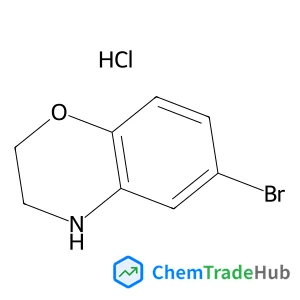
6-Bromo-3,4-dihydro-2H-1,4-benzoxazine hydrochloride (1:1)
CAS Number:
1260803-10-8
Molecular Formula:
C8H9BrClNO
Recommended Suppliers






Disclaimer
This page provides academic journal information for reference and research purposes only. We are not affiliated with any journal publishers and do not handle publication submissions. For publication-related inquiries, please contact the respective journal publishers directly.
If you notice any inaccuracies in the information displayed, please contact us at support@chemtradehub.com. We will promptly review and address your concerns.