


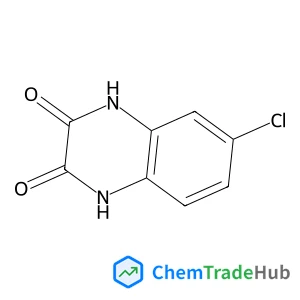
6-CHLORO-2,3-DIOXO-1,2,3,4-TETRAHYDROQUINOXALINE, 97
CAS Number:
169-14-2
Molecular Formula:
C8H5ClN2O2
Avia Leader, Daniel Mandler, Meital Reches
Understanding the nature of interactions between inorganic surfaces and biomolecules, such as amino acids and peptides, can enhance the development of new materials. Here, we present single molecule force spectroscopy (SMFS) measurements of the interactions between an atomic force microscopy (AFM) probe, modified with various amino acids, and a titanium dioxide surface. Specifically, we study the affinity of amino acids toward a titanium dioxide surface bearing hydrophobic (Leu), aromatic (Phe) and hydrophilic (Orn) residues. We find that aromatic interactions dominate over aliphatic in their affinity to the titanium dioxide surface. In addition, we show that by combining aromatic and hydrophilic moieties in a single amino acid (NH2-Phe), the adhesion of the latter to the surface increases. Furthermore, the affinity of positively charged amino acids to the titanium dioxide surface is higher than that of uncharged, and can be increased more, with elevating the pH of the buffer above the pKa of the basic residues. The kinetic and thermodynamic parameters imply that the dynamics of the surface–amino acid interface are mostly governed by hydrophobic interactions.

Current Opinion in Colloid & Interface Science

Russian Journal of Organic Chemistry

Journal of Saudi Chemical Society

Crystallography Reports

Russian Chemical Bulletin

Journal of Peptide Science

Russian Journal of Bioorganic Chemistry

Chemical Communications

Journal of Natural Medicines

Current Opinion in Solid State & Materials Science
Xiqi Zhang, Xiaoyong Zhang, Bin Yang, Junfeng Hui, Meiying Liu, Zhenguo Chi, Siwei Liu, Jiarui Xu, Yen Wei
DOI: 10.1039/C3PY01143G
Yizhi Qi
DOI: 10.1039/C3PY01089A
Anja Thomas, Kerstin Niederer, Frederik Wurm, Holger Frey
DOI: 10.1039/C3PY01078C
Lin Yang, Yaling Lin, Lianshi Wang, Anqiang Zhang
DOI: 10.1039/C3PY01005H
Yinsong Wang, Yang Liu, Yuanyuan Liu, Yan Wang, Jing Wu, Rongshan Li, Jinrong Yang
DOI: 10.1039/C3PY00817G
Xiang Luo, Shijie Xie, Jun Liu, Haibin Hu, Jing Jiang, Wei Huang, Haiyang Gao, Dongshan Zhou, Zhongyuan Lü, Deyue Yan
DOI: 10.1039/C3PY00896G
Daniel J. Phillips, Joseph P. Patterson, Rachel K. O'Reilly, Matthew I. Gibson
DOI: 10.1039/C3PY00991B
Siham Telitel, Yoshifumi Amamoto, Julien Poly, Fabrice Morlet-Savary, Olivier Soppera, Jacques Lalevée, Krzysztof Matyjaszewski
DOI: 10.1039/C3PY01162C
Mohamad-Ali Tehfe, Frédéric Dumur, Pu Xiao, Marie Delgove, Bernadette Graff, Jean-Pierre Fouassier, Didier Gigmes, Jacques Lalevée
DOI: 10.1039/C3PY00922J
Masaki Takara, Masayuki Toyoshima, Hirokazu Seto, Yu Hoshino, Yoshiko Miura
DOI: 10.1039/C3PY01001E
4-Nitrophenyl phosphate disodium salt hexahydrate is primarily used as a substra...
2-(Trifluoromethyl)-1,3-oxazole-4-carboxylic Acid (CAS: 1060816-01-4) is widely ...
2-Fluoro-4-biphenylcarboxylic acid should be stored in a cool, dry place at room...
Prednisolone-21-Carboxylic Acid is primarily used in the pharmaceutical industry...
4-(Hydrazinomethyl)-1,2,3-benzenetriol (CAS: 3614-72-0) should be stored in a co...
4-Amino-1-methyl-1H-pyrazole-5-carboxylic acid hydrochloride (CAS: 92534-70-8) i...
Dehydropachymic acid (CAS: 77012-31-8) is regulated by various agencies. It fall...
The market and research trends for 6-[(2,2-Dimethylpropanoyl)amino]nicotinic aci...
1,10-Phenanthroline-2,9-dicarbaldehyde should be stored in a cool, dry place awa...
5-Carbamoyl-11-oxo-10,11-dihydro-5H-dibenzo[b,f]azepin-10-yl acetate can be synt...

Physical Chemistry Chemical Physics (PCCP) is an international journal co-owned by 19 physical chemistry and physics societies from around the world. This journal publishes original, cutting-edge research in physical chemistry, chemical physics and biophysical chemistry. To be suitable for publication in PCCP, articles must include significant innovation and/or insight into physical chemistry; this is the most important criterion that reviewers and Editors will judge against when evaluating submissions. The journal has a broad scope and welcomes contributions spanning experiment, theory, computation and data science. Topical coverage includes spectroscopy, dynamics, kinetics, statistical mechanics, thermodynamics, electrochemistry, catalysis, surface science, quantum mechanics, quantum computing and machine learning. Interdisciplinary research areas such as polymers and soft matter, materials, nanoscience, energy, surfaces/interfaces, and biophysical chemistry are welcomed if they demonstrate significant innovation and/or insight into physical chemistry. Joined experimental/theoretical studies are particularly appreciated when complementary and based on up-to-date approaches.

phosphoryl}methyl 4-methylbenzenesulfonate structure](https://static.chemtradehub.com/structs/864/864068-45-1-ba7c.webp "{[3-(Hexadecyloxy)propoxy](hydroxy)phosphoryl}methyl 4-methylbenzenesulfonate structure")




