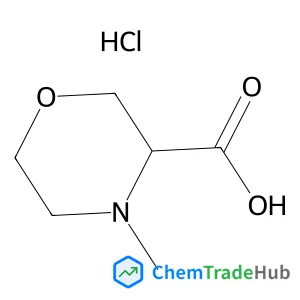
4-Methyl-3-morpholinecarboxylic acid hydrochloride (1:1)
CAS Number:
1240518-90-4
Molecular Formula:
C6H12ClNO3
Jérôme Graton, Seyfeddine Rahali, Jean-Yves Le Questel, Gilles Montavon, Julien Pilmé, Nicolas Galland
The nature of halogen-bond interactions is scrutinized from the perspective of astatine, the heaviest halogen element. Potentially the strongest halogen-bond donor, its ability is shown to be deeply affected by relativistic effects and especially by the spin–orbit coupling. Complexes between a series of XY dihalogens (X, Y = At, I, Br, Cl and F) and ammonia are studied with two-component relativistic quantum calculations, revealing that the spin–orbit interaction leads to a weaker halogen-bond donating ability of the diastatine species with respect to diiodine. In addition, the donating ability of the lighter halogen elements, iodine and bromine, in the AtI and AtBr species is more decreased by the spin–orbit coupling than that of astatine. This can only be rationalized from the evolution of a charge-transfer descriptor, the local electrophilicity ω+S,max, determined for the pre-reactive XY species. Finally, the investigation of the spin–orbit coupling effects by means of quantum chemical topology methods allows us to unveil the connection between the astatine propensity to form charge-shift bonds and the astatine ability to engage in halogen bonds.
Musa Alaydrus
DOI: 10.1039/D1CP02452C
Igor A. Nikovskiy, Dmitry Y. Aleshin
DOI: 10.1039/D1CP04648A
Long Zhao, Matthew Prendergast, Ralf I. Kaiser, Bo Xu, Wenchao Lu, Musahid Ahmed, A. Hasan Howlader, Stanislaw F. Wnuk, Alexander S. Korotchenko, Mikhail M. Evseev, Eugene K. Bashkirov, Alexander M. Mebel
DOI: 10.1039/D1CP02169A
Georgia L. Thornton, Ryan Phelps, Andrew J. Orr-Ewing
DOI: 10.1039/D1CP03137F
J. L. Clabel H., G. Nicolodelli, G. Lozano C., V. A. G. Rivera, S. O. Ferreira, Alexandre H. Pinto, M. Siu Li, E. Marega, Jr.
DOI: 10.1039/D1CP01765A
Paramita Ghosh, Nidhi Gupta, Monika Dhankhar, Madhav Ranganathan
DOI: 10.1039/D1CP00069A
Joanne L. Woodhouse, Alice Henley, Ross Lewin, John M. Ward, Helen C. Hailes, Anastasia V. Bochenkova, Helen H. Fielding
DOI: 10.1039/D1CP01901E
Jemma A. Gibbard, Connor J. Clarke, Jan R. R. Verlet
DOI: 10.1039/D1CP03075B
Travis Sikes, Colin Banyon, Rachel A. Schwind, Patrick T. Lynch, Andrea Comandini, Raghu Sivaramakrishnan, Robert S. Tranter
DOI: 10.1039/D1CP02437J
DOI: 10.1039/D1CP04009J
4-Nitrophenyl phosphate disodium salt hexahydrate is primarily used as a substra...
2-(Trifluoromethyl)-1,3-oxazole-4-carboxylic Acid (CAS: 1060816-01-4) is widely ...
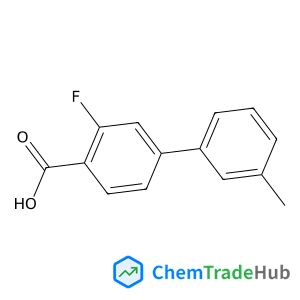
2-Fluoro-4-biphenylcarboxylic acid should be stored in a cool, dry place at room...
Prednisolone-21-Carboxylic Acid is primarily used in the pharmaceutical industry...
4-(Hydrazinomethyl)-1,2,3-benzenetriol (CAS: 3614-72-0) should be stored in a co...
4-Amino-1-methyl-1H-pyrazole-5-carboxylic acid hydrochloride (CAS: 92534-70-8) i...
Dehydropachymic acid (CAS: 77012-31-8) is regulated by various agencies. It fall...
The market and research trends for 6-[(2,2-Dimethylpropanoyl)amino]nicotinic aci...
1,10-Phenanthroline-2,9-dicarbaldehyde should be stored in a cool, dry place awa...
5-Carbamoyl-11-oxo-10,11-dihydro-5H-dibenzo[b,f]azepin-10-yl acetate can be synt...

Physical Chemistry Chemical Physics (PCCP) is an international journal co-owned by 19 physical chemistry and physics societies from around the world. This journal publishes original, cutting-edge research in physical chemistry, chemical physics and biophysical chemistry. To be suitable for publication in PCCP, articles must include significant innovation and/or insight into physical chemistry; this is the most important criterion that reviewers and Editors will judge against when evaluating submissions. The journal has a broad scope and welcomes contributions spanning experiment, theory, computation and data science. Topical coverage includes spectroscopy, dynamics, kinetics, statistical mechanics, thermodynamics, electrochemistry, catalysis, surface science, quantum mechanics, quantum computing and machine learning. Interdisciplinary research areas such as polymers and soft matter, materials, nanoscience, energy, surfaces/interfaces, and biophysical chemistry are welcomed if they demonstrate significant innovation and/or insight into physical chemistry. Joined experimental/theoretical studies are particularly appreciated when complementary and based on up-to-date approaches.