


Factors governing when a metal-bound water is deprotonated in proteins
Literature Information
Publication Date
2018-11-05
DOI
10.1039/C8CP04776F
Impact Factor
3.676
Authors
Cédric Grauffel
View Original
Abstract
Understanding when a metal-bound water molecule in a protein is deprotonated is important as this affects the charge distribution in the metal-binding/enzyme active site and thus their interactions, the enzyme mechanism, and inhibitor design. The protonation state of the metal-bound water molecule at a given pH depends on its pKa value, which in turn depends on the properties of the cation, its ligands, and the protein environment. Here, we reveal how and the extent to which (i) the first-shell composition (type, charge, and number of ligands), (ii) the metal site's immediate surroundings (first-shell⋯second-shell hydrogen-bonding interactions, metal–ligand distance constraints, and ligand-binding mode) and (iii) the protein architecture and coupled solvent interactions (long-range electrostatic interactions and solvent exposure of the site) affect the Zn2+-bound water pKa. The results, which are consistent with available experimental pKa values of Zn2+-bound water, provide guidelines to predict when Zn2+-bound water would likely be deprotonated at physiological pH.
Recommended Journals

Journal of Saudi Chemical Society

New Journal of Chemistry

Russian Journal of Coordination Chemistry

Russian Journal of Bioorganic Chemistry

Russian Journal of General Chemistry

Current Opinion in Colloid & Interface Science

Acta Materialia

Current Opinion in Solid State & Materials Science

Saudi Pharmaceutical Journal

Russian Journal of Organic Chemistry
Related Literature
Micellar-cluster association of ureidopyrimidone functionalized monochelic polybutadiene
Sachin Laxman Bobade, Thomas Malmgren
2013-09-09
Paper
DOI: 10.1039/C3PY01002C
A biomimic pH-sensitive polymeric prodrug based on polycarbonate for intracellular drug delivery
Haibo Wang, Yin Wang, Yangjun Chen, Qiao Jin, Jian Ji
2013-09-09
Paper
DOI: 10.1039/C3PY00861D
RAFT/MADIX (co)polymerization of vinyl trifluoroacetate: a means to many ends
Jean-Daniel Marty, Mathias Destarac
2013-10-01
Paper
DOI: 10.1039/C3PY01109G
Synthesis of biomimetic co-polypeptides with tunable degrees of phosphorylation
2013-10-29
Paper
DOI: 10.1039/C3PY01118F
Preparation of a D–A polymer with disilanobithiophene as a new donor component and application to high-voltage bulk heterojunction polymer solar cells
Joji Ohshita, Makoto Nakashima, Daiki Tanaka, Yasushi Morihara, Hiroyuki Fueno, Kazuyoshi Tanaka
2013-10-17
Communication
DOI: 10.1039/C3PY01157G
Synthesis characterization and bulk-heterojunction photovoltaic applications of new naphtho[1,2-b:5,6-b′]dithiophene–quinoxaline containing narrow band gap D–A conjugated polymers
Pranabesh Dutta, Hanok Park, Woo-Hyung Lee, In Nam Kang, Soo-Hyoung Lee
2013-07-31
Paper
DOI: 10.1039/C3PY00911D
Synthesis of water-soluble polyisocyanates with the oligo(ethylene glycol) side-chain as new thermoresponsive polymers
Naoya Sakai, Mingoo Jin, Shin-ichiro Sato, Toshifumi Satoh, Toyoji Kakuchi
2013-10-02
Paper
DOI: 10.1039/C3PY00972F
Neutral linear amphiphilic homopolymers prepared by atom transfer radical polymerization
Yi Wang, Alina M. Alb, Jibao He, Scott M. Grayson
2013-09-19
Paper
DOI: 10.1039/C3PY00916E
You might also like
Compound Q&A
What are the main uses of 4-Nitrophenyl phosphate disodium salt hexahydrate (CAS: 333338-18-4)?
4-Nitrophenyl phosphate disodium salt hexahydrate is primarily used as a substra...
333338-18-44-Nitrophenyl phosph...
Compound Q&A
What are the main uses of 2-(Trifluoromethyl)-1,3-oxazole-4-carboxylic Acid (CAS: 1060816-01-4)?
2-(Trifluoromethyl)-1,3-oxazole-4-carboxylic Acid (CAS: 1060816-01-4) is widely ...
1060816-01-42-(Trifluoromethyl)-...
Compound Q&A
How should 2-Fluoro-4-biphenylcarboxylic acid (CAS: 137045-30-8) be stored?
2-Fluoro-4-biphenylcarboxylic acid should be stored in a cool, dry place at room...
137045-30-82-Fluoro-4-biphenylc...
Compound Q&A
What industries use Prednisolone-21-Carboxylic Acid (CAS: 61549-70-0)?
Prednisolone-21-Carboxylic Acid is primarily used in the pharmaceutical industry...
61549-70-0Prednisolone-21-Carb...
Compound Q&A
How should 4-(Hydrazinomethyl)-1,2,3-benzenetriol (CAS: 3614-72-0) be stored?
4-(Hydrazinomethyl)-1,2,3-benzenetriol (CAS: 3614-72-0) should be stored in a co...
3614-72-04-(Hydrazinomethyl)-...
Compound Q&A
What industries use 4-Amino-1-methyl-1H-pyrazole-5-carboxylic acid hydrochloride (CAS: 92534-70-8)?
4-Amino-1-methyl-1H-pyrazole-5-carboxylic acid hydrochloride (CAS: 92534-70-8) i...
92534-70-84-Amino-1-methyl-1H-...
Compound Q&A
What regulatory guidelines apply to dehydropachymic acid (CAS: 77012-31-8)?
Dehydropachymic acid (CAS: 77012-31-8) is regulated by various agencies. It fall...
77012-31-8Dehydropachymic acid
Compound Q&A
What is the market or research trend for 6-[(2,2-Dimethylpropanoyl)amino]nicotinic acid (CAS: 898561-66-5)?
The market and research trends for 6-[(2,2-Dimethylpropanoyl)amino]nicotinic aci...
898561-66-56-[(2,2-Dimethylprop...
Compound Q&A
How should 1,10-Phenanthroline-2,9-dicarbaldehyde (CAS: 57709-62-3) be stored?
1,10-Phenanthroline-2,9-dicarbaldehyde should be stored in a cool, dry place awa...
57709-62-31,10-Phenanthroline-...
Compound Q&A
How is 5-Carbamoyl-11-oxo-10,11-dihydro-5H-dibenzo[b,f]azepin-10-yl acetate (CAS: 113952-21-9) typically synthesized?
5-Carbamoyl-11-oxo-10,11-dihydro-5H-dibenzo[b,f]azepin-10-yl acetate can be synt...
113952-21-95-Carbamoyl-11-oxo-1...
Source Journal
Physical Chemistry Chemical Physics

CiteScore:
5.5
Self-citation Rate:
10.3%
Articles per Year:
3036
Physical Chemistry Chemical Physics (PCCP) is an international journal co-owned by 19 physical chemistry and physics societies from around the world. This journal publishes original, cutting-edge research in physical chemistry, chemical physics and biophysical chemistry. To be suitable for publication in PCCP, articles must include significant innovation and/or insight into physical chemistry; this is the most important criterion that reviewers and Editors will judge against when evaluating submissions. The journal has a broad scope and welcomes contributions spanning experiment, theory, computation and data science. Topical coverage includes spectroscopy, dynamics, kinetics, statistical mechanics, thermodynamics, electrochemistry, catalysis, surface science, quantum mechanics, quantum computing and machine learning. Interdisciplinary research areas such as polymers and soft matter, materials, nanoscience, energy, surfaces/interfaces, and biophysical chemistry are welcomed if they demonstrate significant innovation and/or insight into physical chemistry. Joined experimental/theoretical studies are particularly appreciated when complementary and based on up-to-date approaches.
Recommended Compounds
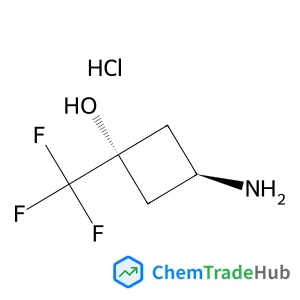
cis-3-Amino-1-(trifluoromethyl)cyclobutanol hydrochloride (1:1)
CAS Number:
1408075-16-0
Molecular Formula:
C5H9ClF3NO
Recommended Suppliers




Disclaimer
This page provides academic journal information for reference and research purposes only. We are not affiliated with any journal publishers and do not handle publication submissions. For publication-related inquiries, please contact the respective journal publishers directly.
If you notice any inaccuracies in the information displayed, please contact us at support@chemtradehub.com. We will promptly review and address your concerns.