












Formation and characterization of nano- and microstructures of twinned cubic boron nitride
Literature Information
Publication Date
2018-09-17
DOI
10.1039/C8CP04592E
Impact Factor
3.676
Authors
Anagh Bhaumik, Jagdish Narayan
View Original
Abstract
Nano- and microstructures of phase-pure cubic boron nitride (c-BN) are synthesized by employing nanosecond pulsed-laser annealing techniques at room temperature and atmospheric pressure. In a highly non-equilibrium synthesis process, nanocrystalline h-BN is directly converted into phase-pure twinned c-BN from a highly undercooled melt state of BN. By changing nucleation and growth rates, we have synthesized a wide range of sizes (90 nm to 25 μm) of c-BN. The electron diffraction patterns show the formation of twinned c-BN with [11] as the twin axis. The twinning density in c-BN can be controlled by the degree of undercooling and quenching rates. The formation of twins predominantly occurs prior to the formation of amorphous quenched BN (Q-BN). Therefore, the defect density in nano c-BN formed under higher undercooling conditions is considerably larger than that in micro c-BN, which is formed under lower undercooling conditions. The temperature-dependent Raman studies show a considerable blue-shift of ∼6 cm−1 with a decrease in temperature from 300 to 78 K in nano c-BN as compared to micro c-BN. The size-effects of c-BN crystals in Raman spectra are modeled using spatial correlation theory, which can be used to calculate the correlation length and twin density in c-BN. It has also been found that the Raman blue-shift in nano c-BN is caused by anharmonic effects, and the decrease in Raman linewidth with decreasing temperature (300 to 78 K) is caused by three- and four-phonon decay processes. The bonding characteristics and crystalline nature of the synthesized c-BN are also demonstrated by using electron energy-loss spectroscopy and electron backscatter diffraction, respectively. We envisage that the controlled growth of phase-pure nano and microstructures of twinned c-BN and their temperature-dependent Raman-active vibrational mode studies will have a tremendous impact on low-temperature solid-state electrical and mechanical devices.
Recommended Journals
Related Literature
Titration microcalorimetry of micelle formation in aqueous solutions containing alkylpolyoxyethylene glycol ethers, C12H25(OCH2CH2)mOH where m=3, 4 and 5, and octadecyltrimethylammonium bromide
Jan B. F. N. Engberts, Jan Kevelam
2000-09-06
Paper
DOI: 10.1039/B004501M
The structure of the water–hydrogen peroxide complex. A matrix isolation study
Anders Engdahl, Bengt Nelander
2000-08-29
Paper
DOI: 10.1039/B005861K
Excited state proton and electron transfer reactions of acridinedione dyes with amines
Paper
DOI: 10.1039/A809070J
Theoretical study of methane adsorption on Zn(II) zeolites
Luis A. M. M. Barbosa, Georgii M. Zhidomirov, Rutger A. van Santen
2000-08-15
Paper
DOI: 10.1039/B004090H
The kinetics of phase transitions in underpotentially deposited Cu adlayers on Au(111)
X. H. Xia, L. Nagle, R. Schuster, O. M. Magnussen, R. J. Behm
2000-09-07
Paper
DOI: 10.1039/B003585H
Molecular dynamics simulations of the lithium coordination environment in phosphate glasses
Todd M. Alam, Jian-Jie Liang, Randall T. Cygan
2000-09-15
Paper
DOI: 10.1039/B004627M
You might also like
Compound Q&A
What precautions should be taken when handling 4-Methyl-6-(trifluoromethyl)quinoline (CAS: 40716-16-3)?
When handling 4-Methyl-6-(trifluoromethyl)quinoline (CAS: 40716-16-3), safety go...
40716-16-34-Methyl-6-(trifluor...
Compound Q&A
What is 4-(3,5-Difluorophenyl)aniline (CAS: 405058-00-6)?
4-(3,5-Difluorophenyl)aniline is an aromatic organic compound with the CAS numbe...
405058-00-64-(3,5-Difluoropheny...
Compound Q&A
How is 5-{[4-(Trifluoromethyl)phenyl]sulfanyl}-1,2,3-thiadiazole-4-carboxylic acid (CAS: 338982-07-3) typically synthesized?
5-{[4-(Trifluoromethyl)phenyl]sulfanyl}-1,2,3-thiadiazole-4-carboxylic acid can ...
338982-07-35-{[4-(Trifluorometh...
Compound Q&A
What is the market or research trend for 4-Benzylaniline hydrochloride (CAS: 6317-57-3)?
The market for 4-Benzylaniline hydrochloride (CAS: 6317-57-3) is steadily growin...
6317-57-34-Benzylaniline hydr...
Compound Q&A
Is [3-(Diethylsulfamoyl)phenyl]boronic acid (CAS: 871329-58-7) safe?
[3-(Diethylsulfamoyl)phenyl]boronic acid is generally considered safe when handl...
871329-58-7[3-(Diethylsulfamoyl...
Compound Q&A
What are the main uses of 3-Bromo-2,5-dimethoxyaniline (CAS: 115929-62-9)?
3-Bromo-2,5-dimethoxyaniline is mainly used in the pharmaceutical and chemical i...
115929-62-93-Bromo-2,5-dimethox...
Compound Q&A
What regulatory guidelines apply to N-Methyl-1-(5-methyl-1H-indol-3-yl)methanamine (CAS: 915922-67-7)?
N-Methyl-1-(5-methyl-1H-indol-3-yl)methanamine (CAS: 915922-67-7) is subject to ...
915922-67-7N-Methyl-1-(5-methyl...
Compound Q&A
What industries use Carbamic acid, N-[(5S)-5,6-diamino-6-oxohexyl]-, 1,1-dimethylethyl ester (CAS: 24828-96-4)?
This compound is primarily used in the pharmaceutical industry for the synthesis...
24828-96-4Carbamic acid, N-[(5...
Compound Q&A
How should 2-Methyl-2-propanyl [(1S,3R)-3-aminocyclohexyl]carbamate (CAS: 1298101-47-9) be stored?
2-Methyl-2-propanyl [(1S,3R)-3-aminocyclohexyl]carbamate (CAS: 1298101-47-9) sho...
1298101-47-92-Methyl-2-propanyl ...
Compound Q&A
What industries use Ethyl 2-bromo-4,4,4-trifluorobutanoate (CAS: 367-33-9)?
Ethyl 2-bromo-4,4,4-trifluorobutanoate (CAS: 367-33-9) is utilized in the pharma...
367-33-9Ethyl 2-bromo-4,4,4-...
Source Journal
Physical Chemistry Chemical Physics

CiteScore:
5.5
Self-citation Rate:
10.3%
Articles per Year:
3036
Physical Chemistry Chemical Physics (PCCP) is an international journal co-owned by 19 physical chemistry and physics societies from around the world. This journal publishes original, cutting-edge research in physical chemistry, chemical physics and biophysical chemistry. To be suitable for publication in PCCP, articles must include significant innovation and/or insight into physical chemistry; this is the most important criterion that reviewers and Editors will judge against when evaluating submissions. The journal has a broad scope and welcomes contributions spanning experiment, theory, computation and data science. Topical coverage includes spectroscopy, dynamics, kinetics, statistical mechanics, thermodynamics, electrochemistry, catalysis, surface science, quantum mechanics, quantum computing and machine learning. Interdisciplinary research areas such as polymers and soft matter, materials, nanoscience, energy, surfaces/interfaces, and biophysical chemistry are welcomed if they demonstrate significant innovation and/or insight into physical chemistry. Joined experimental/theoretical studies are particularly appreciated when complementary and based on up-to-date approaches.
Recommended Compounds
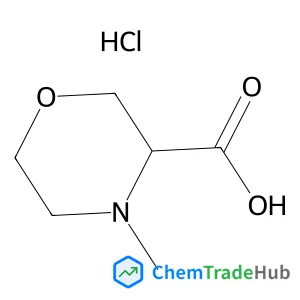
4-Methyl-3-morpholinecarboxylic acid hydrochloride (1:1)
CAS Number:
1240518-90-4
Molecular Formula:
C6H12ClNO3
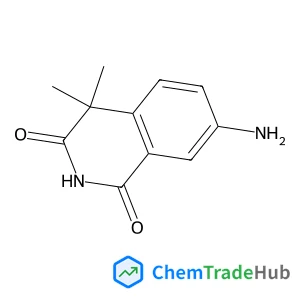
1,3(2H,4H)-Isoquinolinedione, 7-amino-4,4-dimethyl-
CAS Number:
14576-22-8
Molecular Formula:
C11H12N2O2
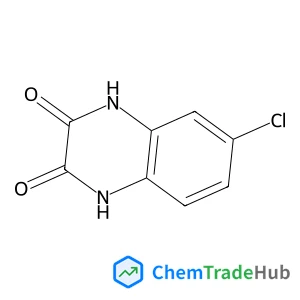
6-CHLORO-2,3-DIOXO-1,2,3,4-TETRAHYDROQUINOXALINE, 97
CAS Number:
169-14-2
Molecular Formula:
C8H5ClN2O2
Recommended Suppliers







Disclaimer
This page provides academic journal information for reference and research purposes only. We are not affiliated with any journal publishers and do not handle publication submissions. For publication-related inquiries, please contact the respective journal publishers directly.
If you notice any inaccuracies in the information displayed, please contact us at support@chemtradehub.com. We will promptly review and address your concerns.