


Spatial distribution of organic functional groups supported on mesoporous silica nanoparticles (2): a study by 1H triple-quantum fast-MAS solid-state NMR
Literature Information
Publication Date
2018-08-10
DOI
10.1039/C8CP04425B
Impact Factor
3.676
Authors
Takeshi Kobayashi
View Original
Abstract
The distribution of organic functional groups attached to the surface of mesoporous silica nanoparticles (MSNs) via co-condensation was scrutinized using 1D and 2D 1H solid-state NMR, including the triple-quantum/single-quantum (TQ/SQ) homonuclear correlation technique. The excellent sensitivity of 1H NMR and high resolution provided by fast magic angle spinning (MAS) allowed us to study surfaces with very low concentrations of aminopropyl functional groups. The sequential process, in which the injection of tetraethyl orthosilicate (TEOS) into the aqueous mother liquor was followed by dropwise addition of the organosilane precursor, resulted in deployment of organic groups on the surface, which were highly clustered even in a sample with a very low loading of ∼0.1 mmol g−1. The underlying mechanism responsible for clustering could involve fast aggregation of the aminopropyltrimethoxysilane (APTMS) precursor within the liquid phase, and/or co-condensation of the silica-bound molecules. Understanding the deposition process and the resulting topology of surface functionalities with atomic-scale resolution, can help to develop novel approaches to the synthesis of complex inorganic–organic hybrid materials.
Recommended Journals

Crystallography Reports

Russian Journal of Organic Chemistry

Russian Chemical Bulletin

Current Opinion in Solid State & Materials Science

Saudi Pharmaceutical Journal

Journal of Saudi Chemical Society

New Journal of Chemistry

Russian Journal of Coordination Chemistry

Journal of Peptide Science

Russian Journal of Applied Chemistry
Related Literature
Self-assembly of a peptide rod–coil: a polyproline rod and a cell-penetrating peptide Tat coil
You-Rim Yoon, Yong-beom Lim, Eunji Lee, Myongsoo Lee
2008-03-11
Communication
DOI: 10.1039/B719868J
Stabilization of cobalt oxyhydrate superconductor
Zhi Ren, Cao Wang, Xiang-fan Xu, Guang-han Cao, Zhu-an Xu, Yu-heng Zhang
2008-03-03
Communication
DOI: 10.1039/B800378E
Benzo[1,2-b:4,5-b′]bis[b]benzothiophene as solution processible organic semiconductor for field-effect transistors
Peng Gao, Dirk Beckmann, Hoi Nok Tsao, Xinliang Feng, Volker Enkelmann, Wojciech Pisula, Klaus Müllen
2008-01-25
Communication
DOI: 10.1039/B717608B
A simple method for the containment and purification of filled open-ended single wall carbon nanotubes using C60 molecules
Lidong Shao, Tsung-Wu Lin, Gerard Tobias, Malcolm L. H. Green
2008-03-05
Communication
DOI: 10.1039/B800881G
Improved 3D DOSY-TOCSY experiment for mixture analysis
Stéphane Viel, Stefano Caldarelli
2008-03-31
Communication
DOI: 10.1039/B802789G
Preparation of silyl substituted crotylzinc reagents and their highly diastereoselectiveaddition to carbonyl compounds
Matthew D. Helm, Peter Mayer, Paul Knochel
2008-03-19
Communication
DOI: 10.1039/B802157K
Fluorescence microscopy coupled to electrochemistry: a powerful tool for the controlled electrochemical switch of fluorescent molecules
Fabien Miomandre, Rachel Meallet-Renault, Jean-Jacques Vachon, Robert Bernard Pansu, Pierre Audebert
2008-02-19
Communication
DOI: 10.1039/B718899D
Rigid cyanine dyenucleic acid labels‡
Adrian Fegan, Pravin S. Shirude, Shankar Balasubramanian
2008-03-26
Communication
DOI: 10.1039/B801629A
A new NCN pincer ruthenium complex and its catalytic activity for enantioselective hydrogenation of ketones
Jun-ichi Ito, Satoshi Ujiie, Hisao Nishiyama
2008-03-12
Communication
DOI: 10.1039/B800387D
You might also like
Compound Q&A
What precautions should be taken when handling 4-Methyl-6-(trifluoromethyl)quinoline (CAS: 40716-16-3)?
When handling 4-Methyl-6-(trifluoromethyl)quinoline (CAS: 40716-16-3), safety go...
40716-16-34-Methyl-6-(trifluor...
Compound Q&A
What is 4-(3,5-Difluorophenyl)aniline (CAS: 405058-00-6)?
4-(3,5-Difluorophenyl)aniline is an aromatic organic compound with the CAS numbe...
405058-00-64-(3,5-Difluoropheny...
Compound Q&A
How is 5-{[4-(Trifluoromethyl)phenyl]sulfanyl}-1,2,3-thiadiazole-4-carboxylic acid (CAS: 338982-07-3) typically synthesized?
5-{[4-(Trifluoromethyl)phenyl]sulfanyl}-1,2,3-thiadiazole-4-carboxylic acid can ...
338982-07-35-{[4-(Trifluorometh...
Compound Q&A
What is the market or research trend for 4-Benzylaniline hydrochloride (CAS: 6317-57-3)?
The market for 4-Benzylaniline hydrochloride (CAS: 6317-57-3) is steadily growin...
6317-57-34-Benzylaniline hydr...
Compound Q&A
Is [3-(Diethylsulfamoyl)phenyl]boronic acid (CAS: 871329-58-7) safe?
[3-(Diethylsulfamoyl)phenyl]boronic acid is generally considered safe when handl...
871329-58-7[3-(Diethylsulfamoyl...
Compound Q&A
What are the main uses of 3-Bromo-2,5-dimethoxyaniline (CAS: 115929-62-9)?
3-Bromo-2,5-dimethoxyaniline is mainly used in the pharmaceutical and chemical i...
115929-62-93-Bromo-2,5-dimethox...
Compound Q&A
What regulatory guidelines apply to N-Methyl-1-(5-methyl-1H-indol-3-yl)methanamine (CAS: 915922-67-7)?
N-Methyl-1-(5-methyl-1H-indol-3-yl)methanamine (CAS: 915922-67-7) is subject to ...
915922-67-7N-Methyl-1-(5-methyl...
Compound Q&A
What industries use Carbamic acid, N-[(5S)-5,6-diamino-6-oxohexyl]-, 1,1-dimethylethyl ester (CAS: 24828-96-4)?
This compound is primarily used in the pharmaceutical industry for the synthesis...
24828-96-4Carbamic acid, N-[(5...
Compound Q&A
How should 2-Methyl-2-propanyl [(1S,3R)-3-aminocyclohexyl]carbamate (CAS: 1298101-47-9) be stored?
2-Methyl-2-propanyl [(1S,3R)-3-aminocyclohexyl]carbamate (CAS: 1298101-47-9) sho...
1298101-47-92-Methyl-2-propanyl ...
Compound Q&A
What industries use Ethyl 2-bromo-4,4,4-trifluorobutanoate (CAS: 367-33-9)?
Ethyl 2-bromo-4,4,4-trifluorobutanoate (CAS: 367-33-9) is utilized in the pharma...
367-33-9Ethyl 2-bromo-4,4,4-...
Source Journal
Physical Chemistry Chemical Physics

CiteScore:
5.5
Self-citation Rate:
10.3%
Articles per Year:
3036
Physical Chemistry Chemical Physics (PCCP) is an international journal co-owned by 19 physical chemistry and physics societies from around the world. This journal publishes original, cutting-edge research in physical chemistry, chemical physics and biophysical chemistry. To be suitable for publication in PCCP, articles must include significant innovation and/or insight into physical chemistry; this is the most important criterion that reviewers and Editors will judge against when evaluating submissions. The journal has a broad scope and welcomes contributions spanning experiment, theory, computation and data science. Topical coverage includes spectroscopy, dynamics, kinetics, statistical mechanics, thermodynamics, electrochemistry, catalysis, surface science, quantum mechanics, quantum computing and machine learning. Interdisciplinary research areas such as polymers and soft matter, materials, nanoscience, energy, surfaces/interfaces, and biophysical chemistry are welcomed if they demonstrate significant innovation and/or insight into physical chemistry. Joined experimental/theoretical studies are particularly appreciated when complementary and based on up-to-date approaches.
Recommended Compounds
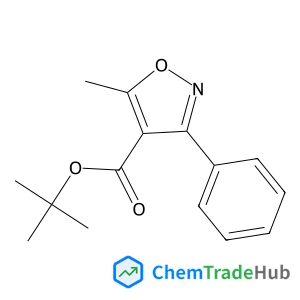
2-Methyl-2-propanyl 5-methyl-3-phenyl-1,2-oxazole-4-carboxylate
CAS Number:
211429-79-7
Molecular Formula:
C15H17NO3
![N-{3-[Benzyl(methyl)amino]propyl}-9-chloro-5,6,7,8-tetrahydro-2-acridinecarboxamide structure](https://static.chemtradehub.com/structs/142/1426944-49-1-1e4c.webp "N-{3-[Benzyl(methyl)amino]propyl}-9-chloro-5,6,7,8-tetrahydro-2-acridinecarboxamide structure")
N-{3-[Benzyl(methyl)amino]propyl}-9-chloro-5,6,7,8-tetrahydro-2-acridinecarboxamide
CAS Number:
1426944-49-1
Molecular Formula:
C25H28ClN3O
Recommended Suppliers





Disclaimer
This page provides academic journal information for reference and research purposes only. We are not affiliated with any journal publishers and do not handle publication submissions. For publication-related inquiries, please contact the respective journal publishers directly.
If you notice any inaccuracies in the information displayed, please contact us at support@chemtradehub.com. We will promptly review and address your concerns.