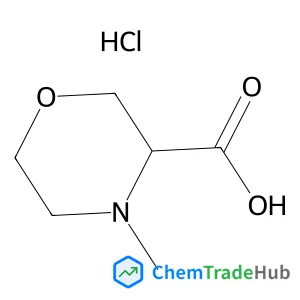
4-Methyl-3-morpholinecarboxylic acid hydrochloride (1:1)
CAS Number:
1240518-90-4
Molecular Formula:
C6H12ClNO3
Serena Cozzolino, Rosario Oliva, Giuseppe Graziano, Pompea Del Vecchio
DSC measurements on RNase A at neutral pH show that five stabilizing agents, namely trimethylamine N-oxide, glucose, sucrose, betaine and sodium sulfate, can counteract the destabilizing action of urea, sodium perchlorate, guanidinium chloride and guanidinium thiocyanate. This is an important finding inferring that counteraction has a common physical origin, regardless of the chemical differences among the stabilizing agents and among the destabilizing ones. A rationalization is provided grounded on the following line of reasoning: (a) the decrease in solvent-excluded volume effect is the main stabilizing contribution of the native state; (b) its magnitude increases on increasing the density of the aqueous solution; (c) the density increases significantly in the ternary solutions containing water, a stabilizing agent and a destabilizing one, as indicated by the present experimental data.
Toshifumi Satoh, Naoki Nishikawa, Daisuke Kawato, Daichi Suemasa, Sungmin Jung, Young Yong Kim, Moonhor Ree, Toyoji Kakuchi
DOI: 10.1039/C3PY00985H
Pranabesh Dutta, Hanok Park, Woo-Hyung Lee, In Nam Kang, Soo-Hyoung Lee
DOI: 10.1039/C3PY00911D
Huiying Liao, Ke Zhang, Gangsheng Tong, Guyu Xiao, Deyue Yan
DOI: 10.1039/C3PY00821E
Dahlia N. Amato, Gregory A. Strange, John P. Swanson, Anton D. Chavez, Suzanne E. Roy, Kim L. Varney, Craig A. Machado, Douglas V. Amato, Philip J. Costanzo
DOI: 10.1039/C3PY01024D
Hartmut Komber, Stefan Müllers, Alexander Held, Michael Walter
DOI: 10.1039/C3PY00853C
Ying-Hsuan Chou, Sanae Takasugi, Raita Goseki, Takashi Ishizone, Wen-Chang Chen
DOI: 10.1039/C3PY01124K
Cen Zhou, Jia Tian, Ji-Liang Wang, Dan-Wei Zhang, Xin Zhao, Yi Liu, Zhan-Ting Li
DOI: 10.1039/C3PY01006F
Xianwen Lou, Joost L. J. van Dongen, Yasmine Braeken, Jeroen Brebels, Gijs W. P. van Pruissen, Weiwei Li, Martijn M. Wienk, René A. J. Janssen
DOI: 10.1039/C3PY00933E
Qijing Chen, Yuanyuan Xu, Xueteng Cao, Lianjie Qin, Zesheng An
DOI: 10.1039/C3PY00942D
4-Nitrophenyl phosphate disodium salt hexahydrate is primarily used as a substra...
2-(Trifluoromethyl)-1,3-oxazole-4-carboxylic Acid (CAS: 1060816-01-4) is widely ...
2-Fluoro-4-biphenylcarboxylic acid should be stored in a cool, dry place at room...
Prednisolone-21-Carboxylic Acid is primarily used in the pharmaceutical industry...
4-(Hydrazinomethyl)-1,2,3-benzenetriol (CAS: 3614-72-0) should be stored in a co...
4-Amino-1-methyl-1H-pyrazole-5-carboxylic acid hydrochloride (CAS: 92534-70-8) i...
Dehydropachymic acid (CAS: 77012-31-8) is regulated by various agencies. It fall...
The market and research trends for 6-[(2,2-Dimethylpropanoyl)amino]nicotinic aci...
1,10-Phenanthroline-2,9-dicarbaldehyde should be stored in a cool, dry place awa...
5-Carbamoyl-11-oxo-10,11-dihydro-5H-dibenzo[b,f]azepin-10-yl acetate can be synt...

Physical Chemistry Chemical Physics (PCCP) is an international journal co-owned by 19 physical chemistry and physics societies from around the world. This journal publishes original, cutting-edge research in physical chemistry, chemical physics and biophysical chemistry. To be suitable for publication in PCCP, articles must include significant innovation and/or insight into physical chemistry; this is the most important criterion that reviewers and Editors will judge against when evaluating submissions. The journal has a broad scope and welcomes contributions spanning experiment, theory, computation and data science. Topical coverage includes spectroscopy, dynamics, kinetics, statistical mechanics, thermodynamics, electrochemistry, catalysis, surface science, quantum mechanics, quantum computing and machine learning. Interdisciplinary research areas such as polymers and soft matter, materials, nanoscience, energy, surfaces/interfaces, and biophysical chemistry are welcomed if they demonstrate significant innovation and/or insight into physical chemistry. Joined experimental/theoretical studies are particularly appreciated when complementary and based on up-to-date approaches.