



Defect generation in TiO2 nanotube anodes via heat treatment in various atmospheres for lithium-ion batteries
Literature Information
Publication Date
2018-08-16
DOI
10.1039/C8CP04368J
Impact Factor
3.676
Authors
Andreas I. Savva, Kassiopeia A. Smith, Matthew Lawson, Sterling R. Croft, Ariel E. Weltner, Chris D. Jones, Hailey Bull, Paul J. Simmonds, Lan Li, Hui Xiong
View Original
Abstract
In this paper, ordered TiO2 nanotubes were grown on a Ti substrate via electrochemical anodization and subsequently annealed at 450 °C for 4 h under various atmospheres to create different point defects. Oxygen-deficient environments such as Ar and N2 were used to develop oxygen vacancies, while a water vapor (WV) atmosphere was used to generate titanium vacancies. Computational models by density functional theory predicted that the presence of oxygen vacancies would cause electronic conductivity to increase, while the presence of Ti vacancies could lead to decreased conductivity. The predictions were confirmed by two-point electrical conductivity measurements and Mott–Schottky analysis. Raman spectroscopy was also conducted to confirm the presence of defects. The annealed samples were then evaluated as anodes in lithium-ion batteries. The oxygen-deficient samples had an improvement in capacity by 10% and 25% for Ar- and N2-treated samples, respectively, while the WV-treated sample displayed a capacity increase of 24% compared to the stoichiometric control sample (annealed in O2). Electrochemical impedance spectroscopy studies revealed that the WV-treated sample's increased capacity was a consequence of its higher Li diffusivity. The results suggest that balanced electrical and ionic conductivity in nanostructured metal oxide anodes can be tuned through defect generation using heat treatments in various atmospheres for improved electrochemical properties.
Recommended Journals

Russian Chemical Bulletin

Journal of Natural Medicines

Russian Journal of Bioorganic Chemistry

Russian Journal of Coordination Chemistry

Journal of Saudi Chemical Society

Chemistry Education Research and Practice

Chemical Communications

Organic Process Research & Development

Journal of Peptide Science

Nature Medicine
Related Literature
Chemically recyclable alternating copolymers with low polydispersity from conjugated/aromatic aldehydes and vinyl ethers: selective degradation to another monomer at ambient temperature
Yasushi Ishido, Arihiro Kanazawa, Shokyoku Kanaoka, Sadahito Aoshima
2013-08-12
Communication
DOI: 10.1039/C3PY00842H
One pot synthesis and characterization of novel poly(ether ester) mutiblock copolymers containing poly(tetramethylene oxide) and poly(ethylene terephthalate)
Weichun Huang, Yingbo Wan, Jianying Chen, Qiaozhen Xu, Xiaohong Li, Xiaoming Yang, Yaowen Li, Yingfeng Tu
2013-10-18
Paper
DOI: 10.1039/C3PY00932G
Combined in situ infrared and mass spectrometric analysis of high-energy heavy ion induced degradation of polyvinyl polymers
Wolfgang Ensinger
2013-10-01
Paper
DOI: 10.1039/C3PY01062G
Synthesis and evaluation of thermally-responsive coatings based upon Diels–Alder chemistry and renewable materials
Dahlia N. Amato, Gregory A. Strange, John P. Swanson, Anton D. Chavez, Suzanne E. Roy, Kim L. Varney, Craig A. Machado, Douglas V. Amato, Philip J. Costanzo
2013-08-20
Paper
DOI: 10.1039/C3PY01024D
Nitroxide mediated polymerization of methacrylates at moderate temperature
Christophe Detrembleur, Christine Jérôme, Julien De Winter, Pascal Gerbaux, Jean-Louis Clément, Yohann Guillaneuf, Didier Gigmes
2013-09-17
Communication
DOI: 10.1039/C3PY01133J
Precise evaluation of the block copolymer nanoparticle growth in polymerization-induced self-assembly under dispersion conditions
Yang Su, Xin Xiao, Shentong Li, Meihan Dan, Xiaohui Wang, Wangqing Zhang
2013-08-30
Paper
DOI: 10.1039/C3PY00995E
Salt-induced reentrant hydrogel of poly(ethylene glycol)–poly(lactide-co-glycolide) block copolymers
Ting Li, Tianyuan Ci, Liang Chen, Lin Yu, Jiandong Ding
2013-09-26
Paper
DOI: 10.1039/C3PY01107K
Facile preparation and cell imaging applications of fluorescent organic nanoparticles that combine AIE dye and ring-opening polymerization
Xiqi Zhang, Xiaoyong Zhang, Bin Yang, Junfeng Hui, Meiying Liu, Zhenguo Chi, Siwei Liu, Jiarui Xu, Yen Wei
2013-09-10
Communication
DOI: 10.1039/C3PY01143G
You might also like
Compound Q&A
What are the main uses of 4-Nitrophenyl phosphate disodium salt hexahydrate (CAS: 333338-18-4)?
4-Nitrophenyl phosphate disodium salt hexahydrate is primarily used as a substra...
333338-18-44-Nitrophenyl phosph...
Compound Q&A
What are the main uses of 2-(Trifluoromethyl)-1,3-oxazole-4-carboxylic Acid (CAS: 1060816-01-4)?
2-(Trifluoromethyl)-1,3-oxazole-4-carboxylic Acid (CAS: 1060816-01-4) is widely ...
1060816-01-42-(Trifluoromethyl)-...
Compound Q&A
How should 2-Fluoro-4-biphenylcarboxylic acid (CAS: 137045-30-8) be stored?
2-Fluoro-4-biphenylcarboxylic acid should be stored in a cool, dry place at room...
137045-30-82-Fluoro-4-biphenylc...
Compound Q&A
What industries use Prednisolone-21-Carboxylic Acid (CAS: 61549-70-0)?
Prednisolone-21-Carboxylic Acid is primarily used in the pharmaceutical industry...
61549-70-0Prednisolone-21-Carb...
Compound Q&A
How should 4-(Hydrazinomethyl)-1,2,3-benzenetriol (CAS: 3614-72-0) be stored?
4-(Hydrazinomethyl)-1,2,3-benzenetriol (CAS: 3614-72-0) should be stored in a co...
3614-72-04-(Hydrazinomethyl)-...
Compound Q&A
What industries use 4-Amino-1-methyl-1H-pyrazole-5-carboxylic acid hydrochloride (CAS: 92534-70-8)?
4-Amino-1-methyl-1H-pyrazole-5-carboxylic acid hydrochloride (CAS: 92534-70-8) i...
92534-70-84-Amino-1-methyl-1H-...
Compound Q&A
What regulatory guidelines apply to dehydropachymic acid (CAS: 77012-31-8)?
Dehydropachymic acid (CAS: 77012-31-8) is regulated by various agencies. It fall...
77012-31-8Dehydropachymic acid
Compound Q&A
What is the market or research trend for 6-[(2,2-Dimethylpropanoyl)amino]nicotinic acid (CAS: 898561-66-5)?
The market and research trends for 6-[(2,2-Dimethylpropanoyl)amino]nicotinic aci...
898561-66-56-[(2,2-Dimethylprop...
Compound Q&A
How should 1,10-Phenanthroline-2,9-dicarbaldehyde (CAS: 57709-62-3) be stored?
1,10-Phenanthroline-2,9-dicarbaldehyde should be stored in a cool, dry place awa...
57709-62-31,10-Phenanthroline-...
Compound Q&A
How is 5-Carbamoyl-11-oxo-10,11-dihydro-5H-dibenzo[b,f]azepin-10-yl acetate (CAS: 113952-21-9) typically synthesized?
5-Carbamoyl-11-oxo-10,11-dihydro-5H-dibenzo[b,f]azepin-10-yl acetate can be synt...
113952-21-95-Carbamoyl-11-oxo-1...
Source Journal
Physical Chemistry Chemical Physics

CiteScore:
5.5
Self-citation Rate:
10.3%
Articles per Year:
3036
Physical Chemistry Chemical Physics (PCCP) is an international journal co-owned by 19 physical chemistry and physics societies from around the world. This journal publishes original, cutting-edge research in physical chemistry, chemical physics and biophysical chemistry. To be suitable for publication in PCCP, articles must include significant innovation and/or insight into physical chemistry; this is the most important criterion that reviewers and Editors will judge against when evaluating submissions. The journal has a broad scope and welcomes contributions spanning experiment, theory, computation and data science. Topical coverage includes spectroscopy, dynamics, kinetics, statistical mechanics, thermodynamics, electrochemistry, catalysis, surface science, quantum mechanics, quantum computing and machine learning. Interdisciplinary research areas such as polymers and soft matter, materials, nanoscience, energy, surfaces/interfaces, and biophysical chemistry are welcomed if they demonstrate significant innovation and/or insight into physical chemistry. Joined experimental/theoretical studies are particularly appreciated when complementary and based on up-to-date approaches.
Recommended Compounds
![S-[2,3-Bis(palmitoyloxy)propyl]-N-[(9H-fluoren-9-ylmethoxy)(hydroxy)methylene]cysteine structure](https://static.chemtradehub.com/structs/210/210532-98-2-f6a7.webp "S-[2,3-Bis(palmitoyloxy)propyl]-N-[(9H-fluoren-9-ylmethoxy)(hydroxy)methylene]cysteine structure")
S-[2,3-Bis(palmitoyloxy)propyl]-N-[(9H-fluoren-9-ylmethoxy)(hydroxy)methylene]cysteine
CAS Number:
210532-98-2
Molecular Formula:
C53H83NO8S
![1-[(4-Methylphenyl)sulfonyl]-3-(4,4,5,5-tetramethyl-1,3,2-dioxaborolan-2-yl)-1H-pyrrolo[2,3-b]pyridine-5-carbonitrile structure](https://static.chemtradehub.com/structs/143/1434747-57-5-fc0d.webp "1-[(4-Methylphenyl)sulfonyl]-3-(4,4,5,5-tetramethyl-1,3,2-dioxaborolan-2-yl)-1H-pyrrolo[2,3-b]pyridine-5-carbonitrile structure")
1-[(4-Methylphenyl)sulfonyl]-3-(4,4,5,5-tetramethyl-1,3,2-dioxaborolan-2-yl)-1H-pyrrolo[2,3-b]pyridine-5-carbonitrile
CAS Number:
1434747-57-5
Molecular Formula:
C21H22BN3O4S
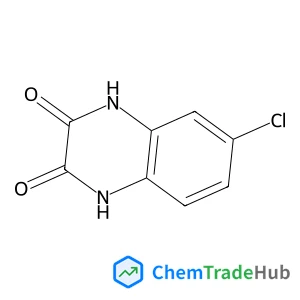
6-CHLORO-2,3-DIOXO-1,2,3,4-TETRAHYDROQUINOXALINE, 97
CAS Number:
169-14-2
Molecular Formula:
C8H5ClN2O2
Recommended Suppliers




Disclaimer
This page provides academic journal information for reference and research purposes only. We are not affiliated with any journal publishers and do not handle publication submissions. For publication-related inquiries, please contact the respective journal publishers directly.
If you notice any inaccuracies in the information displayed, please contact us at support@chemtradehub.com. We will promptly review and address your concerns.