













Ab initio paramagnetic NMR shifts via point-dipole approximation in a large magnetic-anisotropy Co(ii) complex
Literature Information
Publication Date
2018-08-20
DOI
10.1039/C8CP04123G
Impact Factor
3.676
Authors
Jiří Mareš, Juha Vaara
View Original
Abstract
Transition metal complexes can possess a large magnetic susceptibility anisotropy, facilitating applications such as paramagnetic tags or shift agents in nuclear magnetic resonance (NMR) spectroscopy. Due to its g-shift and zero-field splitting (ZFS) we demonstrate on a Co(II) clathrochelate with an aliphatic 16-carbon chain, a modern approach for ab initio calculation of paramagnetic susceptibility. Due to its large anisotropy, large linear dimension but relatively low number of atoms, the chosen complex is especially well-suited for testing the long-range point-dipole approximation (PDA) for the pseudocontact shifts (PCSs) of paramagnetic NMR. A static structure of the complex is used to compare the limiting long-distance PDA with full first-principles quantum-mechanical calculation. A non-symmetric formula for the magnetic susceptibility tensor is necessary to be consistent with the latter. Comparison with experimental shifts is performed by conformational averaging over the chain dynamics using Monte Carlo simulation. We observe satisfactory accuracy from the rudimentary simulation and, more importantly, demonstrate the fast applicability of the ab initio PDA.
Recommended Journals
Related Literature
Synthesis characterization and bulk-heterojunction photovoltaic applications of new naphtho[1,2-b:5,6-b′]dithiophene–quinoxaline containing narrow band gap D–A conjugated polymers
Pranabesh Dutta, Hanok Park, Woo-Hyung Lee, In Nam Kang, Soo-Hyoung Lee
2013-07-31
Paper
DOI: 10.1039/C3PY00911D
Versatile injectable supramolecular hydrogels containing drug loaded micelles for delivery of various drugs
Zhijia Liu, Ping Yao
2013-10-14
Paper
DOI: 10.1039/C3PY01083J
Synthesis and volume phase transition of concanavalin A-based glucose-responsive nanogels
Ting Ye, Suting Yan, Yumei Hu, Li Ding, Weitai Wu
2013-08-07
Paper
DOI: 10.1039/C3PY00778B
Nitroxide mediated polymerization of methacrylates at moderate temperature
Christophe Detrembleur, Christine Jérôme, Julien De Winter, Pascal Gerbaux, Jean-Louis Clément, Yohann Guillaneuf, Didier Gigmes
2013-09-17
Communication
DOI: 10.1039/C3PY01133J
Microporous organic polymers with acetal linkages: synthesis, characterization, and gas sorption properties
Li-Min Zhang, Tao Wang, Bao-Hang Han
2013-08-22
Paper
DOI: 10.1039/C3PY00854A
Silver-decorated biodegradable polymer vesicles with excellent antibacterial efficacy
Kaidian Zou, Qiuming Liu, Jing Chen, Jianzhong Du
2013-08-19
Paper
DOI: 10.1039/C3PY00966A
Combining surface topography with polymer chemistry: exploring new interfacial biological phenomena
Dan Li, Qing Zheng, Yanwei Wang, Hong Chen
2013-07-29
Review Article
DOI: 10.1039/C3PY00739A
Fabrication of aggregation induced emission dye-based fluorescent organic nanoparticles via emulsion polymerization and their cell imaging applications
Xiqi Zhang, Bin Yang, Meiying Liu, Wanyun Liu, Yiwang Chen, Yen Wei
2013-08-20
Paper
DOI: 10.1039/C3PY00984J
Synthesis of well-defined amphiphilic branched polyethylene-graft-poly (N-isopropylacrylamide) copolymers by coordination copolymerization in tandem with RAFT polymerization and their self-assembled vesicles
Ye Zhao, Haiyang Gao, Guodong Liang, Fangming Zhu, Qing Wu
2013-09-27
Paper
DOI: 10.1039/C3PY01289A
Copper-mediated living radical polymerization (SET-LRP) of lipophilic monomers from multi-functional initiators: reducing star–star coupling at high molecular weights and high monomer conversions
Christopher Waldron, Athina Anastasaki, Ronan McHale, Paul Wilson, Zaidong Li, Tim Smith, David M. Haddleton
2013-10-01
Paper
DOI: 10.1039/C3PY01241G
You might also like
Compound Q&A
What are the main uses of 4-Nitrophenyl phosphate disodium salt hexahydrate (CAS: 333338-18-4)?
4-Nitrophenyl phosphate disodium salt hexahydrate is primarily used as a substra...
333338-18-44-Nitrophenyl phosph...
Compound Q&A
What are the main uses of 2-(Trifluoromethyl)-1,3-oxazole-4-carboxylic Acid (CAS: 1060816-01-4)?
2-(Trifluoromethyl)-1,3-oxazole-4-carboxylic Acid (CAS: 1060816-01-4) is widely ...
1060816-01-42-(Trifluoromethyl)-...
Compound Q&A
How should 2-Fluoro-4-biphenylcarboxylic acid (CAS: 137045-30-8) be stored?
2-Fluoro-4-biphenylcarboxylic acid should be stored in a cool, dry place at room...
137045-30-82-Fluoro-4-biphenylc...
Compound Q&A
What industries use Prednisolone-21-Carboxylic Acid (CAS: 61549-70-0)?
Prednisolone-21-Carboxylic Acid is primarily used in the pharmaceutical industry...
61549-70-0Prednisolone-21-Carb...
Compound Q&A
How should 4-(Hydrazinomethyl)-1,2,3-benzenetriol (CAS: 3614-72-0) be stored?
4-(Hydrazinomethyl)-1,2,3-benzenetriol (CAS: 3614-72-0) should be stored in a co...
3614-72-04-(Hydrazinomethyl)-...
Compound Q&A
What industries use 4-Amino-1-methyl-1H-pyrazole-5-carboxylic acid hydrochloride (CAS: 92534-70-8)?
4-Amino-1-methyl-1H-pyrazole-5-carboxylic acid hydrochloride (CAS: 92534-70-8) i...
92534-70-84-Amino-1-methyl-1H-...
Compound Q&A
What regulatory guidelines apply to dehydropachymic acid (CAS: 77012-31-8)?
Dehydropachymic acid (CAS: 77012-31-8) is regulated by various agencies. It fall...
77012-31-8Dehydropachymic acid
Compound Q&A
What is the market or research trend for 6-[(2,2-Dimethylpropanoyl)amino]nicotinic acid (CAS: 898561-66-5)?
The market and research trends for 6-[(2,2-Dimethylpropanoyl)amino]nicotinic aci...
898561-66-56-[(2,2-Dimethylprop...
Compound Q&A
How should 1,10-Phenanthroline-2,9-dicarbaldehyde (CAS: 57709-62-3) be stored?
1,10-Phenanthroline-2,9-dicarbaldehyde should be stored in a cool, dry place awa...
57709-62-31,10-Phenanthroline-...
Compound Q&A
How is 5-Carbamoyl-11-oxo-10,11-dihydro-5H-dibenzo[b,f]azepin-10-yl acetate (CAS: 113952-21-9) typically synthesized?
5-Carbamoyl-11-oxo-10,11-dihydro-5H-dibenzo[b,f]azepin-10-yl acetate can be synt...
113952-21-95-Carbamoyl-11-oxo-1...
Source Journal
Physical Chemistry Chemical Physics

CiteScore:
5.5
Self-citation Rate:
10.3%
Articles per Year:
3036
Physical Chemistry Chemical Physics (PCCP) is an international journal co-owned by 19 physical chemistry and physics societies from around the world. This journal publishes original, cutting-edge research in physical chemistry, chemical physics and biophysical chemistry. To be suitable for publication in PCCP, articles must include significant innovation and/or insight into physical chemistry; this is the most important criterion that reviewers and Editors will judge against when evaluating submissions. The journal has a broad scope and welcomes contributions spanning experiment, theory, computation and data science. Topical coverage includes spectroscopy, dynamics, kinetics, statistical mechanics, thermodynamics, electrochemistry, catalysis, surface science, quantum mechanics, quantum computing and machine learning. Interdisciplinary research areas such as polymers and soft matter, materials, nanoscience, energy, surfaces/interfaces, and biophysical chemistry are welcomed if they demonstrate significant innovation and/or insight into physical chemistry. Joined experimental/theoretical studies are particularly appreciated when complementary and based on up-to-date approaches.
Recommended Compounds
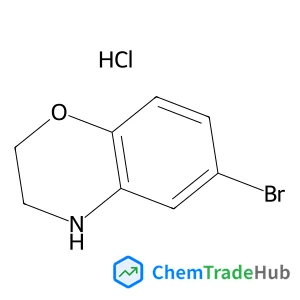
6-Bromo-3,4-dihydro-2H-1,4-benzoxazine hydrochloride (1:1)
CAS Number:
1260803-10-8
Molecular Formula:
C8H9BrClNO


cis-3-Amino-1-(trifluoromethyl)cyclobutanol hydrochloride (1:1)
CAS Number:
1408075-16-0
Molecular Formula:
C5H9ClF3NO
Recommended Suppliers






Disclaimer
This page provides academic journal information for reference and research purposes only. We are not affiliated with any journal publishers and do not handle publication submissions. For publication-related inquiries, please contact the respective journal publishers directly.
If you notice any inaccuracies in the information displayed, please contact us at support@chemtradehub.com. We will promptly review and address your concerns.