


The effects of surface topography of nanostructure arrays on cell adhesion
Literature Information
Publication Date
2018-08-16
DOI
10.1039/C8CP03538E
Impact Factor
3.676
Authors
Jing Zhou, Xiaowei Zhang, Jizheng Sun, Zechun Dang, Jinqi Li, Xinlei Li, Tongsheng Chen
View Original
Abstract
Nanostructure arrays have drawn much attention and are promising as new biomaterials in the field of biomedicine. In recent years, numerous experimental studies on the cell behavior of nanostructured arrays (NSs) have been published, describing a wide variety of experimental results. But there are only a few theoretical analyses that elucidate the mechanisms of interactions between cells and nanostructures. Here we present a quantitative thermodynamic model to elucidate the effects of surface topography of nanostructure arrays on cell adhesion. Based on the established model, we studied the equilibrium state of cell adhesion by analyzing the change in free energy during the adhesion process. Theoretical results showed that cell adhesion mode is actually determined by the balance between adhesion energy and deformation energy of the cell membrane. According to the calculated results, a phase diagram of the cell adhesion has been constructed, which can clarify the interrelated effects of the radius and surface distribution density of nanopillars. We can identify the relation between the surface topography of nanostructure arrays and the cell adhesion mode from the phase.
Recommended Journals

Drug Discovery Today

Journal of Peptide Science

Journal of Natural Medicines

Current Opinion in Colloid & Interface Science

Russian Journal of Coordination Chemistry

Chemical Communications

Russian Chemical Bulletin

Russian Journal of Applied Chemistry

Journal of Saudi Chemical Society

Russian Journal of General Chemistry
Related Literature
Acyl/aroylperoxyl radicals: a comparative study of the reactivity of peroxyl radicals resulting from the α-cleavage of ketones
Ali El-Agamey, David J. McGarvey
2002-03-22
Paper
DOI: 10.1039/B109309F
Correlation functions of singly and multiply scattered light analysed by the 3-D cross-correlation technique
2002-04-18
Paper
DOI: 10.1039/B109479C
Probing the electronic structure of polynuclear metal clusters with total electron spin S > 1/2 and significant zero-field splitting; Application to the clusters of the nitrogenase MoFe-protein
Jan Petersen, David J. Lowe
2002-04-30
Paper
DOI: 10.1039/B110486C
Oscillatory kinetics of phase separation in a binary mixture under constant heating
J. Vollmer, A. J. Wagner
2002-03-21
Paper
DOI: 10.1039/B110256G
XPS, XANES and EXAFS investigations of CuO/ZnO/Al2O3/ZrO2 mixed oxidecatalysts
Chinnakonda S. Gopinath, H. Yoshida, T. Hattori
2002-04-18
Paper
DOI: 10.1039/B109766K
Statistical theory of cluster cooling in rare gas Part II. The PEMET model
Sture Nordholm, Hongrei Li
2002-04-09
Paper
DOI: 10.1039/B108996J
Interaction between probe molecules and zeolites. Part I: Pair-wise addition scheme applied to the calculation of the interaction energy of CO and N2 adsorbed in Na4Ca4A
A. V. Larin, L. Leherte, D. P. Vercauteren
2002-04-29
Paper
DOI: 10.1039/B107243A
Dynamic channels of a porous coordination polymer responding to external stimuli
2002-04-16
Paper
DOI: 10.1039/B110899A
Comment on “Application of Gibbs ensemble methods to reaction kinetics in non-ideal systems”, by D. G. Hall, J. Chem. Soc., Faraday Trans. 2, 1986, 82, 1305
2002-04-17
Comment
DOI: 10.1039/B107802J
Rate constants for the reactions of chlorine atoms with a series of unsaturated aldehydes and ketones at 298 K: structure and reactivity
Weihong Wang, Michael J. Ezell, Alisa A. Ezell, Gennady Soskin, Barbara J. Finlayson-Pitts
2002-04-18
Paper
DOI: 10.1039/B111557J
You might also like
Compound Q&A
What precautions should be taken when handling 4-Methyl-6-(trifluoromethyl)quinoline (CAS: 40716-16-3)?
When handling 4-Methyl-6-(trifluoromethyl)quinoline (CAS: 40716-16-3), safety go...
40716-16-34-Methyl-6-(trifluor...
Compound Q&A
What is 4-(3,5-Difluorophenyl)aniline (CAS: 405058-00-6)?
4-(3,5-Difluorophenyl)aniline is an aromatic organic compound with the CAS numbe...
405058-00-64-(3,5-Difluoropheny...
Compound Q&A
How is 5-{[4-(Trifluoromethyl)phenyl]sulfanyl}-1,2,3-thiadiazole-4-carboxylic acid (CAS: 338982-07-3) typically synthesized?
5-{[4-(Trifluoromethyl)phenyl]sulfanyl}-1,2,3-thiadiazole-4-carboxylic acid can ...
338982-07-35-{[4-(Trifluorometh...
Compound Q&A
What is the market or research trend for 4-Benzylaniline hydrochloride (CAS: 6317-57-3)?
The market for 4-Benzylaniline hydrochloride (CAS: 6317-57-3) is steadily growin...
6317-57-34-Benzylaniline hydr...
Compound Q&A
Is [3-(Diethylsulfamoyl)phenyl]boronic acid (CAS: 871329-58-7) safe?
[3-(Diethylsulfamoyl)phenyl]boronic acid is generally considered safe when handl...
871329-58-7[3-(Diethylsulfamoyl...
Compound Q&A
What are the main uses of 3-Bromo-2,5-dimethoxyaniline (CAS: 115929-62-9)?
3-Bromo-2,5-dimethoxyaniline is mainly used in the pharmaceutical and chemical i...
115929-62-93-Bromo-2,5-dimethox...
Compound Q&A
What regulatory guidelines apply to N-Methyl-1-(5-methyl-1H-indol-3-yl)methanamine (CAS: 915922-67-7)?
N-Methyl-1-(5-methyl-1H-indol-3-yl)methanamine (CAS: 915922-67-7) is subject to ...
915922-67-7N-Methyl-1-(5-methyl...
Compound Q&A
What industries use Carbamic acid, N-[(5S)-5,6-diamino-6-oxohexyl]-, 1,1-dimethylethyl ester (CAS: 24828-96-4)?
This compound is primarily used in the pharmaceutical industry for the synthesis...
24828-96-4Carbamic acid, N-[(5...
Compound Q&A
How should 2-Methyl-2-propanyl [(1S,3R)-3-aminocyclohexyl]carbamate (CAS: 1298101-47-9) be stored?
2-Methyl-2-propanyl [(1S,3R)-3-aminocyclohexyl]carbamate (CAS: 1298101-47-9) sho...
1298101-47-92-Methyl-2-propanyl ...
Compound Q&A
What industries use Ethyl 2-bromo-4,4,4-trifluorobutanoate (CAS: 367-33-9)?
Ethyl 2-bromo-4,4,4-trifluorobutanoate (CAS: 367-33-9) is utilized in the pharma...
367-33-9Ethyl 2-bromo-4,4,4-...
Source Journal
Physical Chemistry Chemical Physics

CiteScore:
5.5
Self-citation Rate:
10.3%
Articles per Year:
3036
Physical Chemistry Chemical Physics (PCCP) is an international journal co-owned by 19 physical chemistry and physics societies from around the world. This journal publishes original, cutting-edge research in physical chemistry, chemical physics and biophysical chemistry. To be suitable for publication in PCCP, articles must include significant innovation and/or insight into physical chemistry; this is the most important criterion that reviewers and Editors will judge against when evaluating submissions. The journal has a broad scope and welcomes contributions spanning experiment, theory, computation and data science. Topical coverage includes spectroscopy, dynamics, kinetics, statistical mechanics, thermodynamics, electrochemistry, catalysis, surface science, quantum mechanics, quantum computing and machine learning. Interdisciplinary research areas such as polymers and soft matter, materials, nanoscience, energy, surfaces/interfaces, and biophysical chemistry are welcomed if they demonstrate significant innovation and/or insight into physical chemistry. Joined experimental/theoretical studies are particularly appreciated when complementary and based on up-to-date approaches.
Recommended Compounds
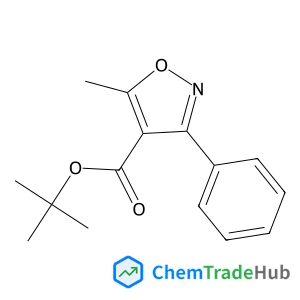
2-Methyl-2-propanyl 5-methyl-3-phenyl-1,2-oxazole-4-carboxylate
CAS Number:
211429-79-7
Molecular Formula:
C15H17NO3
Recommended Suppliers






Disclaimer
This page provides academic journal information for reference and research purposes only. We are not affiliated with any journal publishers and do not handle publication submissions. For publication-related inquiries, please contact the respective journal publishers directly.
If you notice any inaccuracies in the information displayed, please contact us at support@chemtradehub.com. We will promptly review and address your concerns.