


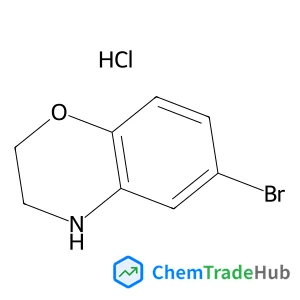
6-Bromo-3,4-dihydro-2H-1,4-benzoxazine hydrochloride (1:1)
CAS Number:
1260803-10-8
Molecular Formula:
C8H9BrClNO
Rositsa Yakimova
High-performance optical detection of toxic heavy metals by using graphene quantum dots (GQDs) requires a strong interaction between the metals and GQDs, which can be reached through a functionalization/immobilization procedure or doping effect. However, commonly used surface activation approaches induce toxicity into the analysis system and, therefore, are ineligible from the environmental point of view. Here, we show that artificial creation of vacancy-type defects in GQDs can be a helpful means of intentional control of the active sites available for reaction with cadmium (Cd), mercury (Hg) and lead (Pb). Using restricted density functional theory (DFT) and time-dependent DFT (TD-DFT) methods, we predict the effect of vacancy complexes not previously studied to describe the binding ability of GQDs towards metal adsorbates. We also show that the interband absorption in closed-shell GQDs complexed with Cd, Hg and Pb is strongly dependent on the vacancy type and can be efficiently tuned to attain the desired coloration of the analysis system. The results suggest that the vacancy defects play an important role in governing the hybridization between locally-excited (LE) and charge-transfer (CT) states of the GQDs. Based on the molecular orbital analysis and in-depth knowledge of excited states, the mechanisms underlying the interband absorption are discussed.

Journal of Natural Medicines

Nature Medicine

Current Opinion in Solid State & Materials Science

Journal of Peptide Science

Chemistry Education Research and Practice

Russian Journal of Organic Chemistry

Russian Chemical Bulletin

Russian Journal of General Chemistry

Russian Journal of Bioorganic Chemistry

Journal of Saudi Chemical Society
Jessalyn Cortese, Corinne Soulié-Ziakovic, Ludwik Leibler
DOI: 10.1039/C3PY00638G
Yasushi Ishido, Arihiro Kanazawa, Shokyoku Kanaoka, Sadahito Aoshima
DOI: 10.1039/C3PY00842H
Yunfeng Yan, Daniel J. Siegwart
DOI: 10.1039/C3PY01474F
Xuelang Miao, Wei Zhu, Zhengbiao Zhang, Wei Zhang, Xiulin Zhu, Jian Zhu
DOI: 10.1039/C3PY00913K
Bin Liu, Lingfeng Li, Cuiling Lin, Jingdan Zhou, Zhexin Zhu, Hongyao Xu, Huayu Qiu, Shouchun Yin
DOI: 10.1039/C3PY01021J
L. Sambe, F. Stoffelbach, J. Lyskawa, F. Delattre, M. Bria, F. X. Sauvage, M. Sliwa, V. Humblot, B. Charleux, G. Cooke, P. Woisel
DOI: 10.1039/C3PY01093G
Christophe Detrembleur, Marie Hurtgen, Antoine Debuigne, Marie-Claire De Pauw-Gillet, Stéphane Mornet, Etienne Duguet, Christine Jérôme
DOI: 10.1039/C3PY00839H
Huiying Liao, Ke Zhang, Gangsheng Tong, Guyu Xiao, Deyue Yan
DOI: 10.1039/C3PY00821E
Pranabesh Dutta, Hanok Park, Woo-Hyung Lee, In Nam Kang, Soo-Hyoung Lee
DOI: 10.1039/C3PY00911D
4-Nitrophenyl phosphate disodium salt hexahydrate is primarily used as a substra...
2-(Trifluoromethyl)-1,3-oxazole-4-carboxylic Acid (CAS: 1060816-01-4) is widely ...
2-Fluoro-4-biphenylcarboxylic acid should be stored in a cool, dry place at room...
Prednisolone-21-Carboxylic Acid is primarily used in the pharmaceutical industry...
4-(Hydrazinomethyl)-1,2,3-benzenetriol (CAS: 3614-72-0) should be stored in a co...
4-Amino-1-methyl-1H-pyrazole-5-carboxylic acid hydrochloride (CAS: 92534-70-8) i...
Dehydropachymic acid (CAS: 77012-31-8) is regulated by various agencies. It fall...
The market and research trends for 6-[(2,2-Dimethylpropanoyl)amino]nicotinic aci...
1,10-Phenanthroline-2,9-dicarbaldehyde should be stored in a cool, dry place awa...
5-Carbamoyl-11-oxo-10,11-dihydro-5H-dibenzo[b,f]azepin-10-yl acetate can be synt...

Physical Chemistry Chemical Physics (PCCP) is an international journal co-owned by 19 physical chemistry and physics societies from around the world. This journal publishes original, cutting-edge research in physical chemistry, chemical physics and biophysical chemistry. To be suitable for publication in PCCP, articles must include significant innovation and/or insight into physical chemistry; this is the most important criterion that reviewers and Editors will judge against when evaluating submissions. The journal has a broad scope and welcomes contributions spanning experiment, theory, computation and data science. Topical coverage includes spectroscopy, dynamics, kinetics, statistical mechanics, thermodynamics, electrochemistry, catalysis, surface science, quantum mechanics, quantum computing and machine learning. Interdisciplinary research areas such as polymers and soft matter, materials, nanoscience, energy, surfaces/interfaces, and biophysical chemistry are welcomed if they demonstrate significant innovation and/or insight into physical chemistry. Joined experimental/theoretical studies are particularly appreciated when complementary and based on up-to-date approaches.
![N-[2-(4-Hydroxyphenoxy)-4-nitrophenyl]methanesulfonamide structure](https://static.chemtradehub.com/structs/109/109032-22-6-7c88.webp "N-[2-(4-Hydroxyphenoxy)-4-nitrophenyl]methanesulfonamide structure")




