


Effect of density on the thermal decomposition mechanism of ε-CL-20: a ReaxFF reactive molecular dynamics simulation study
Literature Information
Publication Date
2018-08-08
DOI
10.1039/C8CP03010C
Impact Factor
3.676
Authors
Fuping Wang, Lang Chen, Deshen Geng, Jianying Lu, Junying Wu
View Original
Abstract
The explosive detonation reaction occurs when explosives are compressed by different shock strengths, and the degree of compression affects the chemical reaction of the detonation process. The thermal decomposition mechanism of explosives under different compression densities has thus attracted significant research interest, and a better understanding of this mechanism would be helpful for determining the mechanism of the detonation reaction of explosives. In this study, a ε-CL-20 supercell was constructed, and the thermal decomposition was calculated at different compression densities and temperatures using molecular dynamics simulations based on the ReaxFF-lg reactive force field. We analyzed the effect of density on the main elementary reaction, which consists of the initial reaction and the formation of final products. In addition, we studied the effect of density on the generation of clusters and the reaction kinetics of the thermal decomposition. The results indicate that the initial reaction pathway of the CL-20 molecule is the cleavage of the N–NO2 bond at different densities and that the frequency of N–NO2 bond breakage decreases at high density. As the density increases, clusters easily form and are resistant to decomposition at the later stage of thermal decomposition, which eventually leads to a decrease in the number of final products. Increasing the initial density of CL-20 significantly increases the reaction rate of the initial decomposition but hardly changes the activation energy of the decomposition.
Recommended Journals

Chemical Communications

Acta Materialia

Russian Journal of Coordination Chemistry

Russian Journal of Applied Chemistry

Russian Journal of Organic Chemistry

Saudi Pharmaceutical Journal

Journal of Peptide Science

Crystallography Reports

Journal of Natural Medicines

Current Opinion in Colloid & Interface Science
Related Literature
Introduction of self-healing properties into covalent polymer networks via the photodissociation of alkoxyamine junctions
Siham Telitel, Yoshifumi Amamoto, Julien Poly, Fabrice Morlet-Savary, Olivier Soppera, Jacques Lalevée, Krzysztof Matyjaszewski
2013-09-26
Paper
DOI: 10.1039/C3PY01162C
Fluoro-benzoselenadiazole-based low band gap polymers for high efficiency organic solar cells
Yongxi Li, Zhe Pan, Lei Miao, Ying Xing, Chao Li, Yu Chen
2013-08-22
Communication
DOI: 10.1039/C3PY01018J
Multi-stimuli responsive polymers – the all-in-one talents
Florian D. Jochum, Patrick Theato
2013-08-07
Review Article
DOI: 10.1039/C3PY00880K
Polymerizable aggregation-induced emission dye-based fluorescent nanoparticles for cell imaging applications
Xiqi Zhang, Bin Yang, Meiying Liu, Wanyun Liu, Yiwang Chen, Yen Wei
2013-10-01
Communication
DOI: 10.1039/C3PY01226C
Glutathione-triggered disassembly of isothermally responsive polymer nanoparticles obtained by nanoprecipitation of hydrophilic polymers
Daniel J. Phillips, Joseph P. Patterson, Rachel K. O'Reilly, Matthew I. Gibson
2013-08-15
Paper
DOI: 10.1039/C3PY00991B
Use of a switchable hydrophobic associative polymer to create an aqueous solution of CO2-switchable viscosity
Xin Su, Philip G. Jessop
2013-10-08
Paper
DOI: 10.1039/C3PY01382K
Photo-induced cobalt-mediated radical polymerization of vinyl acetate
Xuelang Miao, Wei Zhu, Zhengbiao Zhang, Wei Zhang, Xiulin Zhu, Jian Zhu
2013-08-28
Paper
DOI: 10.1039/C3PY00913K
Effect of chemically modified graphene oxide on the phase separation behaviour and properties of an epoxy/polyetherimide binary system
Guijun Yu, Peiyi Wu
2013-07-31
Paper
DOI: 10.1039/C3PY00878A
You might also like
Compound Q&A
What are the main uses of 4-Nitrophenyl phosphate disodium salt hexahydrate (CAS: 333338-18-4)?
4-Nitrophenyl phosphate disodium salt hexahydrate is primarily used as a substra...
333338-18-44-Nitrophenyl phosph...
Compound Q&A
What are the main uses of 2-(Trifluoromethyl)-1,3-oxazole-4-carboxylic Acid (CAS: 1060816-01-4)?
2-(Trifluoromethyl)-1,3-oxazole-4-carboxylic Acid (CAS: 1060816-01-4) is widely ...
1060816-01-42-(Trifluoromethyl)-...
Compound Q&A
How should 2-Fluoro-4-biphenylcarboxylic acid (CAS: 137045-30-8) be stored?
2-Fluoro-4-biphenylcarboxylic acid should be stored in a cool, dry place at room...
137045-30-82-Fluoro-4-biphenylc...
Compound Q&A
What industries use Prednisolone-21-Carboxylic Acid (CAS: 61549-70-0)?
Prednisolone-21-Carboxylic Acid is primarily used in the pharmaceutical industry...
61549-70-0Prednisolone-21-Carb...
Compound Q&A
How should 4-(Hydrazinomethyl)-1,2,3-benzenetriol (CAS: 3614-72-0) be stored?
4-(Hydrazinomethyl)-1,2,3-benzenetriol (CAS: 3614-72-0) should be stored in a co...
3614-72-04-(Hydrazinomethyl)-...
Compound Q&A
What industries use 4-Amino-1-methyl-1H-pyrazole-5-carboxylic acid hydrochloride (CAS: 92534-70-8)?
4-Amino-1-methyl-1H-pyrazole-5-carboxylic acid hydrochloride (CAS: 92534-70-8) i...
92534-70-84-Amino-1-methyl-1H-...
Compound Q&A
What regulatory guidelines apply to dehydropachymic acid (CAS: 77012-31-8)?
Dehydropachymic acid (CAS: 77012-31-8) is regulated by various agencies. It fall...
77012-31-8Dehydropachymic acid
Compound Q&A
What is the market or research trend for 6-[(2,2-Dimethylpropanoyl)amino]nicotinic acid (CAS: 898561-66-5)?
The market and research trends for 6-[(2,2-Dimethylpropanoyl)amino]nicotinic aci...
898561-66-56-[(2,2-Dimethylprop...
Compound Q&A
How should 1,10-Phenanthroline-2,9-dicarbaldehyde (CAS: 57709-62-3) be stored?
1,10-Phenanthroline-2,9-dicarbaldehyde should be stored in a cool, dry place awa...
57709-62-31,10-Phenanthroline-...
Compound Q&A
How is 5-Carbamoyl-11-oxo-10,11-dihydro-5H-dibenzo[b,f]azepin-10-yl acetate (CAS: 113952-21-9) typically synthesized?
5-Carbamoyl-11-oxo-10,11-dihydro-5H-dibenzo[b,f]azepin-10-yl acetate can be synt...
113952-21-95-Carbamoyl-11-oxo-1...
Source Journal
Physical Chemistry Chemical Physics

CiteScore:
5.5
Self-citation Rate:
10.3%
Articles per Year:
3036
Physical Chemistry Chemical Physics (PCCP) is an international journal co-owned by 19 physical chemistry and physics societies from around the world. This journal publishes original, cutting-edge research in physical chemistry, chemical physics and biophysical chemistry. To be suitable for publication in PCCP, articles must include significant innovation and/or insight into physical chemistry; this is the most important criterion that reviewers and Editors will judge against when evaluating submissions. The journal has a broad scope and welcomes contributions spanning experiment, theory, computation and data science. Topical coverage includes spectroscopy, dynamics, kinetics, statistical mechanics, thermodynamics, electrochemistry, catalysis, surface science, quantum mechanics, quantum computing and machine learning. Interdisciplinary research areas such as polymers and soft matter, materials, nanoscience, energy, surfaces/interfaces, and biophysical chemistry are welcomed if they demonstrate significant innovation and/or insight into physical chemistry. Joined experimental/theoretical studies are particularly appreciated when complementary and based on up-to-date approaches.
Recommended Compounds

4-Methyl-3-morpholinecarboxylic acid hydrochloride (1:1)
CAS Number:
1240518-90-4
Molecular Formula:
C6H12ClNO3

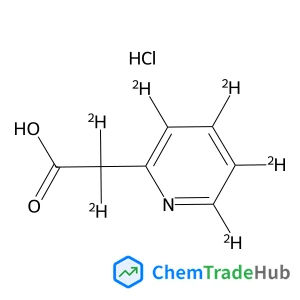
2,2-dideuterio-2-(3,4,5,6-tetradeuterio-2-pyridyl)acetic acid;hydrochloride
CAS Number:
1329799-67-8
Molecular Formula:
C7H2ClD6NO2
Recommended Suppliers






Disclaimer
This page provides academic journal information for reference and research purposes only. We are not affiliated with any journal publishers and do not handle publication submissions. For publication-related inquiries, please contact the respective journal publishers directly.
If you notice any inaccuracies in the information displayed, please contact us at support@chemtradehub.com. We will promptly review and address your concerns.