![[3-(2,6-Dichlorophenyl)-5-isopropyl-1,2-oxazol-4-yl]methanol structure](https://static.chemtradehub.com/structs/278/278597-30-1-5c79.webp "[3-(2,6-Dichlorophenyl)-5-isopropyl-1,2-oxazol-4-yl]methanol structure")
[3-(2,6-Dichlorophenyl)-5-isopropyl-1,2-oxazol-4-yl]methanol
CAS Number:
278597-30-1
Molecular Formula:
C13H13Cl2NO2
Hong Yan Zhao, Kai-Chung Lau, Gustavo A. Garcia, Laurent Nahon, Stéphane Carniato, Lionel Poisson, Martin Schwell, Muneerah Mogren Al-Mogren, Majdi Hochlaf
Adenine, a DNA base, exists as several tautomers and isomers that are closely lying in energy and that may form a mixture upon vaporization of solid adenine. Indeed, it is challenging to bring adenine into the gas phase, especially as a unique tautomer. The experimental conditions were tuned to prepare a jet-cooled canonical adenine (9H-adenine). This isolated DNA base was ionized by single VUV photons from a synchrotron beamline and the corresponding slow photoelectron spectrum was compared to ab initio computations of the neutral and ionic species. We report the vibronic structure of the X+ 2A′′ (D0), A+ 2A′ (D1) and B+ 2A′′ (D2) electronic states of the 9H adenine cation, from the adiabatic ionization energy (AIE) up to AIE + 1.8 eV. Accurate AIEs are derived for the 9H-adenine ( 1A′) + hν → 9H-adenine+ (X+ 2A′′, A+ 2A′, B+ 2A′′) + e− transitions. Close to the AIE, we fully assign the rich vibronic structure solely to the 9H-adenine (X 1A′) + hν → 9H-adenine+ (X+ 2A′′) transition. Importantly, we show that the lowest cationic electronic states of canonical adenine are coupled vibronically. The present findings are important for understanding the effects of ionizing radiation and the charge distribution on this elementary building block of life, at ultrafast, short, and long timescales.

Nature Medicine

Organic Process Research & Development

Journal of Natural Medicines

Journal of Peptide Science

Russian Journal of Coordination Chemistry

Drug Discovery Today

Russian Journal of Bioorganic Chemistry

Current Opinion in Solid State & Materials Science

Russian Journal of General Chemistry

Current Opinion in Colloid & Interface Science
Yuko Ueno, Katsuhiro Ajito, Yasuko Yamada Maruo
DOI: 10.1039/B200510G
Robert Scheuermann, Ian M. Tucker, Andrew M. Creeth, Herbert Dilger, Bettina Beck, Emil Roduner
DOI: 10.1039/B201531P
Martin C. R. Cockett, David A. Beattie, Neil A. Macleod, Kenneth P. Lawley, Trevor Ridley, Robert J. Donovan
DOI: 10.1039/B109560A
DOI: 10.1039/B107742B
Masami Okamoto, Masashi Nagano, Hiroaki Nagashima, Fujio Tanaka
DOI: 10.1039/B111592H
F. Atadinç, C. Selçuki, L. Sari, V. Aviyente
DOI: 10.1039/B109970C
Gary C. Davies, Roger S. Hutton, Nicolas Millot, Simon J. F. Macdonald, Mike S. Anson, Ian B. Campbell
DOI: 10.1039/B110971E
Husheng Yang, Aaron M. Gagnon, Barbara J. Finlayson-Pitts
DOI: 10.1039/B108907B
When handling 4-Methyl-6-(trifluoromethyl)quinoline (CAS: 40716-16-3), safety go...
4-(3,5-Difluorophenyl)aniline is an aromatic organic compound with the CAS numbe...
5-{[4-(Trifluoromethyl)phenyl]sulfanyl}-1,2,3-thiadiazole-4-carboxylic acid can ...
The market for 4-Benzylaniline hydrochloride (CAS: 6317-57-3) is steadily growin...
[3-(Diethylsulfamoyl)phenyl]boronic acid is generally considered safe when handl...
3-Bromo-2,5-dimethoxyaniline is mainly used in the pharmaceutical and chemical i...
N-Methyl-1-(5-methyl-1H-indol-3-yl)methanamine (CAS: 915922-67-7) is subject to ...
This compound is primarily used in the pharmaceutical industry for the synthesis...
2-Methyl-2-propanyl [(1S,3R)-3-aminocyclohexyl]carbamate (CAS: 1298101-47-9) sho...
Ethyl 2-bromo-4,4,4-trifluorobutanoate (CAS: 367-33-9) is utilized in the pharma...

Physical Chemistry Chemical Physics (PCCP) is an international journal co-owned by 19 physical chemistry and physics societies from around the world. This journal publishes original, cutting-edge research in physical chemistry, chemical physics and biophysical chemistry. To be suitable for publication in PCCP, articles must include significant innovation and/or insight into physical chemistry; this is the most important criterion that reviewers and Editors will judge against when evaluating submissions. The journal has a broad scope and welcomes contributions spanning experiment, theory, computation and data science. Topical coverage includes spectroscopy, dynamics, kinetics, statistical mechanics, thermodynamics, electrochemistry, catalysis, surface science, quantum mechanics, quantum computing and machine learning. Interdisciplinary research areas such as polymers and soft matter, materials, nanoscience, energy, surfaces/interfaces, and biophysical chemistry are welcomed if they demonstrate significant innovation and/or insight into physical chemistry. Joined experimental/theoretical studies are particularly appreciated when complementary and based on up-to-date approaches.
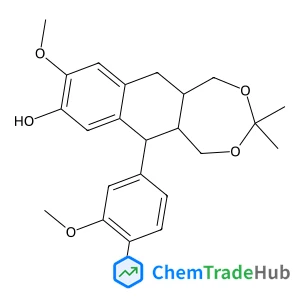
![Methyl 3-({2'-[(E)-(hydroxyhydrazono)methyl]-4-biphenylyl}methyl)-2-oxo-2,3-dihydro-1H-benzimidazole-4-carboxylate structure](https://static.chemtradehub.com/structs/149/1499167-72-4-034a.webp "Methyl 3-({2'-[(E)-(hydroxyhydrazono)methyl]-4-biphenylyl}methyl)-2-oxo-2,3-dihydro-1H-benzimidazole-4-carboxylate structure")