


Water-mediated curvature change in graphene by single-walled carbon nanotubes
Literature Information
Publication Date
2018-08-14
DOI
10.1039/C8CP02394H
Impact Factor
3.676
Authors
Hrushikesh M. Gade, Piyush P. Wanjari, Srihas V. V. Velpuri
View Original
Abstract
Novel nanostructured materials possessing new architectural segments can be synthesized using various combinations of graphene and carbon nanotubes (CNT) that can result in the generation of enhanced physico-chemical properties within the hybrids. Comprehending the various physical processes involved in the creation of these new segments is crucial for designing an optimized nanomaterial for a specific purpose. In this paper we report induced folding in a graphene sheet resulting from the physical interactions between water-mediated graphene and a CNT. Owing to robust binding interactions between the CNT and a compatible graphene sheet, the latter forms a second domed layer around the former culminating in a structure equivalent to a double-walled CNT. The induced curvature change in graphene by CNT was found to have a strong dependence upon their relative physical dimensions. For example, CNT possessing extremely small diameters are unable to induce any significant curvature changes in longer graphene sheets. The potential-of-mean force (PMF) between our reference graphene and CNT in water suggests a favorable binding interaction of −14.5 kcal mol−1. The breakdown of the PMF into direct graphene–nanotube interactions and water-mediated interactions reveals a huge reduction in the strongly attractive binding interactions between graphene and CNT by the water molecules.
Recommended Journals

New Journal of Chemistry

Russian Journal of Applied Chemistry

Current Opinion in Solid State & Materials Science

Russian Journal of Coordination Chemistry

Chemical Communications

Journal of Peptide Science

Russian Journal of Bioorganic Chemistry

Journal of Saudi Chemical Society

Current Opinion in Colloid & Interface Science

Drug Discovery Today
Related Literature
Facile preparation and cell imaging applications of fluorescent organic nanoparticles that combine AIE dye and ring-opening polymerization
Xiqi Zhang, Xiaoyong Zhang, Bin Yang, Junfeng Hui, Meiying Liu, Zhenguo Chi, Siwei Liu, Jiarui Xu, Yen Wei
2013-09-10
Communication
DOI: 10.1039/C3PY01143G
Use of a switchable hydrophobic associative polymer to create an aqueous solution of CO2-switchable viscosity
Xin Su, Philip G. Jessop
2013-10-08
Paper
DOI: 10.1039/C3PY01382K
Photosensitizer-conjugated redox-responsive dextran theranostic nanoparticles for near-infrared cancer imaging and photodynamic therapy
Peng Liu, Caixia Yue, Zonghai Sheng, Guanhui Gao, Mingxing Li, Huqiang Yi, Cuifang Zheng, Bi Wang, Lintao Cai
2013-09-20
Paper
DOI: 10.1039/C3PY01173A
A comparative study of polymers containing naphthodifuranone and benzodifuranone units in the main chain
Haichang Zhang, Jun Zhang, Bernd Tieke
2013-09-30
Paper
DOI: 10.1039/C3PY01101A
Polymer patchy colloids with sticky patches
Yi Zhao, Rüdiger Berger, Katharina Landfester, Daniel Crespy
2013-09-12
Paper
DOI: 10.1039/C3PY01096A
Soluble and stable alternating main-chain merocyanine copolymers through quantitative spiropyran–merocyanine conversion
Hartmut Komber, Stefan Müllers, Alexander Held, Michael Walter
2013-08-22
Paper
DOI: 10.1039/C3PY00853C
Precise synthesis of a rod-coil type miktoarm star copolymer containing poly(n-hexyl isocyanate) and aliphatic polyester
Toshifumi Satoh, Naoki Nishikawa, Daisuke Kawato, Daichi Suemasa, Sungmin Jung, Young Yong Kim, Moonhor Ree, Toyoji Kakuchi
2013-09-04
Paper
DOI: 10.1039/C3PY00985H
Synthesis and evaluation of thermally-responsive coatings based upon Diels–Alder chemistry and renewable materials
Dahlia N. Amato, Gregory A. Strange, John P. Swanson, Anton D. Chavez, Suzanne E. Roy, Kim L. Varney, Craig A. Machado, Douglas V. Amato, Philip J. Costanzo
2013-08-20
Paper
DOI: 10.1039/C3PY01024D
An “active” and self-switchable nanoreactor
Bo Peng, Xinhua Yuan, Maiyong Zhu, Songjun Li
2013-08-30
Paper
DOI: 10.1039/C3PY01074K
You might also like
Compound Q&A
What are the main uses of 4-Nitrophenyl phosphate disodium salt hexahydrate (CAS: 333338-18-4)?
4-Nitrophenyl phosphate disodium salt hexahydrate is primarily used as a substra...
333338-18-44-Nitrophenyl phosph...
Compound Q&A
What are the main uses of 2-(Trifluoromethyl)-1,3-oxazole-4-carboxylic Acid (CAS: 1060816-01-4)?
2-(Trifluoromethyl)-1,3-oxazole-4-carboxylic Acid (CAS: 1060816-01-4) is widely ...
1060816-01-42-(Trifluoromethyl)-...
Compound Q&A
How should 2-Fluoro-4-biphenylcarboxylic acid (CAS: 137045-30-8) be stored?
2-Fluoro-4-biphenylcarboxylic acid should be stored in a cool, dry place at room...
137045-30-82-Fluoro-4-biphenylc...
Compound Q&A
What industries use Prednisolone-21-Carboxylic Acid (CAS: 61549-70-0)?
Prednisolone-21-Carboxylic Acid is primarily used in the pharmaceutical industry...
61549-70-0Prednisolone-21-Carb...
Compound Q&A
How should 4-(Hydrazinomethyl)-1,2,3-benzenetriol (CAS: 3614-72-0) be stored?
4-(Hydrazinomethyl)-1,2,3-benzenetriol (CAS: 3614-72-0) should be stored in a co...
3614-72-04-(Hydrazinomethyl)-...
Compound Q&A
What industries use 4-Amino-1-methyl-1H-pyrazole-5-carboxylic acid hydrochloride (CAS: 92534-70-8)?
4-Amino-1-methyl-1H-pyrazole-5-carboxylic acid hydrochloride (CAS: 92534-70-8) i...
92534-70-84-Amino-1-methyl-1H-...
Compound Q&A
What regulatory guidelines apply to dehydropachymic acid (CAS: 77012-31-8)?
Dehydropachymic acid (CAS: 77012-31-8) is regulated by various agencies. It fall...
77012-31-8Dehydropachymic acid
Compound Q&A
What is the market or research trend for 6-[(2,2-Dimethylpropanoyl)amino]nicotinic acid (CAS: 898561-66-5)?
The market and research trends for 6-[(2,2-Dimethylpropanoyl)amino]nicotinic aci...
898561-66-56-[(2,2-Dimethylprop...
Compound Q&A
How should 1,10-Phenanthroline-2,9-dicarbaldehyde (CAS: 57709-62-3) be stored?
1,10-Phenanthroline-2,9-dicarbaldehyde should be stored in a cool, dry place awa...
57709-62-31,10-Phenanthroline-...
Compound Q&A
How is 5-Carbamoyl-11-oxo-10,11-dihydro-5H-dibenzo[b,f]azepin-10-yl acetate (CAS: 113952-21-9) typically synthesized?
5-Carbamoyl-11-oxo-10,11-dihydro-5H-dibenzo[b,f]azepin-10-yl acetate can be synt...
113952-21-95-Carbamoyl-11-oxo-1...
Source Journal
Physical Chemistry Chemical Physics

CiteScore:
5.5
Self-citation Rate:
10.3%
Articles per Year:
3036
Physical Chemistry Chemical Physics (PCCP) is an international journal co-owned by 19 physical chemistry and physics societies from around the world. This journal publishes original, cutting-edge research in physical chemistry, chemical physics and biophysical chemistry. To be suitable for publication in PCCP, articles must include significant innovation and/or insight into physical chemistry; this is the most important criterion that reviewers and Editors will judge against when evaluating submissions. The journal has a broad scope and welcomes contributions spanning experiment, theory, computation and data science. Topical coverage includes spectroscopy, dynamics, kinetics, statistical mechanics, thermodynamics, electrochemistry, catalysis, surface science, quantum mechanics, quantum computing and machine learning. Interdisciplinary research areas such as polymers and soft matter, materials, nanoscience, energy, surfaces/interfaces, and biophysical chemistry are welcomed if they demonstrate significant innovation and/or insight into physical chemistry. Joined experimental/theoretical studies are particularly appreciated when complementary and based on up-to-date approaches.
Recommended Compounds
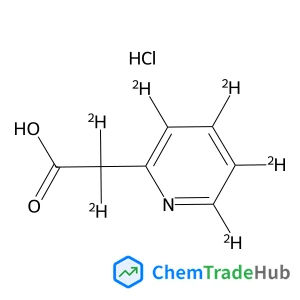
2,2-dideuterio-2-(3,4,5,6-tetradeuterio-2-pyridyl)acetic acid;hydrochloride
CAS Number:
1329799-67-8
Molecular Formula:
C7H2ClD6NO2
![(3R,5R)-1-[(Benzyloxy)carbonyl]-5-methyl-3-piperidinecarboxylic acid structure](https://static.chemtradehub.com/structs/126/1269757-29-0-c552.webp "(3R,5R)-1-[(Benzyloxy)carbonyl]-5-methyl-3-piperidinecarboxylic acid structure")
(3R,5R)-1-[(Benzyloxy)carbonyl]-5-methyl-3-piperidinecarboxylic acid
CAS Number:
1269757-29-0
Molecular Formula:
C15H19NO4
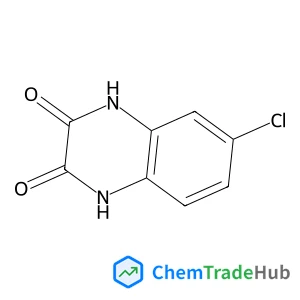
6-CHLORO-2,3-DIOXO-1,2,3,4-TETRAHYDROQUINOXALINE, 97
CAS Number:
169-14-2
Molecular Formula:
C8H5ClN2O2
Recommended Suppliers







Disclaimer
This page provides academic journal information for reference and research purposes only. We are not affiliated with any journal publishers and do not handle publication submissions. For publication-related inquiries, please contact the respective journal publishers directly.
If you notice any inaccuracies in the information displayed, please contact us at support@chemtradehub.com. We will promptly review and address your concerns.