



Atomistic reverse nonequilibrium molecular dynamics simulation of the viscosity of ionic liquid 1-n-butyl 3-methylimidazolium bis(trifluoromethylsulfonyl)imide [bmim][Tf2N]
Literature Information
Publication Date
2018-08-02
DOI
10.1039/C8CP02393J
Impact Factor
3.676
Authors
Rouhollah Safinejad, Nargess Mehdipour, Hossein Eslami
View Original
Abstract
The shear viscosity of room-temperature ionic liquid (IL) 1-n-butyl-3-methylimidazolium bis(trifluoromethylsulfonyl)imide [bmim][Tf2N] is calculated over a temperature range 298–353 K, using the reverse nonequilibrium molecular dynamics simulation technique. The results of this work show that while the use of equilibrium molecular dynamics simulation techniques might be inefficient for viscosity calculations of ILs, the reverse nonequilibrium molecular dynamics technique is an efficient tool for this purpose. Our findings indicate that the shear rate for crossover from the Newtonian plateau to the shear thinning regime, corresponds to the relaxation time for the slowest microscopic scale motions, i.e., exchange of counterions in an ion's solvation shell (ion-pair relaxation time). The closeness of the time scales and activation energies for zero-shear-rate viscosities to the relaxation times and the corresponding activation energies for ion-pair formation/rupture, connects macroscopic dynamic properties with local atomic-level motions of the IL. The calculated viscosity coefficients and relaxation times for reorientations of the cation and anion as well as their corresponding activation energies are in very good agreement with experimental data.
Recommended Journals

Chemistry Education Research and Practice

Journal of Saudi Chemical Society

Saudi Pharmaceutical Journal

Drug Discovery Today

Russian Chemical Bulletin

Current Opinion in Solid State & Materials Science

Russian Journal of General Chemistry

Crystallography Reports

Organic Process Research & Development

Russian Journal of Coordination Chemistry
Related Literature
Versatility of radical coupling in construction of topological polymers
Guowei Wang, Junlian Huang
2013-08-29
Review Article
DOI: 10.1039/C3PY00872J
pH-sensitive pullulan-based nanoparticles for intracellular drug delivery
Yinsong Wang, Yang Liu, Yuanyuan Liu, Yan Wang, Jing Wu, Rongshan Li, Jinrong Yang
2013-08-29
Paper
DOI: 10.1039/C3PY00817G
One-pot synthesis of responsive sulfobetaine nanoparticles by RAFT polymerisation: the effect of branching on the UCST cloud point
Helen Willcock, Annhelen Lu, Claire F. Hansell, Emma Chapman, Ian R. Collins, Rachel K. O'Reilly
2013-10-25
Paper
DOI: 10.1039/C3PY00998J
Biohybrid structures consisting of biotinylated glycodendrimers and proteins: influence of the biotin ligand's number and chemical nature on the biotin–avidin conjugation
Susanne Boye, Mihaela Cernescu, Hartmut Komber, Bernhard Brutschy, Dietmar Appelhans
2013-10-17
Paper
DOI: 10.1039/C3PY01152F
An injectable hyaluronic acid/PEG hydrogel for cartilage tissue engineering formed by integrating enzymatic crosslinking and Diels–Alder “click chemistry”
2013-08-09
Paper
DOI: 10.1039/C3PY00869J
Multi-stimuli responsive supramolecular diblock copolymers
L. Sambe, F. Stoffelbach, J. Lyskawa, F. Delattre, M. Bria, F. X. Sauvage, M. Sliwa, V. Humblot, B. Charleux, G. Cooke, P. Woisel
2013-10-03
Paper
DOI: 10.1039/C3PY01093G
(Meth)acrylic monomers with heteroatom-containing ester side chains: a systematic PLP-SEC and polymerization study
Marek Stach, Anna Chovancová, Andrea M. Misske, Igor Lacík
2013-09-03
Paper
DOI: 10.1039/C3PY00948C
Polymer patchy colloids with sticky patches
Yi Zhao, Rüdiger Berger, Katharina Landfester, Daniel Crespy
2013-09-12
Paper
DOI: 10.1039/C3PY01096A
Supramolecular polymer fabricated by click polymerization from supramonomer
Liulin Yang, Xiaoguang Liu, Xinxin Tan, Hui Yang, Zhiqiang Wang, Xi Zhang
2013-09-10
Communication
DOI: 10.1039/C3PY01161E
You might also like
Compound Q&A
What are the main uses of 4-Nitrophenyl phosphate disodium salt hexahydrate (CAS: 333338-18-4)?
4-Nitrophenyl phosphate disodium salt hexahydrate is primarily used as a substra...
333338-18-44-Nitrophenyl phosph...
Compound Q&A
What are the main uses of 2-(Trifluoromethyl)-1,3-oxazole-4-carboxylic Acid (CAS: 1060816-01-4)?
2-(Trifluoromethyl)-1,3-oxazole-4-carboxylic Acid (CAS: 1060816-01-4) is widely ...
1060816-01-42-(Trifluoromethyl)-...
Compound Q&A
How should 2-Fluoro-4-biphenylcarboxylic acid (CAS: 137045-30-8) be stored?
2-Fluoro-4-biphenylcarboxylic acid should be stored in a cool, dry place at room...
137045-30-82-Fluoro-4-biphenylc...
Compound Q&A
What industries use Prednisolone-21-Carboxylic Acid (CAS: 61549-70-0)?
Prednisolone-21-Carboxylic Acid is primarily used in the pharmaceutical industry...
61549-70-0Prednisolone-21-Carb...
Compound Q&A
How should 4-(Hydrazinomethyl)-1,2,3-benzenetriol (CAS: 3614-72-0) be stored?
4-(Hydrazinomethyl)-1,2,3-benzenetriol (CAS: 3614-72-0) should be stored in a co...
3614-72-04-(Hydrazinomethyl)-...
Compound Q&A
What industries use 4-Amino-1-methyl-1H-pyrazole-5-carboxylic acid hydrochloride (CAS: 92534-70-8)?
4-Amino-1-methyl-1H-pyrazole-5-carboxylic acid hydrochloride (CAS: 92534-70-8) i...
92534-70-84-Amino-1-methyl-1H-...
Compound Q&A
What regulatory guidelines apply to dehydropachymic acid (CAS: 77012-31-8)?
Dehydropachymic acid (CAS: 77012-31-8) is regulated by various agencies. It fall...
77012-31-8Dehydropachymic acid
Compound Q&A
What is the market or research trend for 6-[(2,2-Dimethylpropanoyl)amino]nicotinic acid (CAS: 898561-66-5)?
The market and research trends for 6-[(2,2-Dimethylpropanoyl)amino]nicotinic aci...
898561-66-56-[(2,2-Dimethylprop...
Compound Q&A
How should 1,10-Phenanthroline-2,9-dicarbaldehyde (CAS: 57709-62-3) be stored?
1,10-Phenanthroline-2,9-dicarbaldehyde should be stored in a cool, dry place awa...
57709-62-31,10-Phenanthroline-...
Compound Q&A
How is 5-Carbamoyl-11-oxo-10,11-dihydro-5H-dibenzo[b,f]azepin-10-yl acetate (CAS: 113952-21-9) typically synthesized?
5-Carbamoyl-11-oxo-10,11-dihydro-5H-dibenzo[b,f]azepin-10-yl acetate can be synt...
113952-21-95-Carbamoyl-11-oxo-1...
Source Journal
Physical Chemistry Chemical Physics

CiteScore:
5.5
Self-citation Rate:
10.3%
Articles per Year:
3036
Physical Chemistry Chemical Physics (PCCP) is an international journal co-owned by 19 physical chemistry and physics societies from around the world. This journal publishes original, cutting-edge research in physical chemistry, chemical physics and biophysical chemistry. To be suitable for publication in PCCP, articles must include significant innovation and/or insight into physical chemistry; this is the most important criterion that reviewers and Editors will judge against when evaluating submissions. The journal has a broad scope and welcomes contributions spanning experiment, theory, computation and data science. Topical coverage includes spectroscopy, dynamics, kinetics, statistical mechanics, thermodynamics, electrochemistry, catalysis, surface science, quantum mechanics, quantum computing and machine learning. Interdisciplinary research areas such as polymers and soft matter, materials, nanoscience, energy, surfaces/interfaces, and biophysical chemistry are welcomed if they demonstrate significant innovation and/or insight into physical chemistry. Joined experimental/theoretical studies are particularly appreciated when complementary and based on up-to-date approaches.
Recommended Compounds


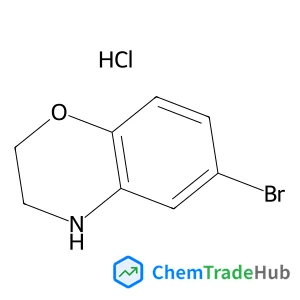
6-Bromo-3,4-dihydro-2H-1,4-benzoxazine hydrochloride (1:1)
CAS Number:
1260803-10-8
Molecular Formula:
C8H9BrClNO
Recommended Suppliers





Disclaimer
This page provides academic journal information for reference and research purposes only. We are not affiliated with any journal publishers and do not handle publication submissions. For publication-related inquiries, please contact the respective journal publishers directly.
If you notice any inaccuracies in the information displayed, please contact us at support@chemtradehub.com. We will promptly review and address your concerns.