


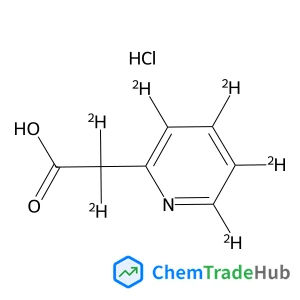
2,2-dideuterio-2-(3,4,5,6-tetradeuterio-2-pyridyl)acetic acid;hydrochloride
CAS Number:
1329799-67-8
Molecular Formula:
C7H2ClD6NO2
Nicolò Azzaroli, Justin R. Caram, Timothy S. Sinclair, Lorenzo Cupellini, Sandro Jurinovich, Benedetta Mennucci, Gloria Zanotti, Anna Maria Paoletti, Giovanna Pennesi
The photophysics of 9(19),16(17),23(24)-tri-tert-butyl-2-[ethynyl-(4-carboxymethyl)phenyl]phthalocyaninatozinc(II) and its H-aggregates is studied in different solvents by means of ultrafast non-linear optical spectroscopy and computational modeling. In non-coordinating solvents, both stationary and time-resolved spectroscopies highlight the formation of extended molecular aggregates, whose dimension and spectral properties depends on the concentration. In all the explored experimental conditions, time-resolved transient absorption experiments show multi exponential decay of the signals. Additional insights into the excited state relaxation mechanisms of the system is obtained with 2D electronic spectroscopy, which is employed to compare the deactivation channels in the absence or presence of aggregates. In ethanol and diethylether, where only monomers are present, an ultrafast relaxation process among the two non-degenerate Q-states of the molecule is evidenced by the appearance of a cross peak in the 2D-maps. In chloroform or CCl4, where disordered H-aggregates are formed, an energy transfer channel among aggregates with different composition and size is observed, leading to the non-radiative decay towards the lower energy dark state of the aggregates. Efficient coupling between less and more aggregated species is highlighted in two-dimensional electronic spectra by the appearance of a cross peak. The kinetics and intensity of the latter depend on the concentration of the solution. Finally, the linear spectroscopic properties of the aggregate are reproduced using a simplified structural model of an extended aggregate, based on Frenkel Hamiltonian Calculations and on an estimate of the electronic couplings between each dimer composing the aggregate computed at DFT level.

Russian Journal of Bioorganic Chemistry

Current Opinion in Colloid & Interface Science

Crystallography Reports

Current Opinion in Solid State & Materials Science

Russian Journal of Coordination Chemistry

Drug Discovery Today

New Journal of Chemistry

Saudi Pharmaceutical Journal

Chemistry Education Research and Practice

Journal of Natural Medicines
Yinsong Wang, Yang Liu, Yuanyuan Liu, Yan Wang, Jing Wu, Rongshan Li, Jinrong Yang
DOI: 10.1039/C3PY00817G
Ye Zhao, Haiyang Gao, Guodong Liang, Fangming Zhu, Qing Wu
DOI: 10.1039/C3PY01289A
Ping Wang, Yin-Ning Zhou, Jiang-Shui Luo, Zheng-Hong Luo
DOI: 10.1039/C3PY01025B
L. Sambe, F. Stoffelbach, J. Lyskawa, F. Delattre, M. Bria, F. X. Sauvage, M. Sliwa, V. Humblot, B. Charleux, G. Cooke, P. Woisel
DOI: 10.1039/C3PY01093G
Christopher R. Fenoli
DOI: 10.1039/C3PY00709J
Marta Liras, Isabel Quijada-Garrido, Marta Palacios-Cuesta, Sonia Muñoz-Durieux, Olga García
DOI: 10.1039/C3PY00987D
Helen Willcock, Annhelen Lu, Claire F. Hansell, Emma Chapman, Ian R. Collins, Rachel K. O'Reilly
DOI: 10.1039/C3PY00998J
Jessalyn Cortese, Corinne Soulié-Ziakovic, Ludwik Leibler
DOI: 10.1039/C3PY00638G
Hartmut Komber, Stefan Müllers, Alexander Held, Michael Walter
DOI: 10.1039/C3PY00853C
4-Nitrophenyl phosphate disodium salt hexahydrate is primarily used as a substra...
2-(Trifluoromethyl)-1,3-oxazole-4-carboxylic Acid (CAS: 1060816-01-4) is widely ...
2-Fluoro-4-biphenylcarboxylic acid should be stored in a cool, dry place at room...
Prednisolone-21-Carboxylic Acid is primarily used in the pharmaceutical industry...
4-(Hydrazinomethyl)-1,2,3-benzenetriol (CAS: 3614-72-0) should be stored in a co...
4-Amino-1-methyl-1H-pyrazole-5-carboxylic acid hydrochloride (CAS: 92534-70-8) i...
Dehydropachymic acid (CAS: 77012-31-8) is regulated by various agencies. It fall...
The market and research trends for 6-[(2,2-Dimethylpropanoyl)amino]nicotinic aci...
1,10-Phenanthroline-2,9-dicarbaldehyde should be stored in a cool, dry place awa...
5-Carbamoyl-11-oxo-10,11-dihydro-5H-dibenzo[b,f]azepin-10-yl acetate can be synt...

Physical Chemistry Chemical Physics (PCCP) is an international journal co-owned by 19 physical chemistry and physics societies from around the world. This journal publishes original, cutting-edge research in physical chemistry, chemical physics and biophysical chemistry. To be suitable for publication in PCCP, articles must include significant innovation and/or insight into physical chemistry; this is the most important criterion that reviewers and Editors will judge against when evaluating submissions. The journal has a broad scope and welcomes contributions spanning experiment, theory, computation and data science. Topical coverage includes spectroscopy, dynamics, kinetics, statistical mechanics, thermodynamics, electrochemistry, catalysis, surface science, quantum mechanics, quantum computing and machine learning. Interdisciplinary research areas such as polymers and soft matter, materials, nanoscience, energy, surfaces/interfaces, and biophysical chemistry are welcomed if they demonstrate significant innovation and/or insight into physical chemistry. Joined experimental/theoretical studies are particularly appreciated when complementary and based on up-to-date approaches.
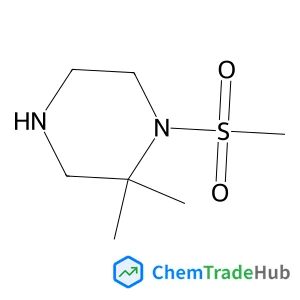
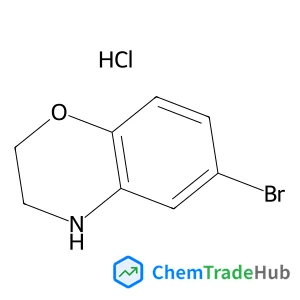
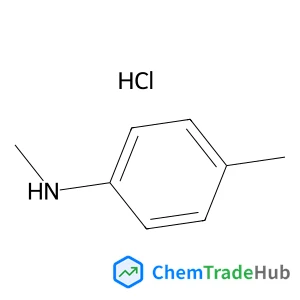
![N-[2-(4-Hydroxyphenoxy)-4-nitrophenyl]methanesulfonamide structure](https://static.chemtradehub.com/structs/109/109032-22-6-7c88.webp "N-[2-(4-Hydroxyphenoxy)-4-nitrophenyl]methanesulfonamide structure")





