![S-[2,3-Bis(palmitoyloxy)propyl]-N-[(9H-fluoren-9-ylmethoxy)(hydroxy)methylene]cysteine structure](https://static.chemtradehub.com/structs/210/210532-98-2-f6a7.webp "S-[2,3-Bis(palmitoyloxy)propyl]-N-[(9H-fluoren-9-ylmethoxy)(hydroxy)methylene]cysteine structure")
S-[2,3-Bis(palmitoyloxy)propyl]-N-[(9H-fluoren-9-ylmethoxy)(hydroxy)methylene]cysteine
CAS Number:
210532-98-2
Molecular Formula:
C53H83NO8S
Zhixiao Liu, Shiguo Zhang, Wangyu Hu
Our previous study (J. Mater. Chem. A, 2018, 6, 3171-3180) theoretically predicted that a scandium oxide (ScO2) monolayer can deliver high specific capacity and energy density as the active material of a lithium-ion (Li-ion) battery, but the voltage will drop below 0.5 V when ScO2 is lithiated to LiScO2 during the discharge process. The current study predicts that the discharge product LiScO2 in the Li-ion battery mode can potentially work as the host material of Li–O2 batteries. It is found that the adsorption of O2 on the LiScO2 substrate is energetically favored. The LiScO2 substrate can also provide strong affinities to molecular LiO2 and Li2O2 species. It is interesting to find that the presence of an O2 molecule can oxidize the pre-adsorbed Li2O2 molecule and result in two LiO2 molecules. Hence, the final discharge product of the Li–O2 battery using the LiScO2 cathode is expected to be a crystalline-like LiO2 layer. The discharge voltage related to forming a LiO2 layer on the LiScO2 substrate is 3.50 V vs. Li+/Li according to the present theoretical calculation.
D. Döhler, P. Zare, W. H. Binder
DOI: 10.1039/C3PY01151H
Xiqi Zhang, Xiaoyong Zhang, Bin Yang, Junfeng Hui, Meiying Liu, Zhenguo Chi, Siwei Liu, Jiarui Xu, Yen Wei
DOI: 10.1039/C3PY01143G
Xiqi Zhang, Bin Yang, Meiying Liu, Wanyun Liu, Yiwang Chen, Yen Wei
DOI: 10.1039/C3PY00984J
Guowei Wang, Junlian Huang
DOI: 10.1039/C3PY00872J
DOI: 10.1039/C3PY01118F
Yinsong Wang, Yang Liu, Yuanyuan Liu, Yan Wang, Jing Wu, Rongshan Li, Jinrong Yang
DOI: 10.1039/C3PY00817G
Susanne Boye, Mihaela Cernescu, Hartmut Komber, Bernhard Brutschy, Dietmar Appelhans
DOI: 10.1039/C3PY01152F
Ji-won Choi, Denis Martin, Vanessa Yardley, Keith Powell, Antony Godwin
DOI: 10.1039/C3PY01051A
Dahlia N. Amato, Gregory A. Strange, John P. Swanson, Anton D. Chavez, Suzanne E. Roy, Kim L. Varney, Craig A. Machado, Douglas V. Amato, Philip J. Costanzo
DOI: 10.1039/C3PY01024D
4-Nitrophenyl phosphate disodium salt hexahydrate is primarily used as a substra...
2-(Trifluoromethyl)-1,3-oxazole-4-carboxylic Acid (CAS: 1060816-01-4) is widely ...
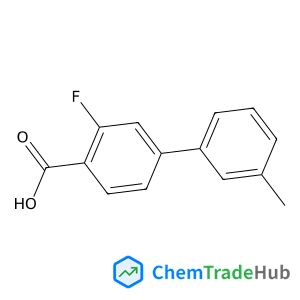
2-Fluoro-4-biphenylcarboxylic acid should be stored in a cool, dry place at room...
Prednisolone-21-Carboxylic Acid is primarily used in the pharmaceutical industry...
4-(Hydrazinomethyl)-1,2,3-benzenetriol (CAS: 3614-72-0) should be stored in a co...
4-Amino-1-methyl-1H-pyrazole-5-carboxylic acid hydrochloride (CAS: 92534-70-8) i...
Dehydropachymic acid (CAS: 77012-31-8) is regulated by various agencies. It fall...
The market and research trends for 6-[(2,2-Dimethylpropanoyl)amino]nicotinic aci...
1,10-Phenanthroline-2,9-dicarbaldehyde should be stored in a cool, dry place awa...
5-Carbamoyl-11-oxo-10,11-dihydro-5H-dibenzo[b,f]azepin-10-yl acetate can be synt...

Physical Chemistry Chemical Physics (PCCP) is an international journal co-owned by 19 physical chemistry and physics societies from around the world. This journal publishes original, cutting-edge research in physical chemistry, chemical physics and biophysical chemistry. To be suitable for publication in PCCP, articles must include significant innovation and/or insight into physical chemistry; this is the most important criterion that reviewers and Editors will judge against when evaluating submissions. The journal has a broad scope and welcomes contributions spanning experiment, theory, computation and data science. Topical coverage includes spectroscopy, dynamics, kinetics, statistical mechanics, thermodynamics, electrochemistry, catalysis, surface science, quantum mechanics, quantum computing and machine learning. Interdisciplinary research areas such as polymers and soft matter, materials, nanoscience, energy, surfaces/interfaces, and biophysical chemistry are welcomed if they demonstrate significant innovation and/or insight into physical chemistry. Joined experimental/theoretical studies are particularly appreciated when complementary and based on up-to-date approaches.