












Ultrasensitive detection of nucleic acids based on dually enhanced fluorescence polarization
Literature Information
Publication Date
2018-06-08
DOI
10.1039/C8AN00952J
Impact Factor
4.616
Authors
Bin Wang, Dahai Ren, Zheng You, Yaxiaer Yalikun, Yo Tanaka
View Original
Abstract
Highly sensitive detection of nucleic acids is crucial for genomics, transcriptomics, and heterogeneity studies. Conventional fluorescence polarization and intensity-based assays for DNA/RNA measurements often suffer from a poor limit of detection and a long test period. A versatile nanoscale probe based on a competitive displacement assay and fluorescence polarization was proposed for the simple, fast and sensitive detection of nucleic acids. For the probe, a partially complementary double-stranded DNA (dsDNA) was used as a connector of gold nanoparticles (AuNPs) and Alexa fluor 488 dyes (Alexa488), leading to the nanometal surface energy transfer (NSET) between Alexa488 and AuNPs. Meanwhile, suppression of the fluorescence intensity caused a decrease in the effective concentration of the Alexa488, and an increase in the volume or mass prolonged the rotational relaxation time of the Alexa488, both of which increased polarization of the Alexa488 in an aqueous solution. After competitive displacement between the probe and the target strand, the decrease in the volume or mass of the Alexa488 and fluorescence recovery resulted in the decline of the fluorescence polarization of the Alexa488, which could be used to sensitively detect the target concentration. After optimization, the fluorescence polarization-based method achieved a pM level detection of single-stranded nucleic acids within 30 minutes.
Related Literature
The role of halogen bonding in metal free phosphors
Ramin Ansari, Daniel Hashemi, John Kieffer
2021-10-09
Paper
DOI: 10.1039/D1CP01325D
Bishop's hat silicene: a planar square silicon bilayer decorated with adatoms
Pedro Borlido, Miguel A. L. Marques, Silvana Botti
2021-08-02
Paper
DOI: 10.1039/D1CP01316E
An interplay of various damage channels in polyethylene exposed to ultra-short XUV/X-ray pulses
P. Babaev, J. Chalupský, A. E. Volkov
2021-07-02
Paper
DOI: 10.1039/D1CP02199K
Chiral recognition via a stereodynamic vanadium probe using the electronic circular dichroism effect in differential Raman scattering
Davide Carraro, Giulia Licini, Petr Bouř, Cristiano Zonta
2021-09-21
Paper
DOI: 10.1039/D1CP03020E
Computational investigations of selected enzymes from two iron and α-ketoglutarate-dependent families
Madison B. Berger, Alice R. Walker, Erik Antonio Vázquez-Montelongo, G. Andrés Cisneros
2021-09-24
Perspective
DOI: 10.1039/D1CP03800A
Enhanced photocatalytic activity, transport properties and electronic structure of Mn doped GdFeO3 synthesized using the sol–gel process
Ritwik Maity, Alo Dutta, Saswata Halder, Santiranjan Shannigrahi, Kalyan Mandal, T. P. Sinha
2021-07-22
Paper
DOI: 10.1039/D1CP00621E
Mixed-diphosphine-protected chiral undecagold clusters Au11(S,S-DIOP)4(rac-/R-/S-BINAP): effect of the handedness of BINAP on their chiroptical responses
Yasuhiko Sato, Hiroshi Yao
2021-07-26
Paper
DOI: 10.1039/D1CP02106K
Phase transitions in 1-bromoadamantane compared to 1-chloroadamantane: similarities and unique features
Igor V. Danilov, Elena L. Gromnitskaya, Vadim V. Brazhkin
2021-10-04
Paper
DOI: 10.1039/D1CP03080A
Strain engineering of polar optical phonon scattering mechanism – an effective way to optimize the power-factor and lattice thermal conductivity of ScN
Man Hea Kim, Carlos Baldo, III, Yan Wang, Mahalakshmi Sahasranaman
2021-09-27
Paper
DOI: 10.1039/D1CP02971A
You might also like
Compound Q&A
What precautions should be taken when handling 4-Methyl-6-(trifluoromethyl)quinoline (CAS: 40716-16-3)?
When handling 4-Methyl-6-(trifluoromethyl)quinoline (CAS: 40716-16-3), safety go...
40716-16-34-Methyl-6-(trifluor...
Compound Q&A
What is 4-(3,5-Difluorophenyl)aniline (CAS: 405058-00-6)?
4-(3,5-Difluorophenyl)aniline is an aromatic organic compound with the CAS numbe...
405058-00-64-(3,5-Difluoropheny...
Compound Q&A
How is 5-{[4-(Trifluoromethyl)phenyl]sulfanyl}-1,2,3-thiadiazole-4-carboxylic acid (CAS: 338982-07-3) typically synthesized?
5-{[4-(Trifluoromethyl)phenyl]sulfanyl}-1,2,3-thiadiazole-4-carboxylic acid can ...
338982-07-35-{[4-(Trifluorometh...
Compound Q&A
What is the market or research trend for 4-Benzylaniline hydrochloride (CAS: 6317-57-3)?
The market for 4-Benzylaniline hydrochloride (CAS: 6317-57-3) is steadily growin...
6317-57-34-Benzylaniline hydr...
Compound Q&A
Is [3-(Diethylsulfamoyl)phenyl]boronic acid (CAS: 871329-58-7) safe?
[3-(Diethylsulfamoyl)phenyl]boronic acid is generally considered safe when handl...
871329-58-7[3-(Diethylsulfamoyl...
Compound Q&A
What are the main uses of 3-Bromo-2,5-dimethoxyaniline (CAS: 115929-62-9)?
3-Bromo-2,5-dimethoxyaniline is mainly used in the pharmaceutical and chemical i...
115929-62-93-Bromo-2,5-dimethox...
Compound Q&A
What regulatory guidelines apply to N-Methyl-1-(5-methyl-1H-indol-3-yl)methanamine (CAS: 915922-67-7)?
N-Methyl-1-(5-methyl-1H-indol-3-yl)methanamine (CAS: 915922-67-7) is subject to ...
915922-67-7N-Methyl-1-(5-methyl...
Compound Q&A
What industries use Carbamic acid, N-[(5S)-5,6-diamino-6-oxohexyl]-, 1,1-dimethylethyl ester (CAS: 24828-96-4)?
This compound is primarily used in the pharmaceutical industry for the synthesis...
24828-96-4Carbamic acid, N-[(5...
Compound Q&A
How should 2-Methyl-2-propanyl [(1S,3R)-3-aminocyclohexyl]carbamate (CAS: 1298101-47-9) be stored?
2-Methyl-2-propanyl [(1S,3R)-3-aminocyclohexyl]carbamate (CAS: 1298101-47-9) sho...
1298101-47-92-Methyl-2-propanyl ...
Compound Q&A
What industries use Ethyl 2-bromo-4,4,4-trifluorobutanoate (CAS: 367-33-9)?
Ethyl 2-bromo-4,4,4-trifluorobutanoate (CAS: 367-33-9) is utilized in the pharma...
367-33-9Ethyl 2-bromo-4,4,4-...
Source Journal
Analyst

CiteScore:
7.8
Self-citation Rate:
5.6%
Articles per Year:
653
Analyst publishes analytical and bioanalytical research that reports premier fundamental discoveries and inventions, and the applications of those discoveries, unconfined by traditional discipline barriers.
Recommended Compounds
![N-{3-[Benzyl(methyl)amino]propyl}-9-chloro-5,6,7,8-tetrahydro-2-acridinecarboxamide structure](https://static.chemtradehub.com/structs/142/1426944-49-1-1e4c.webp "N-{3-[Benzyl(methyl)amino]propyl}-9-chloro-5,6,7,8-tetrahydro-2-acridinecarboxamide structure")
N-{3-[Benzyl(methyl)amino]propyl}-9-chloro-5,6,7,8-tetrahydro-2-acridinecarboxamide
CAS Number:
1426944-49-1
Molecular Formula:
C25H28ClN3O
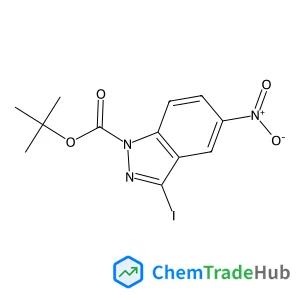
Tert-butyl 3-iodo-5-nitro-1H-indazole-1-carboxylate
CAS Number:
459133-69-8
Molecular Formula:
C12H12IN3O4
![2-[(5Z,8Z,11Z,14Z)-5,8,11,14-Icosatetraen-1-yloxy]-1,3-propanediol structure](https://static.chemtradehub.com/structs/222/222723-55-9-0348.webp "2-[(5Z,8Z,11Z,14Z)-5,8,11,14-Icosatetraen-1-yloxy]-1,3-propanediol structure")
2-[(5Z,8Z,11Z,14Z)-5,8,11,14-Icosatetraen-1-yloxy]-1,3-propanediol
CAS Number:
222723-55-9
Molecular Formula:
C23H40O3
Recommended Suppliers





Disclaimer
This page provides academic journal information for reference and research purposes only. We are not affiliated with any journal publishers and do not handle publication submissions. For publication-related inquiries, please contact the respective journal publishers directly.
If you notice any inaccuracies in the information displayed, please contact us at support@chemtradehub.com. We will promptly review and address your concerns.