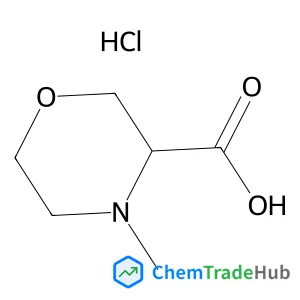
4-Methyl-3-morpholinecarboxylic acid hydrochloride (1:1)
CAS Number:
1240518-90-4
Molecular Formula:
C6H12ClNO3
Ramana V. Daggupati, Chandrasekharam Malapaka
A mild and efficient reaction protocol for the cross-dehydrogenative carbon–nitrogen (CDCN) coupling of N-arylglycine ester derivatives with benzamides, aromatic heterocyclic amides (oxindole, isatins), acyclic and cyclic amides (lactams) and imides (phthalimide, succinimide) has been achieved. The copper-catalyzed C–N coupling reaction exhibits a wide substrate scope with respect to N-arylglycine ester derivatives. The ligand/oxidant free reaction facilitates the direct formation of a C(sp3)–N bond with high atom economy to furnish the corresponding amidated/imidated N-arylglycine ester derivatives in good to excellent yields under open flask conditions.

Contact Lens & Anterior Eye

Journal of Enzyme inhibition and Medicinal Chemistry

Nature Reviews Drug Discovery

Photochemical & Photobiological Sciences

Molecules

Mini-Reviews in Medicinal Chemistry

European Journal of Organic Chemistry

Physical Chemistry Chemical Physics

Environmental Toxicology and Pharmacology

Lab on a Chip
Dong Young Kim, Han Myoung Lee, Jongcheol Seo, Seung Koo Shin, Kwang S. Kim
DOI: 10.1039/B925235E
Haixia Li, Lili Zhao, Gang Lu, Yirong Mo, Zhi-Xiang Wang
DOI: 10.1039/B924586C
Amitava Adhikary, Anil Kumar, Shawn A. Munafo, Deepti Khanduri, Michael D. Sevilla
DOI: 10.1039/B925496J
Cheralathan Kanakkampalayam Krishnan, Keiko Nakamura, Hirohito Hirata, Masaru Ogura
DOI: 10.1039/B922046A
Fei Yang, Yukina Takahashi, Nobuyuki Sakai, Tetsu Tatsuma
DOI: 10.1039/B925146D
DOI: 10.1039/B925246K
Alejandro Rodríguez, Carolina Oliva, Miguel González
DOI: 10.1039/C002116D
Roland Schmidt, Sebastian Hagen, Daniel Brete, Robert Carley, Cornelius Gahl, Jadranka Dokić, Peter Saalfrank, Stefan Hecht, Petra Tegeder
DOI: 10.1039/B924409C
D. Carta, M. F. Casula, P. Floris, A. Falqui, G. Mountjoy, A. Boni, C. Sangregorio, A. Corrias
DOI: 10.1039/B922646J
When handling 4-Methyl-6-(trifluoromethyl)quinoline (CAS: 40716-16-3), safety go...
4-(3,5-Difluorophenyl)aniline is an aromatic organic compound with the CAS numbe...
5-{[4-(Trifluoromethyl)phenyl]sulfanyl}-1,2,3-thiadiazole-4-carboxylic acid can ...
The market for 4-Benzylaniline hydrochloride (CAS: 6317-57-3) is steadily growin...
[3-(Diethylsulfamoyl)phenyl]boronic acid is generally considered safe when handl...
3-Bromo-2,5-dimethoxyaniline is mainly used in the pharmaceutical and chemical i...
N-Methyl-1-(5-methyl-1H-indol-3-yl)methanamine (CAS: 915922-67-7) is subject to ...
This compound is primarily used in the pharmaceutical industry for the synthesis...
2-Methyl-2-propanyl [(1S,3R)-3-aminocyclohexyl]carbamate (CAS: 1298101-47-9) sho...
Ethyl 2-bromo-4,4,4-trifluorobutanoate (CAS: 367-33-9) is utilized in the pharma...

Organic Chemistry Frontiers publishes high-quality research from across organic chemistry. Emphases are placed on studies that make significant contributions to the field of organic chemistry by reporting either new or significantly improved protocols or methodologies. Topics include, but are not limited to the following: Organic synthesis Development of synthetic methodologies Catalysis Natural products Functional organic materials Supramolecular and macromolecular chemistry Physical and computational organic chemistry