












B2(OH)4-mediated one-pot synthesis of tetrahydroquinoxalines from 2-amino(nitro)anilines and 1,2-dicarbonyl compounds in water
Literature Information
Publication Date
2017-08-09
DOI
10.1039/C7QO00604G
Impact Factor
5.281
Authors
Sensheng Liu, Yanmei Zhou, Yuebo Sui, Huan Liu, Haifeng Zhou
View Original
Abstract
A practical one-pot synthesis of tetrahydroquinoxalines from readily available 2-amino(nitro)anilines and 1,2-dicarbonyl compounds mediated by diboronic acid with water as both a solvent and a hydrogen donor under metal-free conditions has been discovered. The deuterium labeling experiments with D2O were also performed to demonstrate that water acts as the hydrogen donor.
Related Literature
Raman spectroscopic studies of defect structures and phase transition in hyper-stoichiometric UO2+x
Heming He, David Shoesmith
2010-06-08
Paper
DOI: 10.1039/B925495A
Role of excited-state hydrogen detachment and hydrogen-transfer processes for the excited-state deactivation of an aromatic dipeptide: N-acetyl tryptophan methyl amide
Dorit Shemesh, Andrzej L. Sobolewski, Wolfgang Domcke
2010-03-01
Paper
DOI: 10.1039/B927024H
Slice-selective single scan protonCOSY with dynamic nuclear polarisation
Rafal Panek, Josef Granwehr, James Leggett, Walter Köckenberger
2010-05-05
Paper
DOI: 10.1039/C002710N
Ultrafast radiationless transition pathways through conical intersections in photo-excited 9H-adenine
Walid Mohamed Ibrahim Hassan, Wilfredo Credo Chung, Noriyuki Shimakura, Shiro Koseki, Hirohiko Kono
2010-03-31
Paper
DOI: 10.1039/B926102H
The UV absorption of nucleobases: semi-classical ab initiospectra simulations
Mario Barbatti
2010-03-29
Paper
DOI: 10.1039/B924956G
A fullerene–distyrylbenzene photosensitizer for two-photon promoted singlet oxygen production
Elisabetta Collini, Ilaria Fortunati, Sara Scolaro, Raffaella Signorini, Camilla Ferrante, Renato Bozio, Graziano Fabbrini, Michele Maggini, Emiliano Rossi, Simone Silvestrini
2010-03-17
Paper
DOI: 10.1039/B922740G
Theoretical study of the structural and electronic properties of the Fen(C6H6)m, n ≤ 2; m ≤ 2 complexes
Israel Valencia, Miguel Castro
2010-06-04
Paper
DOI: 10.1039/B922847K
Dehalogenation of 5-halo-uracil molecules induced by 100 keV proton collisions
Jean-Philippe Champeaux, Julien Rabier, Pierre Cafarelli, Martine Sence, Patrick Moretto-Capelle
2010-03-29
Paper
DOI: 10.1039/B926803K
The chemical roots of the matching polynomial
Patrick W. Fowler, Jean-Paul Malrieu
2010-04-06
Paper
DOI: 10.1039/B923893J
Prototropic equilibria in DNA containing one-electron oxidized GC: intra-duplex vs. duplex to solvent deprotonation
Amitava Adhikary, Anil Kumar, Shawn A. Munafo, Deepti Khanduri, Michael D. Sevilla
2010-03-29
Paper
DOI: 10.1039/B925496J
You might also like
Compound Q&A
What precautions should be taken when handling 4-Methyl-6-(trifluoromethyl)quinoline (CAS: 40716-16-3)?
When handling 4-Methyl-6-(trifluoromethyl)quinoline (CAS: 40716-16-3), safety go...
40716-16-34-Methyl-6-(trifluor...
Compound Q&A
What is 4-(3,5-Difluorophenyl)aniline (CAS: 405058-00-6)?
4-(3,5-Difluorophenyl)aniline is an aromatic organic compound with the CAS numbe...
405058-00-64-(3,5-Difluoropheny...
Compound Q&A
How is 5-{[4-(Trifluoromethyl)phenyl]sulfanyl}-1,2,3-thiadiazole-4-carboxylic acid (CAS: 338982-07-3) typically synthesized?
5-{[4-(Trifluoromethyl)phenyl]sulfanyl}-1,2,3-thiadiazole-4-carboxylic acid can ...
338982-07-35-{[4-(Trifluorometh...
Compound Q&A
What is the market or research trend for 4-Benzylaniline hydrochloride (CAS: 6317-57-3)?
The market for 4-Benzylaniline hydrochloride (CAS: 6317-57-3) is steadily growin...
6317-57-34-Benzylaniline hydr...
Compound Q&A
Is [3-(Diethylsulfamoyl)phenyl]boronic acid (CAS: 871329-58-7) safe?
[3-(Diethylsulfamoyl)phenyl]boronic acid is generally considered safe when handl...
871329-58-7[3-(Diethylsulfamoyl...
Compound Q&A
What are the main uses of 3-Bromo-2,5-dimethoxyaniline (CAS: 115929-62-9)?
3-Bromo-2,5-dimethoxyaniline is mainly used in the pharmaceutical and chemical i...
115929-62-93-Bromo-2,5-dimethox...
Compound Q&A
What regulatory guidelines apply to N-Methyl-1-(5-methyl-1H-indol-3-yl)methanamine (CAS: 915922-67-7)?
N-Methyl-1-(5-methyl-1H-indol-3-yl)methanamine (CAS: 915922-67-7) is subject to ...
915922-67-7N-Methyl-1-(5-methyl...
Compound Q&A
What industries use Carbamic acid, N-[(5S)-5,6-diamino-6-oxohexyl]-, 1,1-dimethylethyl ester (CAS: 24828-96-4)?
This compound is primarily used in the pharmaceutical industry for the synthesis...
24828-96-4Carbamic acid, N-[(5...
Compound Q&A
How should 2-Methyl-2-propanyl [(1S,3R)-3-aminocyclohexyl]carbamate (CAS: 1298101-47-9) be stored?
2-Methyl-2-propanyl [(1S,3R)-3-aminocyclohexyl]carbamate (CAS: 1298101-47-9) sho...
1298101-47-92-Methyl-2-propanyl ...
Compound Q&A
What industries use Ethyl 2-bromo-4,4,4-trifluorobutanoate (CAS: 367-33-9)?
Ethyl 2-bromo-4,4,4-trifluorobutanoate (CAS: 367-33-9) is utilized in the pharma...
367-33-9Ethyl 2-bromo-4,4,4-...
Source Journal
Organic Chemistry Frontiers

CiteScore:
7.8
Self-citation Rate:
8.7%
Articles per Year:
724
Organic Chemistry Frontiers publishes high-quality research from across organic chemistry. Emphases are placed on studies that make significant contributions to the field of organic chemistry by reporting either new or significantly improved protocols or methodologies. Topics include, but are not limited to the following: Organic synthesis Development of synthetic methodologies Catalysis Natural products Functional organic materials Supramolecular and macromolecular chemistry Physical and computational organic chemistry
Recommended Compounds
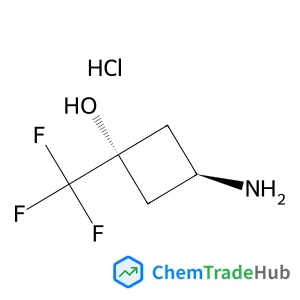
cis-3-Amino-1-(trifluoromethyl)cyclobutanol hydrochloride (1:1)
CAS Number:
1408075-16-0
Molecular Formula:
C5H9ClF3NO
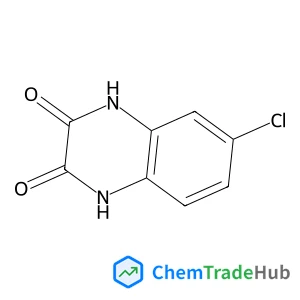
6-CHLORO-2,3-DIOXO-1,2,3,4-TETRAHYDROQUINOXALINE, 97
CAS Number:
169-14-2
Molecular Formula:
C8H5ClN2O2
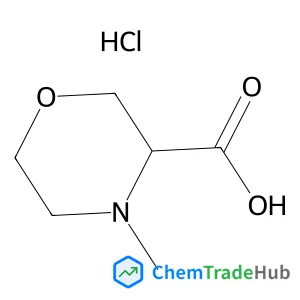
4-Methyl-3-morpholinecarboxylic acid hydrochloride (1:1)
CAS Number:
1240518-90-4
Molecular Formula:
C6H12ClNO3
Recommended Suppliers




Disclaimer
This page provides academic journal information for reference and research purposes only. We are not affiliated with any journal publishers and do not handle publication submissions. For publication-related inquiries, please contact the respective journal publishers directly.
If you notice any inaccuracies in the information displayed, please contact us at support@chemtradehub.com. We will promptly review and address your concerns.