













1,2,3-Triazole-assisted C–H amidation by cobalt(iii) catalysis
Literature Information
Publication Date
2017-08-10
DOI
10.1039/C7QO00556C
Impact Factor
5.281
Authors
Xinling Yu, Qiang Ma, Songyang Lv, Jue Li, Chen Zhang, Li Hai, Qiantao Wang, Yong Wu
View Original
Abstract
A procedure for the [Cp*CoIII]-catalyzed, 1,2,3-triazole directed C–H amidation of arenes, using dioxazolone as an efficient amidating reagent, has been developed. This reaction provides a step- and atom-economical protocol for C–N bond formation, releasing carbon dioxide as a single byproduct. Yet a variety of functional groups are well tolerated, obtaining the desired products in moderate to excellent yields.
Related Literature
The capture of ˙H and ˙OH radicals by vitamin C and implications for the new source for the formation of the anion free radical
Zhitao Shen, Weihua Wang, Zhiying Ma, Siwei Bi, Haitao Sun
2010-04-01
Paper
DOI: 10.1039/B924058F
Alkali metal cation doped Al-SBA-15 for carbon dioxide adsorption
Arnošt Zukal, Jana Mayerová, Jiří Čejka
2010-04-01
Paper
DOI: 10.1039/B924938A
NO2 quantum yields from ultraviolet photodissociation of methyl and isopropyl nitrate
Paula Gorrotxategi Carbajo, Andrew J. Orr-Ewing
2010-04-20
Paper
DOI: 10.1039/C001425G
Thermal chemistry and photochemistry of hexafluoroacetone on rutile TiO2(110)
Robert T. Zehr, Michael A. Henderson
2010-06-04
Paper
DOI: 10.1039/C003115A
Iron phthalocyanine in non-aqueous medium forming layer-by-layer films: growth mechanism, molecular architecture and applications
Maria Luz Rodríguez-Méndez, Jose Antonio De Saja Saez, Carlos José Leopoldo Constantino
2010-03-02
Paper
DOI: 10.1039/B922242C
The excited electronic states of adenine-guanine stacked dimers in aqueous solution: a PCM/TD-DFT study
Fabrizio Santoro, Vincenzo Barone, Alessandro Lami, Roberto Improta
2010-03-27
Paper
DOI: 10.1039/B925108A
Benchmark calculations of water–acene interaction energies: Extrapolation to the water–graphene limit and assessment of dispersion–corrected DFT methods
Glen R. Jenness, Ozan Karalti, Kenneth D. Jordan
2010-04-22
Paper
DOI: 10.1039/C000988A
Feasibility of in vivo15N MRS detection of hyperpolarized 15N labeled choline in rats
Cristina Cudalbu, Ruud B. van Heeswijk, Kai Uffmann, Sami Jannin, Vladimir Denisov, Deniz Kirik
2010-05-12
Paper
DOI: 10.1039/C002309B
Prospects for sub-micron solid state nuclear magnetic resonance imaging with low-temperature dynamic nuclear polarization
Kent R. Thurber, Robert Tycko
2010-05-11
Paper
DOI: 10.1039/C0CP00157K
Photostability and solvation: photodynamics of microsolvated zwitterionic glycine
2010-02-11
Paper
DOI: 10.1039/B925246K
You might also like
Compound Q&A
What precautions should be taken when handling 4-Methyl-6-(trifluoromethyl)quinoline (CAS: 40716-16-3)?
When handling 4-Methyl-6-(trifluoromethyl)quinoline (CAS: 40716-16-3), safety go...
40716-16-34-Methyl-6-(trifluor...
Compound Q&A
What is 4-(3,5-Difluorophenyl)aniline (CAS: 405058-00-6)?
4-(3,5-Difluorophenyl)aniline is an aromatic organic compound with the CAS numbe...
405058-00-64-(3,5-Difluoropheny...
Compound Q&A
How is 5-{[4-(Trifluoromethyl)phenyl]sulfanyl}-1,2,3-thiadiazole-4-carboxylic acid (CAS: 338982-07-3) typically synthesized?
5-{[4-(Trifluoromethyl)phenyl]sulfanyl}-1,2,3-thiadiazole-4-carboxylic acid can ...
338982-07-35-{[4-(Trifluorometh...
Compound Q&A
What is the market or research trend for 4-Benzylaniline hydrochloride (CAS: 6317-57-3)?
The market for 4-Benzylaniline hydrochloride (CAS: 6317-57-3) is steadily growin...
6317-57-34-Benzylaniline hydr...
Compound Q&A
Is [3-(Diethylsulfamoyl)phenyl]boronic acid (CAS: 871329-58-7) safe?
[3-(Diethylsulfamoyl)phenyl]boronic acid is generally considered safe when handl...
871329-58-7[3-(Diethylsulfamoyl...
Compound Q&A
What are the main uses of 3-Bromo-2,5-dimethoxyaniline (CAS: 115929-62-9)?
3-Bromo-2,5-dimethoxyaniline is mainly used in the pharmaceutical and chemical i...
115929-62-93-Bromo-2,5-dimethox...
Compound Q&A
What regulatory guidelines apply to N-Methyl-1-(5-methyl-1H-indol-3-yl)methanamine (CAS: 915922-67-7)?
N-Methyl-1-(5-methyl-1H-indol-3-yl)methanamine (CAS: 915922-67-7) is subject to ...
915922-67-7N-Methyl-1-(5-methyl...
Compound Q&A
What industries use Carbamic acid, N-[(5S)-5,6-diamino-6-oxohexyl]-, 1,1-dimethylethyl ester (CAS: 24828-96-4)?
This compound is primarily used in the pharmaceutical industry for the synthesis...
24828-96-4Carbamic acid, N-[(5...
Compound Q&A
How should 2-Methyl-2-propanyl [(1S,3R)-3-aminocyclohexyl]carbamate (CAS: 1298101-47-9) be stored?
2-Methyl-2-propanyl [(1S,3R)-3-aminocyclohexyl]carbamate (CAS: 1298101-47-9) sho...
1298101-47-92-Methyl-2-propanyl ...
Compound Q&A
What industries use Ethyl 2-bromo-4,4,4-trifluorobutanoate (CAS: 367-33-9)?
Ethyl 2-bromo-4,4,4-trifluorobutanoate (CAS: 367-33-9) is utilized in the pharma...
367-33-9Ethyl 2-bromo-4,4,4-...
Source Journal
Organic Chemistry Frontiers

CiteScore:
7.8
Self-citation Rate:
8.7%
Articles per Year:
724
Organic Chemistry Frontiers publishes high-quality research from across organic chemistry. Emphases are placed on studies that make significant contributions to the field of organic chemistry by reporting either new or significantly improved protocols or methodologies. Topics include, but are not limited to the following: Organic synthesis Development of synthetic methodologies Catalysis Natural products Functional organic materials Supramolecular and macromolecular chemistry Physical and computational organic chemistry
Recommended Compounds
![(3R,5R)-1-[(Benzyloxy)carbonyl]-5-methyl-3-piperidinecarboxylic acid structure](https://static.chemtradehub.com/structs/126/1269757-29-0-c552.webp "(3R,5R)-1-[(Benzyloxy)carbonyl]-5-methyl-3-piperidinecarboxylic acid structure")
(3R,5R)-1-[(Benzyloxy)carbonyl]-5-methyl-3-piperidinecarboxylic acid
CAS Number:
1269757-29-0
Molecular Formula:
C15H19NO4

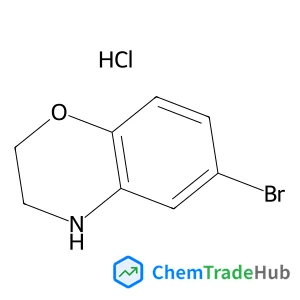
6-Bromo-3,4-dihydro-2H-1,4-benzoxazine hydrochloride (1:1)
CAS Number:
1260803-10-8
Molecular Formula:
C8H9BrClNO
Recommended Suppliers





Disclaimer
This page provides academic journal information for reference and research purposes only. We are not affiliated with any journal publishers and do not handle publication submissions. For publication-related inquiries, please contact the respective journal publishers directly.
If you notice any inaccuracies in the information displayed, please contact us at support@chemtradehub.com. We will promptly review and address your concerns.