












Orange is the new white: rapid curing of an ethylene-glycidyl methacrylate copolymer with a Ti-bisphenolate type catalyst
Literature Information
Publication Date
2018-01-09
DOI
10.1039/C7PY01840A
Impact Factor
5.582
Authors
Massimiliano Mauri, Leo Svenningsson, Thomas Hjertberg, Lars Nordstierna, Oscar Prieto, Christian Müller
View Original
Abstract
Polyethylene must be crosslinked if the polymer is to be used at elevated temperatures. However, established crosslinking methods result in the release of volatile by-products that can compromise the cleanliness and purity required for many electrical and medical applications. Currently available alternative curing processes, free from by-product formation, are too slow to be of practical relevance. Here, we demonstrate that an epoxy-bearing polyethylene copolymer, which contains one glycidyl methacrylate comonomer per 64 ethylene monomers, can be rapidly crosslinked with a click-chemistry curing process. We show that a titanium-based Lewis acid together with a bisphenol crosslinking agent allows the formation of thermosets. Compounding of the Lewis acid catalyst, crosslinking agent and copolymer through extrusion at 140 °C can be carried out without onset of the curing reaction. Then, at more elevated temperatures of 180 °C and above rapid crosslinking occurs. The competitive curing rate of the here explored formulation is due to in situ generation of a new titanium-phenoxide catalyst, which efficiently promotes crosslinking of the epoxy-bearing polyethylene copolymer. Adjustment of the curing time and temperature results in a high network density of at least 3 crosslinks per 1000 carbons in only 2 minutes at 240 °C and at a curing agent stoichiometry of 3 wt%, which corresponds to merely 0.04 wt% elemental titanium. The here established crosslinking chemistry opens up a by-product free method for rapid curing of epoxy-functionalised polyethylenes.
Recommended Journals
Related Literature
Underwater determination of calcium and strontium ions in oilfield produced water by laser-induced breakdown spectroscopy (LIBS)
Nilvan A. Silva, Ivo M. Raimundo, Jr
2023-10-06
Paper
DOI: 10.1039/D3AY01457F
Sporopollenin exine capsules modulate the function of microglial cells
Mengwei Li, Banglian Hu, Zhaojie Wu, Ziwei Wang, Jian Weng, Honghua Zheng, Liping Sun
2023-12-05
Paper
DOI: 10.1039/D3BM01154B
A rapid and direct method for dating blue pen ink in documents using multiset modeling of infrared spectroscopy and mass spectrometry data
Kauanny B. N. Braga, Lanaia Í. L. Maciel, Boniek G. Vaz, Licarion Pinto, Jandyson M. Santos
2023-11-14
Paper
DOI: 10.1039/D3AY01732J
Oxygen and pH responsive theragnostic liposomes for early-stage diagnosis and photothermal therapy of solid tumours
Siyi Li, Qinglin Wang, Yingying Ren, Pengtao Bao, Shanyue Guan, Xiaochen Qiu
2023-12-12
Paper
DOI: 10.1039/D3BM01514A
A dually emissive MPA-CdTe QDs@N, S-GQD nanosensor for sensitive and selective detection of 4-nitrophenol using two turn-off signals
Ali Nematollahzadeh
2023-10-19
Paper
DOI: 10.1039/D3AY01160G
A low-cost optofluidic platform for the colorimetric assessment of bacterial activity in domestic wastewater
Prajal Chettri, Kalathur Mohan Ganesh, Sahashransu Satyajeet Mahapatra, A. S. Vishwanathan, Shailesh Srivastava
2023-11-02
Paper
DOI: 10.1039/D3AY01612A
Preparation and characterization of iron(iii) nitrilotriacetate complex in aqueous solutions for quantitative protein binding experiments
Valentina Borko, Tomislav Friganović, Tin Weitner
2023-11-09
Technical Note
DOI: 10.1039/D3AY01261A
A stable ratiometric fluorescent probe for hypochlorous acid detection and rheumatoid arthritis evaluation
Liuwei Gu, Yinghao Li, Xiaojie Kong, Ke Zhang, Yuling Qin, Xiaobo Zhou, Haiwei Ji, Guo Li, Li Wu
2023-12-21
Communication
DOI: 10.1039/D3BM01576A
Development and application of a universal extraction-free reagent based on an algal glycolipid
Minli Qiu, Jun Cheng, Huajun Zhou, Feihu Che, Yan Hu, Yinghui He, Yuzhu Dai, Yingjie Zhang
2023-11-03
Paper
DOI: 10.1039/D3AY01246H
Expression of concern: High cytotoxic activity of ZnO@leucovorin nanocomposite based materials against an MCF-7 cell model
Shereen Magdy Bazid, Shimaa Nabih, Md Ariful Ahsan
2023-11-21
Expression of Concern
DOI: 10.1039/D3AY90141F
You might also like
Compound Q&A
What are the main uses of 4-Nitrophenyl phosphate disodium salt hexahydrate (CAS: 333338-18-4)?
4-Nitrophenyl phosphate disodium salt hexahydrate is primarily used as a substra...
333338-18-44-Nitrophenyl phosph...
Compound Q&A
What are the main uses of 2-(Trifluoromethyl)-1,3-oxazole-4-carboxylic Acid (CAS: 1060816-01-4)?
2-(Trifluoromethyl)-1,3-oxazole-4-carboxylic Acid (CAS: 1060816-01-4) is widely ...
1060816-01-42-(Trifluoromethyl)-...
Compound Q&A
How should 2-Fluoro-4-biphenylcarboxylic acid (CAS: 137045-30-8) be stored?
2-Fluoro-4-biphenylcarboxylic acid should be stored in a cool, dry place at room...
137045-30-82-Fluoro-4-biphenylc...
Compound Q&A
What industries use Prednisolone-21-Carboxylic Acid (CAS: 61549-70-0)?
Prednisolone-21-Carboxylic Acid is primarily used in the pharmaceutical industry...
61549-70-0Prednisolone-21-Carb...
Compound Q&A
How should 4-(Hydrazinomethyl)-1,2,3-benzenetriol (CAS: 3614-72-0) be stored?
4-(Hydrazinomethyl)-1,2,3-benzenetriol (CAS: 3614-72-0) should be stored in a co...
3614-72-04-(Hydrazinomethyl)-...
Compound Q&A
What industries use 4-Amino-1-methyl-1H-pyrazole-5-carboxylic acid hydrochloride (CAS: 92534-70-8)?
4-Amino-1-methyl-1H-pyrazole-5-carboxylic acid hydrochloride (CAS: 92534-70-8) i...
92534-70-84-Amino-1-methyl-1H-...
Compound Q&A
What regulatory guidelines apply to dehydropachymic acid (CAS: 77012-31-8)?
Dehydropachymic acid (CAS: 77012-31-8) is regulated by various agencies. It fall...
77012-31-8Dehydropachymic acid
Compound Q&A
What is the market or research trend for 6-[(2,2-Dimethylpropanoyl)amino]nicotinic acid (CAS: 898561-66-5)?
The market and research trends for 6-[(2,2-Dimethylpropanoyl)amino]nicotinic aci...
898561-66-56-[(2,2-Dimethylprop...
Compound Q&A
How should 1,10-Phenanthroline-2,9-dicarbaldehyde (CAS: 57709-62-3) be stored?
1,10-Phenanthroline-2,9-dicarbaldehyde should be stored in a cool, dry place awa...
57709-62-31,10-Phenanthroline-...
Compound Q&A
How is 5-Carbamoyl-11-oxo-10,11-dihydro-5H-dibenzo[b,f]azepin-10-yl acetate (CAS: 113952-21-9) typically synthesized?
5-Carbamoyl-11-oxo-10,11-dihydro-5H-dibenzo[b,f]azepin-10-yl acetate can be synt...
113952-21-95-Carbamoyl-11-oxo-1...
Source Journal
Polymer Chemistry

CiteScore:
8.6
Self-citation Rate:
7.3%
Articles per Year:
457
Polymer Chemistry welcomes submissions in all areas of polymer science that have a strong focus on macromolecular chemistry. Manuscripts may cover a broad range of fields, yet no direct application focus is required.
Recommended Compounds
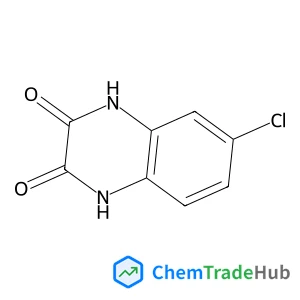
6-CHLORO-2,3-DIOXO-1,2,3,4-TETRAHYDROQUINOXALINE, 97
CAS Number:
169-14-2
Molecular Formula:
C8H5ClN2O2

![S-[2,3-Bis(palmitoyloxy)propyl]-N-[(9H-fluoren-9-ylmethoxy)(hydroxy)methylene]cysteine structure](https://static.chemtradehub.com/structs/210/210532-98-2-f6a7.webp "S-[2,3-Bis(palmitoyloxy)propyl]-N-[(9H-fluoren-9-ylmethoxy)(hydroxy)methylene]cysteine structure")
S-[2,3-Bis(palmitoyloxy)propyl]-N-[(9H-fluoren-9-ylmethoxy)(hydroxy)methylene]cysteine
CAS Number:
210532-98-2
Molecular Formula:
C53H83NO8S
Recommended Suppliers





Disclaimer
This page provides academic journal information for reference and research purposes only. We are not affiliated with any journal publishers and do not handle publication submissions. For publication-related inquiries, please contact the respective journal publishers directly.
If you notice any inaccuracies in the information displayed, please contact us at support@chemtradehub.com. We will promptly review and address your concerns.