












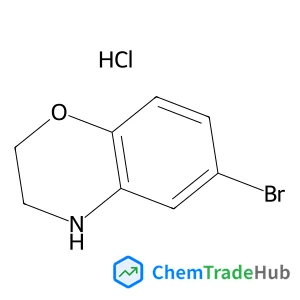
6-Bromo-3,4-dihydro-2H-1,4-benzoxazine hydrochloride (1:1)
CAS Number:
1260803-10-8
Molecular Formula:
C8H9BrClNO
Fei Gao, Yaohui Xing, Yuan Yao, Liuying Sun, Yao Sun, Xiaohua He, Shaoliang Lin
In this work, a triblock copolymer poly(acrylic acid)-block-poly[6-(4-methoxy-azobenzene-4′-oxy) hexylmethacrylate]-block-poly(N-isopropylacrylamide) (PAA-b-PAzoMA-b-PNIPAM) containing pH, photo and temperature sensitive groups was synthesized through three-step RAFT polymerization. By tuning the solvents, the copolymer could self-assemble into spherical micelles or vesicles with multi-stimuli responsiveness. Either the micelles or the vesicles underwent obvious size decreases when the temperature was above the LCST of PNIPAM, and size increases when the pH value was below the pKa of PAA without obvious morphology changes. In addition, under UV irradiation, the micelles disrupted into much smaller particles whereas the vesicles transformed into micelles with an apparent size decrease on account of trans-to-cis isomerization of the azobenzene moieties. Upon irradiation by linear polarized light, the micelles were elongated into spindles and short rods. Furthermore, the photo-isomerization rate of the azobenzene moiety could be modulated by pH and temperature. The multi-stimuli responsive properties of PAA-b-PAzoMA-b-PNIPAM will further expand the potential application of azobenzene copolymers in smart materials.
Paul H. M. Van Steenberge, Pieter Derboven, Marie-Françoise Reyniers, Guy B. Marin
DOI: 10.1039/C5PY01069A
J. Areephong, J. W. Kramer, H. A. Sprafke
DOI: 10.1039/C5PY01563D
T. Boursier, S. Georges, M. Mosquet, D. Rinaldi, F. D'Agosto
DOI: 10.1039/C5PY01730K
Tao Zhang, Yunhao Du, Jana Kalbacova, René Schubel, Raul D. Rodriguez, Tao Chen, Dietrich R. T. Zahn, Rainer Jordan
DOI: 10.1039/C5PY01274K
Kemal Arda Günay, Harm-Anton Klok
DOI: 10.1039/C5PY01817J
Takahiro Sasaki, Masayoshi Tabata
DOI: 10.1039/C5PY01200G
4-Nitrophenyl phosphate disodium salt hexahydrate is primarily used as a substra...
2-(Trifluoromethyl)-1,3-oxazole-4-carboxylic Acid (CAS: 1060816-01-4) is widely ...
2-Fluoro-4-biphenylcarboxylic acid should be stored in a cool, dry place at room...
Prednisolone-21-Carboxylic Acid is primarily used in the pharmaceutical industry...
4-(Hydrazinomethyl)-1,2,3-benzenetriol (CAS: 3614-72-0) should be stored in a co...
4-Amino-1-methyl-1H-pyrazole-5-carboxylic acid hydrochloride (CAS: 92534-70-8) i...
Dehydropachymic acid (CAS: 77012-31-8) is regulated by various agencies. It fall...
The market and research trends for 6-[(2,2-Dimethylpropanoyl)amino]nicotinic aci...
1,10-Phenanthroline-2,9-dicarbaldehyde should be stored in a cool, dry place awa...
5-Carbamoyl-11-oxo-10,11-dihydro-5H-dibenzo[b,f]azepin-10-yl acetate can be synt...

Polymer Chemistry welcomes submissions in all areas of polymer science that have a strong focus on macromolecular chemistry. Manuscripts may cover a broad range of fields, yet no direct application focus is required.
![S-[2,3-Bis(palmitoyloxy)propyl]-N-[(9H-fluoren-9-ylmethoxy)(hydroxy)methylene]cysteine structure](https://static.chemtradehub.com/structs/210/210532-98-2-f6a7.webp "S-[2,3-Bis(palmitoyloxy)propyl]-N-[(9H-fluoren-9-ylmethoxy)(hydroxy)methylene]cysteine structure")
![[(1S,2S,3R,4S,7R,9S,10S,12R,15S)-4,12-Diacetyloxy-15-[(2R,3S)-3-benzamido-3-phenyl-2-(2,2,2-trichloroethoxycarbonyloxy)propanoyl]oxy-1,9-dihydroxy-10,14,17,17-tetramethyl-11-oxo-6-oxatetracyclo[11.3.1.03,10.04,7]heptadec-13-en-2-yl] benzoate structure](https://static.chemtradehub.com/structs/100/100431-55-8-7104.webp "[(1S,2S,3R,4S,7R,9S,10S,12R,15S)-4,12-Diacetyloxy-15-[(2R,3S)-3-benzamido-3-phenyl-2-(2,2,2-trichloroethoxycarbonyloxy)propanoyl]oxy-1,9-dihydroxy-10,14,17,17-tetramethyl-11-oxo-6-oxatetracyclo[11.3.1.03,10.04,7]heptadec-13-en-2-yl] benzoate structure")






