












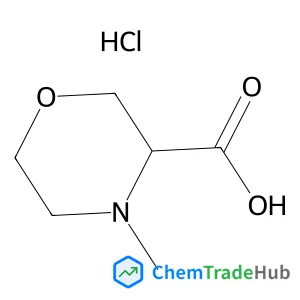
4-Methyl-3-morpholinecarboxylic acid hydrochloride (1:1)
CAS Number:
1240518-90-4
Molecular Formula:
C6H12ClNO3
Maarten Rubens, Phanumat Latsrisaeng
Recently, new opportunities have emerged for the synthesis of functional polymers and materials by light-induced controlled radical polymerization techniques. Light-induced polymerization reactions implemented in batch reactors require chromophores as initiators or activators, and with increasing optical pathlength light is successively absorbed, lowering the overall efficiency of the reactions. This typically leads to long reaction times, making the process both inconvenient and costly to upscale. Implementing a continuous flow reactor is hereby advantageous. In here, we describe the visible light induced polymerization of several methacrylates via trithiocarbonate photoiniferter polymerization. In all cases, the method affords polymers with comparatively narrow molecular weight distribution (Đ = 1.20–1.30) even for moderate molar mass values above 10 kg mol−1, whereby full monomer conversions are reached already after 60 min for a variety of monomers. Several diblock and triblock copolymers were synthesized, demonstrating the versatility and good control of the technique. Further, the intensified synthesis of block copolymers is shown by coupling two photoflow reactors into a single continuous process, allowing for block copolymer synthesis without intermediate purification or sample collection.
Yongjin Zhong, Yancheng Lai, Zeru Feng, Si Huang, Yu Fu, Lirong Huang, Keng-fu Lan, Anchun Mo
DOI: 10.1039/D3BM01676E
Daiki Asakawa, Ryoma Yamamoto, Nobuyasu Hanari, Kazumi Saikusa
DOI: 10.1039/D3AY01450A
Dai Junfeng, Fu Li-hui
DOI: 10.1039/D3AY01462B
Qiuyan Zhao, Mingyue Ding, Dangshuai Pei, Xiuhua Qi, Yexuan Mao, Xianqing Huang, Lianjun Song, Jingnan Zuo, Huijuan Yang, Xiya Zhang
DOI: 10.1039/D3AY01403G
Jiahao Shen, Junli Liu, Xiuyi Fan, Hui Liu, Yan Bao, AiPing Hui, Hafiz Akif Munir
DOI: 10.1039/D3BM01030A
Huiyan Cao, Chenchen Zhu, Fangyuan Chen, Jiaqi Ye, Bin-Chun Li, Peng Yang, Mingqiang Qiao, Zhuoyu Li
DOI: 10.1039/D3BM01779F
Yong Ding, Xiao-Chan Yang, Ya-Ya Yu, Sheng-Nan Song, Bo Li, Xue-Yao Pang, Jian-Jian Cai, Chun-Huan Zhang, Ya-Mu Xia, Wei-Wei Gao
DOI: 10.1039/D3BM01228J
Tomohiro Narukawa, Satoki Okabayashi, Koichi Chiba
DOI: 10.1039/D3AY01574B
4-Nitrophenyl phosphate disodium salt hexahydrate is primarily used as a substra...
2-(Trifluoromethyl)-1,3-oxazole-4-carboxylic Acid (CAS: 1060816-01-4) is widely ...
2-Fluoro-4-biphenylcarboxylic acid should be stored in a cool, dry place at room...
Prednisolone-21-Carboxylic Acid is primarily used in the pharmaceutical industry...
4-(Hydrazinomethyl)-1,2,3-benzenetriol (CAS: 3614-72-0) should be stored in a co...
4-Amino-1-methyl-1H-pyrazole-5-carboxylic acid hydrochloride (CAS: 92534-70-8) i...
Dehydropachymic acid (CAS: 77012-31-8) is regulated by various agencies. It fall...
The market and research trends for 6-[(2,2-Dimethylpropanoyl)amino]nicotinic aci...
1,10-Phenanthroline-2,9-dicarbaldehyde should be stored in a cool, dry place awa...
5-Carbamoyl-11-oxo-10,11-dihydro-5H-dibenzo[b,f]azepin-10-yl acetate can be synt...

Polymer Chemistry welcomes submissions in all areas of polymer science that have a strong focus on macromolecular chemistry. Manuscripts may cover a broad range of fields, yet no direct application focus is required.
![1-[(4-Methylphenyl)sulfonyl]-3-(4,4,5,5-tetramethyl-1,3,2-dioxaborolan-2-yl)-1H-pyrrolo[2,3-b]pyridine-5-carbonitrile structure](https://static.chemtradehub.com/structs/143/1434747-57-5-fc0d.webp "1-[(4-Methylphenyl)sulfonyl]-3-(4,4,5,5-tetramethyl-1,3,2-dioxaborolan-2-yl)-1H-pyrrolo[2,3-b]pyridine-5-carbonitrile structure")
![S-[2,3-Bis(palmitoyloxy)propyl]-N-[(9H-fluoren-9-ylmethoxy)(hydroxy)methylene]cysteine structure](https://static.chemtradehub.com/structs/210/210532-98-2-f6a7.webp "S-[2,3-Bis(palmitoyloxy)propyl]-N-[(9H-fluoren-9-ylmethoxy)(hydroxy)methylene]cysteine structure")






