













CO2-Stimulated morphology transition of ABC miktoarm star terpolymer assemblies
Literature Information
Publication Date
2017-04-04
DOI
10.1039/C7PY00214A
Impact Factor
5.582
Authors
Haotian Du, Min Zeng, Long Pan, Tommy Fang, Xuming Xie, Yen Wei, Jinying Yuan
View Original
Abstract
The integration of stimuli-responsive polymers with polymeric assemblies enables exquisite control over their nanostructures. Herein, we report the CO2-regulated self-assembly behaviors of a series of amphiphilic miktoarm star terpolymers star-[poly(ethylene glycol)-polystyrene-poly[2-(N,N-diethylamino)ethyl methacrylate]] (μ-PEG-PS-PDEA). These μ-PEG-PS-PDEA assemblies show enhanced CO2-responsibility with the increase in the molecular weight (Mn) of the PDEA segment. For μ-PEG-PS-PDEAx (x represents the Mn of the PDEA block, x = 9.3k, 12.2k, 25k), we observed an unusual sphere/vesicle-to-lamella transition upon CO2 stimulation. As the Mn of PDEA increases from 9.3k to 25k, the morphology of these lamellae evolves from nanophase segregated “E. coli-shaped” nanosheets to nanoribbons, then to nanodiscs. We studied the pH, zeta potential and the microscopy images of the assemblies before and after CO2 stimulation, and accordingly speculated the possible mechanisms for the morphology transformation and the nanophase segregation. Our results indicate that the combination of CO2 stimulation with miktoarm star polymers could potentially extend the horizon of macromolecular self-assembly.
Related Literature
A comparison of size exclusion chromatography-based tandem strategies for plasma exosome enrichment and proteomic analysis
H. H. Bai, X. F. Wang, B. Y. Zhang, W. Liu
2023-11-02
Paper
DOI: 10.1039/D3AY01704D
Determination of polyfluoroalkyl substances in cosmetic products using dispersed liquid–liquid extraction coupled with UHPLC-MS/MS
Wenyao Liang, Zemin Xia, Jianhua Tan
2023-11-20
Paper
DOI: 10.1039/D3AY01553J
Facilely printed silk fibroin hydrogel microparticles as injectable long-lasting fillers
Chunyu Xie, Xiao Yang, Fan Zheng, Jiahao Shi, Caixia Huo, Zuyuan Wang, Bo Xiao, Lian Duan
2023-11-14
Paper
DOI: 10.1039/D3BM01488F
Cartilage regeneration using transforming growth factor-beta 3-loaded injectable crosslinked hyaluronic acid hydrogel
Ju Hwa Lee, Yun Chang Pyun, Jonggyu Park, Tae Woong Kang, Jin Sol Seo, Dae Hoon Lee
2023-12-13
Paper
DOI: 10.1039/D3BM01008B
3D bioprinting of GelMA with enhanced extrusion printability through coupling sacrificial carrageenan
Yudong Yao
2023-12-07
Paper
DOI: 10.1039/D3BM01489D
The application of generalized S-transform in the denoising of surface plasmon resonance (SPR) spectrum
Dai Junfeng, Fu Li-hui
2023-10-27
Paper
DOI: 10.1039/D3AY01462B
On site separation of inorganic forms of thallium and arsenic in sea water systems followed by ICP-MS determination
Joanna Kowalska, Alicja Drwal, Klaudia Tutaj, Lidiia Kovshun, Beata Krasnodębska-Ostręga
2023-11-06
Paper
DOI: 10.1039/D3AY01292A
A C4-modified bipyridinium multi-mode stationary phase for reversed phase, hydrophilic interaction and ion exchange chromatography
Yan Li, Zelong Long, Lingling Han, Kaijun Quan, Jia Chen, Xiuhui Liu, Hongdeng Qiu
2023-11-03
Paper
DOI: 10.1039/D3AY01796F
A dual-mode green emissive fluorescent probe for real-time detection of doxycycline in milk using a smartphone sensing platform
Ruiqing Sun, Ping Liu, Yingjia Dong, Qingli Yang, Yongchao Ma
2023-11-14
Paper
DOI: 10.1039/D3AY01850D
Oxygen and pH responsive theragnostic liposomes for early-stage diagnosis and photothermal therapy of solid tumours
Siyi Li, Qinglin Wang, Yingying Ren, Pengtao Bao, Shanyue Guan, Xiaochen Qiu
2023-12-12
Paper
DOI: 10.1039/D3BM01514A
You might also like
Compound Q&A
What are the main uses of 4-Nitrophenyl phosphate disodium salt hexahydrate (CAS: 333338-18-4)?
4-Nitrophenyl phosphate disodium salt hexahydrate is primarily used as a substra...
333338-18-44-Nitrophenyl phosph...
Compound Q&A
What are the main uses of 2-(Trifluoromethyl)-1,3-oxazole-4-carboxylic Acid (CAS: 1060816-01-4)?
2-(Trifluoromethyl)-1,3-oxazole-4-carboxylic Acid (CAS: 1060816-01-4) is widely ...
1060816-01-42-(Trifluoromethyl)-...
Compound Q&A
How should 2-Fluoro-4-biphenylcarboxylic acid (CAS: 137045-30-8) be stored?
2-Fluoro-4-biphenylcarboxylic acid should be stored in a cool, dry place at room...
137045-30-82-Fluoro-4-biphenylc...
Compound Q&A
What industries use Prednisolone-21-Carboxylic Acid (CAS: 61549-70-0)?
Prednisolone-21-Carboxylic Acid is primarily used in the pharmaceutical industry...
61549-70-0Prednisolone-21-Carb...
Compound Q&A
How should 4-(Hydrazinomethyl)-1,2,3-benzenetriol (CAS: 3614-72-0) be stored?
4-(Hydrazinomethyl)-1,2,3-benzenetriol (CAS: 3614-72-0) should be stored in a co...
3614-72-04-(Hydrazinomethyl)-...
Compound Q&A
What industries use 4-Amino-1-methyl-1H-pyrazole-5-carboxylic acid hydrochloride (CAS: 92534-70-8)?
4-Amino-1-methyl-1H-pyrazole-5-carboxylic acid hydrochloride (CAS: 92534-70-8) i...
92534-70-84-Amino-1-methyl-1H-...
Compound Q&A
What regulatory guidelines apply to dehydropachymic acid (CAS: 77012-31-8)?
Dehydropachymic acid (CAS: 77012-31-8) is regulated by various agencies. It fall...
77012-31-8Dehydropachymic acid
Compound Q&A
What is the market or research trend for 6-[(2,2-Dimethylpropanoyl)amino]nicotinic acid (CAS: 898561-66-5)?
The market and research trends for 6-[(2,2-Dimethylpropanoyl)amino]nicotinic aci...
898561-66-56-[(2,2-Dimethylprop...
Compound Q&A
How should 1,10-Phenanthroline-2,9-dicarbaldehyde (CAS: 57709-62-3) be stored?
1,10-Phenanthroline-2,9-dicarbaldehyde should be stored in a cool, dry place awa...
57709-62-31,10-Phenanthroline-...
Compound Q&A
How is 5-Carbamoyl-11-oxo-10,11-dihydro-5H-dibenzo[b,f]azepin-10-yl acetate (CAS: 113952-21-9) typically synthesized?
5-Carbamoyl-11-oxo-10,11-dihydro-5H-dibenzo[b,f]azepin-10-yl acetate can be synt...
113952-21-95-Carbamoyl-11-oxo-1...
Source Journal
Polymer Chemistry

CiteScore:
8.6
Self-citation Rate:
7.3%
Articles per Year:
457
Polymer Chemistry welcomes submissions in all areas of polymer science that have a strong focus on macromolecular chemistry. Manuscripts may cover a broad range of fields, yet no direct application focus is required.
Recommended Compounds
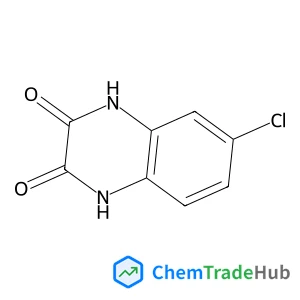
6-CHLORO-2,3-DIOXO-1,2,3,4-TETRAHYDROQUINOXALINE, 97
CAS Number:
169-14-2
Molecular Formula:
C8H5ClN2O2
phosphoryl}methyl 4-methylbenzenesulfonate structure](https://static.chemtradehub.com/structs/864/864068-45-1-ba7c.webp "{[3-(Hexadecyloxy)propoxy](hydroxy)phosphoryl}methyl 4-methylbenzenesulfonate structure")
{[3-(Hexadecyloxy)propoxy](hydroxy)phosphoryl}methyl 4-methylbenzenesulfonate
CAS Number:
864068-45-1
Molecular Formula:
C27H49O7PS


Recommended Suppliers





Disclaimer
This page provides academic journal information for reference and research purposes only. We are not affiliated with any journal publishers and do not handle publication submissions. For publication-related inquiries, please contact the respective journal publishers directly.
If you notice any inaccuracies in the information displayed, please contact us at support@chemtradehub.com. We will promptly review and address your concerns.