












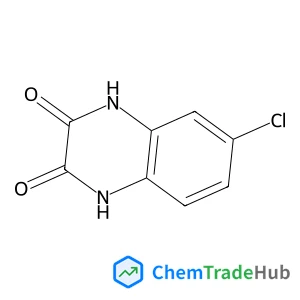
6-CHLORO-2,3-DIOXO-1,2,3,4-TETRAHYDROQUINOXALINE, 97
CAS Number:
169-14-2
Molecular Formula:
C8H5ClN2O2
Yusuke Ogura, Takaya Terashima, Mitsuo Sawamoto
Fluorinated gradient copolymers were synthesized by the tandem catalysis of ruthenium-catalyzed living radical polymerization (LRP) and titanium alkoxide-mediated transesterification of methyl methacrylate (MMA) with fluoroalcohols. Although transesterification using less nucleophilic fluoroalcohols is generally regarded as difficult, we found that MMA was efficiently transesterified with fluoroalcohols (RFOH) into fluorinated methacrylates (RFMA) by Ti(Oi-Pr)4 catalysts (2–8 mol%) in the presence of molecular sieves 4A (MS 4A). The yield of RFMA increased with increasing the alkyl spacer (carbon number) between a hydroxyl group and a fluorinated alkyl segment in fluoroalcohols: propyl (4,4,5,5,5-pentafluoro-1-pentanol: 5FPOH) > ethyl (1H,1H,2H,2H-nonafluoro-1-hexanol: 9FHOH) > methyl (1H,1H-heptafluoro-1-butanol). Tandem polymerization of MMA was conducted with a ruthenium catalyst, a chloride initiator, and Ti(Oi-Pr)4 in toluene/fluoroalcohol mixtures (1/1, v/v) at 80 °C. Typically, in the presence of 4 mol% Ti and MS 4A, transesterification of MMA with 5FPOH or 9FHOH was efficiently synchronized with LRP to produce well-controlled MMA/5FPMA or MMA/9FHMA gradient copolymers in high yield (Conv. >95%, Mw/Mn = 1.2).
Jiahao Shen, Junli Liu, Xiuyi Fan, Hui Liu, Yan Bao, AiPing Hui, Hafiz Akif Munir
DOI: 10.1039/D3BM01030A
Bo Yu, Qiao Jin, Jian Ji
DOI: 10.1039/D3BM01772A
Shereen Magdy Bazid, Shimaa Nabih, Md Ariful Ahsan
DOI: 10.1039/D3AY90141F
Chunyu Xie, Xiao Yang, Fan Zheng, Jiahao Shi, Caixia Huo, Zuyuan Wang, Bo Xiao, Lian Duan
DOI: 10.1039/D3BM01488F
Sabina Susmel, Federico Figueredo
DOI: 10.1039/D3AY01448G
H. H. Bai, X. F. Wang, B. Y. Zhang, W. Liu
DOI: 10.1039/D3AY01704D
Jie Huang, Xiaojing Chen, Zhonghao Xie, Shujat Ali, Xi Chen, Leiming Yuan, Chengxi Jiang, Guangzao Huang, Wen Shi
DOI: 10.1039/D3AY01411H
Chen Chen, Qi Xiao, Leyi Xiao, Mengge Feng, Fangzhe Liu, Ke Yao, Yu Cui, Tiange Zhang
DOI: 10.1039/D3BM01584J
Mingzhu Liu, Jingran Sun, Jin Wu, Zunquan Zhao, Jialei Bai, Yanjun Fang, Xiaoyong Jin
DOI: 10.1039/D3AY01423A
Clément Praud, Victor Ribay, Arnab Dey, Benoît Charrier, Joris Mandral, Jonathan Farjon, Jean-Nicolas Dumez, Patrick Giraudeau
DOI: 10.1039/D3AY01681A
4-Nitrophenyl phosphate disodium salt hexahydrate is primarily used as a substra...
2-(Trifluoromethyl)-1,3-oxazole-4-carboxylic Acid (CAS: 1060816-01-4) is widely ...
2-Fluoro-4-biphenylcarboxylic acid should be stored in a cool, dry place at room...
Prednisolone-21-Carboxylic Acid is primarily used in the pharmaceutical industry...
4-(Hydrazinomethyl)-1,2,3-benzenetriol (CAS: 3614-72-0) should be stored in a co...
4-Amino-1-methyl-1H-pyrazole-5-carboxylic acid hydrochloride (CAS: 92534-70-8) i...
Dehydropachymic acid (CAS: 77012-31-8) is regulated by various agencies. It fall...
The market and research trends for 6-[(2,2-Dimethylpropanoyl)amino]nicotinic aci...
1,10-Phenanthroline-2,9-dicarbaldehyde should be stored in a cool, dry place awa...
5-Carbamoyl-11-oxo-10,11-dihydro-5H-dibenzo[b,f]azepin-10-yl acetate can be synt...

Polymer Chemistry welcomes submissions in all areas of polymer science that have a strong focus on macromolecular chemistry. Manuscripts may cover a broad range of fields, yet no direct application focus is required.
phosphoryl}methyl 4-methylbenzenesulfonate structure](https://static.chemtradehub.com/structs/864/864068-45-1-ba7c.webp "{[3-(Hexadecyloxy)propoxy](hydroxy)phosphoryl}methyl 4-methylbenzenesulfonate structure")




