












On the H2 interactions with transition metal adatoms supported on graphene: a systematic density functional study
Literature Information
Publication Date
2018-01-02
DOI
10.1039/C7CP07995H
Impact Factor
3.676
Authors
Montserrat Manadé, Francesc Viñes, Francesc Illas
View Original
Abstract
The attachment of H2 to the full set of transition metal (TM) adatoms supported on graphene is studied by using density functional theory. Methodology validation calculations on the interactions of H2 with benzene and graphene show that any of the vdW corrections under study, the Grimme D2, D3, D3 with Becke-Jonson damping (D3BJ), and Tkatchenko–Scheffler methods, applied on the PBE functional, are similarly accurate in describing such subtle interactions, with an accuracy of almost 2 kJ mol−1 compared to experiments. The PBE-D3 results show that H2 physisorbs on especially stable d5 or d10 TMs. In other 5d metals, and the rightmost 3d and 4d ones, H2 dissociates, and only for Y, Mn, Fe, and Zr the H2 binds strongly enough for its storage in the so-called Kubas mode, where the H2 bond is sensibly elongated. Other metals (Co, Ni, Ru, Rh and Pd) feature also an elongated Kubas mode, interesting as well for H2 storage. Sc and Ti display a Kubas modes especially suited, given their lightness, for meeting the gravimetric requirements. The H2 interactions with TM adatoms imply a TM → H2 charge transfer, although the magnetic moment of the system tends to remain intact, except for the early 5d TMs, where the unpaired electron transfer seems to be associated with the H2 bond breakage.
Recommended Journals
Related Literature
On product state distributions in triatomic unimolecular reactions Part II. Processes governed by non-linear bending forces
P. Larrégaray, L. Bonnet, J. C. Rayez
2002-03-25
Paper
DOI: 10.1039/B109739N
Fourier transform EPR study and quantum chemical calculations of dihydrofuran radicals formed by triplet sensitized electron transfer in aqueous solution
K. Bernhard, S. Naumov
2002-04-09
Paper
DOI: 10.1039/B109064J
Secondary quasiperiodicity in the peroxidase–oxidase reaction
Lars F. Olsen, Tatiana V. Bronnikova, William M. Schaffer
2001-12-06
Paper
DOI: 10.1039/B107311G
Spectral dependence of the intrinsic optical signal of excited states of central gray matter and conformational changes at membrane interfaces
Vera Maura Fernandes de Lima, Marc Weimer, Wolfgang Hanke
2002-03-14
Paper
DOI: 10.1039/B109914K
Structures of the protected amino acid Ac–Phe–OMe and its dimer: A β-sheet model system in the gas phase
M. Gerhards, C. Unterberg
2002-04-03
Paper
DOI: 10.1039/B110029G
HSO2 isomers in rare-gas solids
Esa Isoniemi, Leonid Khriachtchev, Jan Lundell, Markku Räsänen
2002-03-21
Paper
DOI: 10.1039/B110109A
Modelling of reagent reorientation and tunneling in the activated exchange reaction N(2D) + H2 → NH + H
P. Larrégaray, L. Bonnet, J.-C. Rayez
2002-03-25
Paper
DOI: 10.1039/B109737G
New fluorescent probes for visual proteins Part I. Photophysical properties of 3-(oxo)propenyl-4′-(N,N-dimethylamino)benzoate
Vladislav Papper, Vladimir Kharlanov, Wolfgang Rettig
2002-04-04
Paper
DOI: 10.1039/B111681A
Theoretical studies of rotational and spin–orbit predissociation of the Ne·XH ( 2Π, X = O,S) van der Waals complexes.
Hee-Seung Lee, Anne B. McCoy
2002-03-20
Paper
DOI: 10.1039/B110963D
Ion exchange in the synthetic gismondine, zeolite MAP
Susan Allen, Stuart Carr, Andrew Chapple, Alan Dyer, Brigid Heywood
2002-05-02
Paper
DOI: 10.1039/B111490P
You might also like
Compound Q&A
What precautions should be taken when handling 4-Methyl-6-(trifluoromethyl)quinoline (CAS: 40716-16-3)?
When handling 4-Methyl-6-(trifluoromethyl)quinoline (CAS: 40716-16-3), safety go...
40716-16-34-Methyl-6-(trifluor...
Compound Q&A
What is 4-(3,5-Difluorophenyl)aniline (CAS: 405058-00-6)?
4-(3,5-Difluorophenyl)aniline is an aromatic organic compound with the CAS numbe...
405058-00-64-(3,5-Difluoropheny...
Compound Q&A
How is 5-{[4-(Trifluoromethyl)phenyl]sulfanyl}-1,2,3-thiadiazole-4-carboxylic acid (CAS: 338982-07-3) typically synthesized?
5-{[4-(Trifluoromethyl)phenyl]sulfanyl}-1,2,3-thiadiazole-4-carboxylic acid can ...
338982-07-35-{[4-(Trifluorometh...
Compound Q&A
What is the market or research trend for 4-Benzylaniline hydrochloride (CAS: 6317-57-3)?
The market for 4-Benzylaniline hydrochloride (CAS: 6317-57-3) is steadily growin...
6317-57-34-Benzylaniline hydr...
Compound Q&A
Is [3-(Diethylsulfamoyl)phenyl]boronic acid (CAS: 871329-58-7) safe?
[3-(Diethylsulfamoyl)phenyl]boronic acid is generally considered safe when handl...
871329-58-7[3-(Diethylsulfamoyl...
Compound Q&A
What are the main uses of 3-Bromo-2,5-dimethoxyaniline (CAS: 115929-62-9)?
3-Bromo-2,5-dimethoxyaniline is mainly used in the pharmaceutical and chemical i...
115929-62-93-Bromo-2,5-dimethox...
Compound Q&A
What regulatory guidelines apply to N-Methyl-1-(5-methyl-1H-indol-3-yl)methanamine (CAS: 915922-67-7)?
N-Methyl-1-(5-methyl-1H-indol-3-yl)methanamine (CAS: 915922-67-7) is subject to ...
915922-67-7N-Methyl-1-(5-methyl...
Compound Q&A
What industries use Carbamic acid, N-[(5S)-5,6-diamino-6-oxohexyl]-, 1,1-dimethylethyl ester (CAS: 24828-96-4)?
This compound is primarily used in the pharmaceutical industry for the synthesis...
24828-96-4Carbamic acid, N-[(5...
Compound Q&A
How should 2-Methyl-2-propanyl [(1S,3R)-3-aminocyclohexyl]carbamate (CAS: 1298101-47-9) be stored?
2-Methyl-2-propanyl [(1S,3R)-3-aminocyclohexyl]carbamate (CAS: 1298101-47-9) sho...
1298101-47-92-Methyl-2-propanyl ...
Compound Q&A
What industries use Ethyl 2-bromo-4,4,4-trifluorobutanoate (CAS: 367-33-9)?
Ethyl 2-bromo-4,4,4-trifluorobutanoate (CAS: 367-33-9) is utilized in the pharma...
367-33-9Ethyl 2-bromo-4,4,4-...
Source Journal
Physical Chemistry Chemical Physics

CiteScore:
5.5
Self-citation Rate:
10.3%
Articles per Year:
3036
Physical Chemistry Chemical Physics (PCCP) is an international journal co-owned by 19 physical chemistry and physics societies from around the world. This journal publishes original, cutting-edge research in physical chemistry, chemical physics and biophysical chemistry. To be suitable for publication in PCCP, articles must include significant innovation and/or insight into physical chemistry; this is the most important criterion that reviewers and Editors will judge against when evaluating submissions. The journal has a broad scope and welcomes contributions spanning experiment, theory, computation and data science. Topical coverage includes spectroscopy, dynamics, kinetics, statistical mechanics, thermodynamics, electrochemistry, catalysis, surface science, quantum mechanics, quantum computing and machine learning. Interdisciplinary research areas such as polymers and soft matter, materials, nanoscience, energy, surfaces/interfaces, and biophysical chemistry are welcomed if they demonstrate significant innovation and/or insight into physical chemistry. Joined experimental/theoretical studies are particularly appreciated when complementary and based on up-to-date approaches.
Recommended Compounds
![Methyl 3-({2'-[(E)-(hydroxyhydrazono)methyl]-4-biphenylyl}methyl)-2-oxo-2,3-dihydro-1H-benzimidazole-4-carboxylate structure](https://static.chemtradehub.com/structs/149/1499167-72-4-034a.webp "Methyl 3-({2'-[(E)-(hydroxyhydrazono)methyl]-4-biphenylyl}methyl)-2-oxo-2,3-dihydro-1H-benzimidazole-4-carboxylate structure")
Methyl 3-({2'-[(E)-(hydroxyhydrazono)methyl]-4-biphenylyl}methyl)-2-oxo-2,3-dihydro-1H-benzimidazole-4-carboxylate
CAS Number:
1499167-72-4
Molecular Formula:
C23H20N4O4
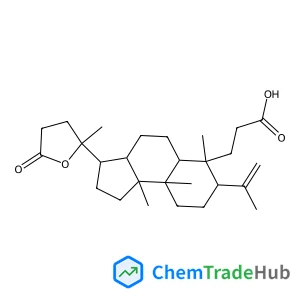
![2-[(5Z,8Z,11Z,14Z)-5,8,11,14-Icosatetraen-1-yloxy]-1,3-propanediol structure](https://static.chemtradehub.com/structs/222/222723-55-9-0348.webp "2-[(5Z,8Z,11Z,14Z)-5,8,11,14-Icosatetraen-1-yloxy]-1,3-propanediol structure")
2-[(5Z,8Z,11Z,14Z)-5,8,11,14-Icosatetraen-1-yloxy]-1,3-propanediol
CAS Number:
222723-55-9
Molecular Formula:
C23H40O3
Recommended Suppliers




Disclaimer
This page provides academic journal information for reference and research purposes only. We are not affiliated with any journal publishers and do not handle publication submissions. For publication-related inquiries, please contact the respective journal publishers directly.
If you notice any inaccuracies in the information displayed, please contact us at support@chemtradehub.com. We will promptly review and address your concerns.