



Theoretical investigation of selective catalytic reduction of NO on MIL-100-Fe
Literature Information
Publication Date
2017-12-20
DOI
10.1039/C7CP06756A
Impact Factor
3.676
Authors
View Original
Abstract
MIL-100-Fe, a three-dimensional porous metal organic framework material, shows good activity for the selective catalytic reduction of NO by ammonia. Understanding reaction mechanisms at the molecular level contributes to the design and development of highly active catalysts. Herein, density functional theory calculations with the consideration of van der Waals interactions were performed to investigate the SCR mechanism on MIL-100-Fe. Lewis acid sites and Brønsted acid sites both exist on MIL-100-Fe, which are active for the SCR reaction. MIL-100-Fe exhibits the features of single-site catalysts, thus we calculated the NH3-SCR reaction process following the Eley–Rideal mechanism. The proposed NH3-SCR mechanism can be subdivided into two parts: (1) NO oxidation and (2) fast SCR reaction. Our results show that Lewis acid sites play an essential role in activating the reactants. The NO molecule is readily oxidized to NO2 species on the Fe Lewis acid sites, the adsorbed NH3 species react with gaseous NO2, and the formation of intermediate NH2NO is the rate-determining step. This study offers new and important insights into the mechanistic understanding of the NH3-SCR reaction on the MIL-100-Fe catalyst.
Recommended Journals

Russian Journal of Organic Chemistry

New Journal of Chemistry

Journal of Peptide Science

Russian Journal of Coordination Chemistry

Chemical Communications

Current Opinion in Solid State & Materials Science

Current Opinion in Colloid & Interface Science

Journal of Saudi Chemical Society

Russian Journal of Applied Chemistry

Russian Chemical Bulletin
Related Literature
The emission spectrum and the radiative lifetime of Eu3+ in luminescent lanthanide complexes
Martinus H. V. Werts, Ronald T. F. Jukes, Jan W. Verhoeven
2002-03-22
Paper
DOI: 10.1039/B107770H
A non-rotatory isomerization path in ethene derivatives? Investigation of a stilbenophane and protonated azobenzenophanes (“pseudo-stilbenophanes”)‡
2002-04-17
Paper
DOI: 10.1039/B111483M
Effects of salt on the lamellar and bicontinuous cubic phases of fully hydrated monoacylglycerol (monoelaidin)
Hiroshi Takahashi, Akira Matsuo, Ichiro Hatta
2002-04-26
Paper
DOI: 10.1039/B110852B
FTIR spectroscopy of carbon dioxide adsorbed on sodium- and magnesium-exchanged ETS-10 molecular sieves
F. X. Llabrés i Xamena, A. Zecchina
2002-04-18
Paper
DOI: 10.1039/B110483G
Electrical conductivity of reverse micelles in supercritical carbon dioxide
Christian Blattner, Jürgen Bittner, Georg Schmeer, Werner Kunz
2002-04-16
Paper
DOI: 10.1039/B109085B
Oscillatory kinetics of phase separation in a binary mixture under constant heating
J. Vollmer, A. J. Wagner
2002-03-21
Paper
DOI: 10.1039/B110256G
Aggregation of azamethine dyes on hydrated glass surfaces: An evanescent wave-induced fluorescence study
Chetan K. Parmar, Garry Rumbles, Christopher J. Winscom
2002-04-08
Paper
DOI: 10.1039/B108865C
UV absorption cross sections of HO2NO2 between 343 and 273 K
Gary Knight, A. R. Ravishankara, James B. Burkholder
2002-03-11
Paper
DOI: 10.1039/B108904H
Analysis of the ν3 + ν7 combination band of CF2Cl2 from spectra obtained by high resolution diode laser and FTIR supersonic jet techniques
Giuseppe D'Amico, Marcel Snels, Hans Hollenstein, Martin Quack
2002-03-25
Paper
DOI: 10.1039/B110919G
Theoretical study of hydrogen abstraction from dimethyl ether and methyl tert-butyl ether by hydroxyl radical
F. Atadinç, C. Selçuki, L. Sari, V. Aviyente
2002-04-16
Paper
DOI: 10.1039/B109970C
You might also like
Compound Q&A
What precautions should be taken when handling 4-Methyl-6-(trifluoromethyl)quinoline (CAS: 40716-16-3)?
When handling 4-Methyl-6-(trifluoromethyl)quinoline (CAS: 40716-16-3), safety go...
40716-16-34-Methyl-6-(trifluor...
Compound Q&A
What is 4-(3,5-Difluorophenyl)aniline (CAS: 405058-00-6)?
4-(3,5-Difluorophenyl)aniline is an aromatic organic compound with the CAS numbe...
405058-00-64-(3,5-Difluoropheny...
Compound Q&A
How is 5-{[4-(Trifluoromethyl)phenyl]sulfanyl}-1,2,3-thiadiazole-4-carboxylic acid (CAS: 338982-07-3) typically synthesized?
5-{[4-(Trifluoromethyl)phenyl]sulfanyl}-1,2,3-thiadiazole-4-carboxylic acid can ...
338982-07-35-{[4-(Trifluorometh...
Compound Q&A
What is the market or research trend for 4-Benzylaniline hydrochloride (CAS: 6317-57-3)?
The market for 4-Benzylaniline hydrochloride (CAS: 6317-57-3) is steadily growin...
6317-57-34-Benzylaniline hydr...
Compound Q&A
Is [3-(Diethylsulfamoyl)phenyl]boronic acid (CAS: 871329-58-7) safe?
[3-(Diethylsulfamoyl)phenyl]boronic acid is generally considered safe when handl...
871329-58-7[3-(Diethylsulfamoyl...
Compound Q&A
What are the main uses of 3-Bromo-2,5-dimethoxyaniline (CAS: 115929-62-9)?
3-Bromo-2,5-dimethoxyaniline is mainly used in the pharmaceutical and chemical i...
115929-62-93-Bromo-2,5-dimethox...
Compound Q&A
What regulatory guidelines apply to N-Methyl-1-(5-methyl-1H-indol-3-yl)methanamine (CAS: 915922-67-7)?
N-Methyl-1-(5-methyl-1H-indol-3-yl)methanamine (CAS: 915922-67-7) is subject to ...
915922-67-7N-Methyl-1-(5-methyl...
Compound Q&A
What industries use Carbamic acid, N-[(5S)-5,6-diamino-6-oxohexyl]-, 1,1-dimethylethyl ester (CAS: 24828-96-4)?
This compound is primarily used in the pharmaceutical industry for the synthesis...
24828-96-4Carbamic acid, N-[(5...
Compound Q&A
How should 2-Methyl-2-propanyl [(1S,3R)-3-aminocyclohexyl]carbamate (CAS: 1298101-47-9) be stored?
2-Methyl-2-propanyl [(1S,3R)-3-aminocyclohexyl]carbamate (CAS: 1298101-47-9) sho...
1298101-47-92-Methyl-2-propanyl ...
Compound Q&A
What industries use Ethyl 2-bromo-4,4,4-trifluorobutanoate (CAS: 367-33-9)?
Ethyl 2-bromo-4,4,4-trifluorobutanoate (CAS: 367-33-9) is utilized in the pharma...
367-33-9Ethyl 2-bromo-4,4,4-...
Source Journal
Physical Chemistry Chemical Physics

CiteScore:
5.5
Self-citation Rate:
10.3%
Articles per Year:
3036
Physical Chemistry Chemical Physics (PCCP) is an international journal co-owned by 19 physical chemistry and physics societies from around the world. This journal publishes original, cutting-edge research in physical chemistry, chemical physics and biophysical chemistry. To be suitable for publication in PCCP, articles must include significant innovation and/or insight into physical chemistry; this is the most important criterion that reviewers and Editors will judge against when evaluating submissions. The journal has a broad scope and welcomes contributions spanning experiment, theory, computation and data science. Topical coverage includes spectroscopy, dynamics, kinetics, statistical mechanics, thermodynamics, electrochemistry, catalysis, surface science, quantum mechanics, quantum computing and machine learning. Interdisciplinary research areas such as polymers and soft matter, materials, nanoscience, energy, surfaces/interfaces, and biophysical chemistry are welcomed if they demonstrate significant innovation and/or insight into physical chemistry. Joined experimental/theoretical studies are particularly appreciated when complementary and based on up-to-date approaches.
Recommended Compounds
![N-{3-[Benzyl(methyl)amino]propyl}-9-chloro-5,6,7,8-tetrahydro-2-acridinecarboxamide structure](https://static.chemtradehub.com/structs/142/1426944-49-1-1e4c.webp "N-{3-[Benzyl(methyl)amino]propyl}-9-chloro-5,6,7,8-tetrahydro-2-acridinecarboxamide structure")
N-{3-[Benzyl(methyl)amino]propyl}-9-chloro-5,6,7,8-tetrahydro-2-acridinecarboxamide
CAS Number:
1426944-49-1
Molecular Formula:
C25H28ClN3O
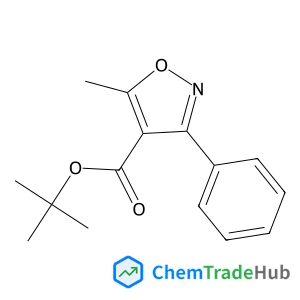
2-Methyl-2-propanyl 5-methyl-3-phenyl-1,2-oxazole-4-carboxylate
CAS Number:
211429-79-7
Molecular Formula:
C15H17NO3

Recommended Suppliers





Disclaimer
This page provides academic journal information for reference and research purposes only. We are not affiliated with any journal publishers and do not handle publication submissions. For publication-related inquiries, please contact the respective journal publishers directly.
If you notice any inaccuracies in the information displayed, please contact us at support@chemtradehub.com. We will promptly review and address your concerns.