



Water facilitates oxygen migration on gold surfaces
Literature Information
Publication Date
2017-12-05
DOI
10.1039/C7CP06451A
Impact Factor
3.676
Authors
Fang Xu, Ioanna Fampiou, Christopher R. O'Connor, Stavros Karakalos, Fanny Hiebel, Robert J. Madix
View Original
Abstract
The water–oxygen–gold interface is important in many surface processes and has potential influence on heterogeneous catalysis. Herein, it is shown that water facilitates the migration of atomic oxygen on Au(110), demonstrating the dynamic nature of surface adsorption. We demonstrate this effect for the first time, using in situ scanning tunnelling microscopy (STM), temperature-programmed reaction spectroscopy (TPRS) and first-principles theoretical calculations. The dynamic interaction of water with adsorbed O maintains a high dispersion of O on the surface, potentially creating reactive transient species. At low temperature and pressure, isotopic experiments show that adsorbed oxygen on the Au(110) surface exchanges with oxygen in H218O. The presence of water modulates local electronic properties and facilitates oxygen exchange. Combining experimental results and theory, we propose that hydroxyl is transiently formed via proton transfer from the water to adsorbed oxygen. Hydroxyl groups easily recombine to regenerate water and adsorbed oxygen atoms, the net result of which is migration of the adsorbed oxygen without significant change in its overall distribution on the surface. The presence of water creates a dynamic surface where mobile surface oxygen atoms and hydroxyls are present, which can lead to a better performance of gold catalysis in oxidation reactions.
Recommended Journals

Russian Journal of Applied Chemistry

Russian Journal of Bioorganic Chemistry

Saudi Pharmaceutical Journal

Acta Materialia

Chemical Communications

Russian Journal of Organic Chemistry

Organic Process Research & Development

Nature Medicine

Current Opinion in Solid State & Materials Science

Current Opinion in Colloid & Interface Science
Related Literature
The effect of gravity on the rate of a simple neutralisation reaction in a small, open cylindrical vessel
David F. Fletcher
2002-03-19
Paper
DOI: 10.1039/B110795J
A non-rotatory isomerization path in ethene derivatives? Investigation of a stilbenophane and protonated azobenzenophanes (“pseudo-stilbenophanes”)‡
2002-04-17
Paper
DOI: 10.1039/B111483M
OH-initiated oxidation of benzene Part I. Phenol formation under atmospheric conditions
Ian Barnes, Takashi Imamura, Klaus Wirtz, Nobuaki Washida, Karl Heinz Becker, Ulrich Platt
2002-03-21
Paper
DOI: 10.1039/B108747A
A pulse radiolysis study of the oxidation of Br− by Cl2˙− in aqueous solution: formation and properties of ClBr˙−
M. Kelm, A. V. Gordeev, E. Janata
2002-04-11
Paper
DOI: 10.1039/B110362H
Self-motion of a camphoric acid boat sensitive to the chemical environment
Yuko Hayashima, Masaharu Nagayama, Yukie Doi, Satoshi Nakata, Maya Kimura, Masayasu Iida
2002-03-15
Paper
DOI: 10.1039/B108686C
Transformation of diamond nanoparticles into carbon onions under electron irradiation
V. V. Roddatis, V. L. Kuznetsov, Yu. V. Butenko, D. S. Su, R. Schlögl
2002-04-09
Paper
DOI: 10.1039/B110487J
Effects of salt on the lamellar and bicontinuous cubic phases of fully hydrated monoacylglycerol (monoelaidin)
Hiroshi Takahashi, Akira Matsuo, Ichiro Hatta
2002-04-26
Paper
DOI: 10.1039/B110852B
Low temperature matrix-isolation and solid state vibrational spectra of 5-chlorotetrazole
Susana C. S. Bugalho, A. C. Serra, Leszek Lapinski, M. Lurdes S. Cristiano, Rui Fausto
2002-04-15
Paper
DOI: 10.1039/B111329C
Adducts of alkali-metal ions with the CC triple bond: an experimental and ab initio study
B. Bonelli, B. Civalleri, P. Ugliengo, Z. Gabelica, E. Garrone
2002-03-26
Paper
DOI: 10.1039/B108577H
You might also like
Compound Q&A
What precautions should be taken when handling 4-Methyl-6-(trifluoromethyl)quinoline (CAS: 40716-16-3)?
When handling 4-Methyl-6-(trifluoromethyl)quinoline (CAS: 40716-16-3), safety go...
40716-16-34-Methyl-6-(trifluor...
Compound Q&A
What is 4-(3,5-Difluorophenyl)aniline (CAS: 405058-00-6)?
4-(3,5-Difluorophenyl)aniline is an aromatic organic compound with the CAS numbe...
405058-00-64-(3,5-Difluoropheny...
Compound Q&A
How is 5-{[4-(Trifluoromethyl)phenyl]sulfanyl}-1,2,3-thiadiazole-4-carboxylic acid (CAS: 338982-07-3) typically synthesized?
5-{[4-(Trifluoromethyl)phenyl]sulfanyl}-1,2,3-thiadiazole-4-carboxylic acid can ...
338982-07-35-{[4-(Trifluorometh...
Compound Q&A
What is the market or research trend for 4-Benzylaniline hydrochloride (CAS: 6317-57-3)?
The market for 4-Benzylaniline hydrochloride (CAS: 6317-57-3) is steadily growin...
6317-57-34-Benzylaniline hydr...
Compound Q&A
Is [3-(Diethylsulfamoyl)phenyl]boronic acid (CAS: 871329-58-7) safe?
[3-(Diethylsulfamoyl)phenyl]boronic acid is generally considered safe when handl...
871329-58-7[3-(Diethylsulfamoyl...
Compound Q&A
What are the main uses of 3-Bromo-2,5-dimethoxyaniline (CAS: 115929-62-9)?
3-Bromo-2,5-dimethoxyaniline is mainly used in the pharmaceutical and chemical i...
115929-62-93-Bromo-2,5-dimethox...
Compound Q&A
What regulatory guidelines apply to N-Methyl-1-(5-methyl-1H-indol-3-yl)methanamine (CAS: 915922-67-7)?
N-Methyl-1-(5-methyl-1H-indol-3-yl)methanamine (CAS: 915922-67-7) is subject to ...
915922-67-7N-Methyl-1-(5-methyl...
Compound Q&A
What industries use Carbamic acid, N-[(5S)-5,6-diamino-6-oxohexyl]-, 1,1-dimethylethyl ester (CAS: 24828-96-4)?
This compound is primarily used in the pharmaceutical industry for the synthesis...
24828-96-4Carbamic acid, N-[(5...
Compound Q&A
How should 2-Methyl-2-propanyl [(1S,3R)-3-aminocyclohexyl]carbamate (CAS: 1298101-47-9) be stored?
2-Methyl-2-propanyl [(1S,3R)-3-aminocyclohexyl]carbamate (CAS: 1298101-47-9) sho...
1298101-47-92-Methyl-2-propanyl ...
Compound Q&A
What industries use Ethyl 2-bromo-4,4,4-trifluorobutanoate (CAS: 367-33-9)?
Ethyl 2-bromo-4,4,4-trifluorobutanoate (CAS: 367-33-9) is utilized in the pharma...
367-33-9Ethyl 2-bromo-4,4,4-...
Source Journal
Physical Chemistry Chemical Physics

CiteScore:
5.5
Self-citation Rate:
10.3%
Articles per Year:
3036
Physical Chemistry Chemical Physics (PCCP) is an international journal co-owned by 19 physical chemistry and physics societies from around the world. This journal publishes original, cutting-edge research in physical chemistry, chemical physics and biophysical chemistry. To be suitable for publication in PCCP, articles must include significant innovation and/or insight into physical chemistry; this is the most important criterion that reviewers and Editors will judge against when evaluating submissions. The journal has a broad scope and welcomes contributions spanning experiment, theory, computation and data science. Topical coverage includes spectroscopy, dynamics, kinetics, statistical mechanics, thermodynamics, electrochemistry, catalysis, surface science, quantum mechanics, quantum computing and machine learning. Interdisciplinary research areas such as polymers and soft matter, materials, nanoscience, energy, surfaces/interfaces, and biophysical chemistry are welcomed if they demonstrate significant innovation and/or insight into physical chemistry. Joined experimental/theoretical studies are particularly appreciated when complementary and based on up-to-date approaches.
Recommended Compounds
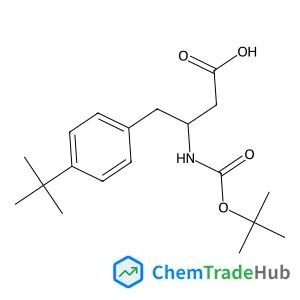
(S)-3-((tert-Butoxycarbonyl)amino)-4-(4-(tert-butyl)phenyl)butanoic acid
CAS Number:
403661-85-8
Molecular Formula:
C19H29NO4
Recommended Suppliers




Disclaimer
This page provides academic journal information for reference and research purposes only. We are not affiliated with any journal publishers and do not handle publication submissions. For publication-related inquiries, please contact the respective journal publishers directly.
If you notice any inaccuracies in the information displayed, please contact us at support@chemtradehub.com. We will promptly review and address your concerns.