












Conformational distortion of α-phenylethyl amine in cryogenic matrices – a matrix isolation VCD study
Literature Information
Publication Date
2016-04-14
DOI
10.1039/C6CP01946C
Impact Factor
3.676
Authors
Corina H. Pollok, Christian Merten
View Original
Abstract
The chiral amine α-phenylethyl amine (PEA) was isolated in cryogenic matrices and investigated using vibrational circular dichroism (VCD) and infrared spectroscopy. The potential energy surface (PES) of PEA features five different conformers connected by relatively low conformational transition states. Based on the IR spectra, it could be confirmed that all conformational energy barriers are passed at a deposition temperature of 20 K, and that only the global minimum conformation of PEA is populated in both argon and nitrogen matrices. However, differences in the calculated and experimental VCD spectra indicate deviations from the minimum structure by perturbation of the phenyl ring as well as of the amine orientation. The degree of the perturbation is found to also depend on the choice of the host gas, which shows the subtle influence of the environment on the conformational distortion of PEA.
Related Literature
Resolution of mixed dyes by in situ near infrared (NIR) spectroelectrochemistry
David Ibáñez, Alejandro Pérez-Junquera, María Begoña González-García, David Hernández-Santos, Pablo Fanjul-Bolado
2019-03-04
Communication
DOI: 10.1039/C9CP00484J
Strong influence of weak hydrogen bonding on actinide–phosphonate complexation: accurate predictions from DFT followed by experimental validation
Aditi Chandrasekar, Tapan K. Ghanty, C. V. S. Brahmmananda Rao, Mahesh Sundararajan, N. Sivaraman
2019-02-13
Paper
DOI: 10.1039/C9CP00479C
Structural organization and phase behaviour of meta-substituted dioctadecylaminobenzoquinones at the air/water interface
Shirin Behyan, Dimitrios Gritzalis, Eskedar Kebede
2019-01-03
Paper
DOI: 10.1039/C8CP07186A
Far-IR and UV spectral signatures of controlled complexation and microhydration of the polycyclic aromatic hydrocarbon acenaphthene
Jens Antony, Stefan Grimme, Anouk M. Rijs
2018-10-11
Paper
DOI: 10.1039/C8CP04480E
Manipulation of dipolar magnetism in low-dimensional iron oxide nanoparticle assemblies
Asma Qdemat, Oleg Petracic, Emmanuel Kentzinger, Ulrich Rücker, Fengshan Zheng, Peng-Han Lu, Xian-Kui Wei, Rafal E. Dunin-Borkowski, Thomas Brückel
2019-02-25
Paper
DOI: 10.1039/C9CP00302A
Comparison of hydrogen vacancies in KDP and ADP crystals: a combination of density functional theory calculations and experiment
Tingting Sui, Yafei Lian, Mingxia Xu, Lisong Zhang, Yanlu Li, Xian Zhao, Xinguang Xu, Xun Sun
2019-02-22
Paper
DOI: 10.1039/C8CP07685E
Graphene–hBN non-van der Waals vertical heterostructures for four- electron oxygen reduction reaction
Pankaj Kumar Rastogi, Krishna Rani Sahoo, Pallavi Thakur, Rahul Sharma, Sumit Bawari, Ramakrishna Podila, Tharangattu N. Narayanan
2019-01-18
Paper
DOI: 10.1039/C8CP06155F
Complete catalog of ground-state diagrams for the general three-state lattice-gas model with nearest-neighbor interactions on a square lattice
Daniel Silva
2019-02-22
Paper
DOI: 10.1039/C8CP07721E
Kinetics of the reactions of NO3 radical with alkanes
Li Zhou, Mahmoud Idir, Véronique Daële, Abdelwahid Mellouki
2019-02-05
Paper
DOI: 10.1039/C8CP07675H
Tuning oxygen electrocatalysis via strain on LaNiO3(001)‡
Simuck F. Yuk, Valentino R. Cooper
2018-10-15
Paper
DOI: 10.1039/C8CP02405G
You might also like
Compound Q&A
What are the main uses of 4-Nitrophenyl phosphate disodium salt hexahydrate (CAS: 333338-18-4)?
4-Nitrophenyl phosphate disodium salt hexahydrate is primarily used as a substra...
333338-18-44-Nitrophenyl phosph...
Compound Q&A
What are the main uses of 2-(Trifluoromethyl)-1,3-oxazole-4-carboxylic Acid (CAS: 1060816-01-4)?
2-(Trifluoromethyl)-1,3-oxazole-4-carboxylic Acid (CAS: 1060816-01-4) is widely ...
1060816-01-42-(Trifluoromethyl)-...
Compound Q&A
How should 2-Fluoro-4-biphenylcarboxylic acid (CAS: 137045-30-8) be stored?
2-Fluoro-4-biphenylcarboxylic acid should be stored in a cool, dry place at room...
137045-30-82-Fluoro-4-biphenylc...
Compound Q&A
What industries use Prednisolone-21-Carboxylic Acid (CAS: 61549-70-0)?
Prednisolone-21-Carboxylic Acid is primarily used in the pharmaceutical industry...
61549-70-0Prednisolone-21-Carb...
Compound Q&A
How should 4-(Hydrazinomethyl)-1,2,3-benzenetriol (CAS: 3614-72-0) be stored?
4-(Hydrazinomethyl)-1,2,3-benzenetriol (CAS: 3614-72-0) should be stored in a co...
3614-72-04-(Hydrazinomethyl)-...
Compound Q&A
What industries use 4-Amino-1-methyl-1H-pyrazole-5-carboxylic acid hydrochloride (CAS: 92534-70-8)?
4-Amino-1-methyl-1H-pyrazole-5-carboxylic acid hydrochloride (CAS: 92534-70-8) i...
92534-70-84-Amino-1-methyl-1H-...
Compound Q&A
What regulatory guidelines apply to dehydropachymic acid (CAS: 77012-31-8)?
Dehydropachymic acid (CAS: 77012-31-8) is regulated by various agencies. It fall...
77012-31-8Dehydropachymic acid
Compound Q&A
What is the market or research trend for 6-[(2,2-Dimethylpropanoyl)amino]nicotinic acid (CAS: 898561-66-5)?
The market and research trends for 6-[(2,2-Dimethylpropanoyl)amino]nicotinic aci...
898561-66-56-[(2,2-Dimethylprop...
Compound Q&A
How should 1,10-Phenanthroline-2,9-dicarbaldehyde (CAS: 57709-62-3) be stored?
1,10-Phenanthroline-2,9-dicarbaldehyde should be stored in a cool, dry place awa...
57709-62-31,10-Phenanthroline-...
Compound Q&A
How is 5-Carbamoyl-11-oxo-10,11-dihydro-5H-dibenzo[b,f]azepin-10-yl acetate (CAS: 113952-21-9) typically synthesized?
5-Carbamoyl-11-oxo-10,11-dihydro-5H-dibenzo[b,f]azepin-10-yl acetate can be synt...
113952-21-95-Carbamoyl-11-oxo-1...
Source Journal
Physical Chemistry Chemical Physics

CiteScore:
5.5
Self-citation Rate:
10.3%
Articles per Year:
3036
Physical Chemistry Chemical Physics (PCCP) is an international journal co-owned by 19 physical chemistry and physics societies from around the world. This journal publishes original, cutting-edge research in physical chemistry, chemical physics and biophysical chemistry. To be suitable for publication in PCCP, articles must include significant innovation and/or insight into physical chemistry; this is the most important criterion that reviewers and Editors will judge against when evaluating submissions. The journal has a broad scope and welcomes contributions spanning experiment, theory, computation and data science. Topical coverage includes spectroscopy, dynamics, kinetics, statistical mechanics, thermodynamics, electrochemistry, catalysis, surface science, quantum mechanics, quantum computing and machine learning. Interdisciplinary research areas such as polymers and soft matter, materials, nanoscience, energy, surfaces/interfaces, and biophysical chemistry are welcomed if they demonstrate significant innovation and/or insight into physical chemistry. Joined experimental/theoretical studies are particularly appreciated when complementary and based on up-to-date approaches.
Recommended Compounds
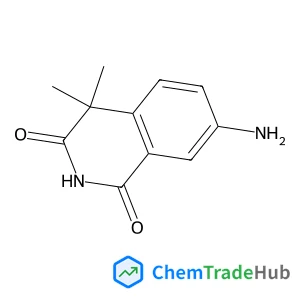
1,3(2H,4H)-Isoquinolinedione, 7-amino-4,4-dimethyl-
CAS Number:
14576-22-8
Molecular Formula:
C11H12N2O2

4-Methyl-3-morpholinecarboxylic acid hydrochloride (1:1)
CAS Number:
1240518-90-4
Molecular Formula:
C6H12ClNO3

2,2-dideuterio-2-(3,4,5,6-tetradeuterio-2-pyridyl)acetic acid;hydrochloride
CAS Number:
1329799-67-8
Molecular Formula:
C7H2ClD6NO2
Recommended Suppliers





Disclaimer
This page provides academic journal information for reference and research purposes only. We are not affiliated with any journal publishers and do not handle publication submissions. For publication-related inquiries, please contact the respective journal publishers directly.
If you notice any inaccuracies in the information displayed, please contact us at support@chemtradehub.com. We will promptly review and address your concerns.