


Structural reconstruction and spontaneous formation of Fe polynuclears: a self-assembly of Fe–porphyrin coordination chains on Au(111) revealed by scanning tunneling microscopy
Literature Information
Publication Date
2016-04-27
DOI
10.1039/C6CP01836J
Impact Factor
3.676
Authors
Yuxu Wang, Kun Zhou, Ziliang Shi
View Original
Abstract
A self-assembled Fe–porphyrin coordination chain structure on a Au(111) surface is investigated by scanning tunneling microscopy (STM), revealing structural reconstruction resulting from an alternative change of molecular orientations and spontaneous formation of uniformly sized Fe polynuclears. The alternation of the molecular orientations is ascribed to the cooperation of the attractive coordination and the intermolecular steric repulsion as elucidated by high-resolution STM observations. Furthermore, chemical control experiments are carried out to determine the number of atoms in an Fe polynuclear, suggesting a tentative Fe dinuclear-module that serves not only as a coordination center to link porphyrin units together but also as a “dangling” site for further functionalization by a guest terpyridine ligand. The chain structure and the Fe polynuclears are stable up to 320 K as revealed by real-time STM scanning. Annealing at higher temperatures converts the chain structure into a two-dimensional coordination structure.
Recommended Journals

New Journal of Chemistry

Russian Journal of Coordination Chemistry

Organic Process Research & Development

Saudi Pharmaceutical Journal

Crystallography Reports

Russian Journal of Organic Chemistry

Russian Journal of Bioorganic Chemistry

Journal of Natural Medicines

Drug Discovery Today

Journal of Saudi Chemical Society
Related Literature
Experimental characterization of aircraft combustor soot: Microstructure, surface area, porosity and water adsorption
O. B. Popovitcheva, N. M. Persiantseva, M. E. Trukhin, G. B. Rulev, N. K. Shonija, Yu. Ya. Buriko, A. M. Starik, B. Demirdjian, D. Ferry, J. Suzanne
2000-09-15
Paper
DOI: 10.1039/B004345L
Thermal desorption–degradation of cyclohexylamine over Ni2+- and Al3+-exchanged bentonite studied using evolved gas analysis (TG-EGA) and diffuse reflectance spectroscopy (DRIFTS)
Christopher Breen, Jeffrey Forsyth, Jack Yarwood, Trevor Hughes
2000-08-01
Paper
DOI: 10.1039/B003587O
Ni–Ar complex studied by laser spectroscopy
Yasunobu Kawamoto, Kenji Honma
2000-08-21
Paper
DOI: 10.1039/B004714G
Characterization of a TiCl4-modified silica surface by means of quantitative surface analysis
Paper
DOI: 10.1039/A901016E
An inelastic neutron scattering spectroscopic investigation of the adsorption of ethene and propene on carbon
David Lennon, John McNamara, Jon R. Phillips, Richard M. Ibberson, Stewart F. Parker
2000-09-06
Paper
DOI: 10.1039/B005144F
You might also like
Compound Q&A
What are the main uses of 4-Nitrophenyl phosphate disodium salt hexahydrate (CAS: 333338-18-4)?
4-Nitrophenyl phosphate disodium salt hexahydrate is primarily used as a substra...
333338-18-44-Nitrophenyl phosph...
Compound Q&A
What are the main uses of 2-(Trifluoromethyl)-1,3-oxazole-4-carboxylic Acid (CAS: 1060816-01-4)?
2-(Trifluoromethyl)-1,3-oxazole-4-carboxylic Acid (CAS: 1060816-01-4) is widely ...
1060816-01-42-(Trifluoromethyl)-...
Compound Q&A
How should 2-Fluoro-4-biphenylcarboxylic acid (CAS: 137045-30-8) be stored?
2-Fluoro-4-biphenylcarboxylic acid should be stored in a cool, dry place at room...
137045-30-82-Fluoro-4-biphenylc...
Compound Q&A
What industries use Prednisolone-21-Carboxylic Acid (CAS: 61549-70-0)?
Prednisolone-21-Carboxylic Acid is primarily used in the pharmaceutical industry...
61549-70-0Prednisolone-21-Carb...
Compound Q&A
How should 4-(Hydrazinomethyl)-1,2,3-benzenetriol (CAS: 3614-72-0) be stored?
4-(Hydrazinomethyl)-1,2,3-benzenetriol (CAS: 3614-72-0) should be stored in a co...
3614-72-04-(Hydrazinomethyl)-...
Compound Q&A
What industries use 4-Amino-1-methyl-1H-pyrazole-5-carboxylic acid hydrochloride (CAS: 92534-70-8)?
4-Amino-1-methyl-1H-pyrazole-5-carboxylic acid hydrochloride (CAS: 92534-70-8) i...
92534-70-84-Amino-1-methyl-1H-...
Compound Q&A
What regulatory guidelines apply to dehydropachymic acid (CAS: 77012-31-8)?
Dehydropachymic acid (CAS: 77012-31-8) is regulated by various agencies. It fall...
77012-31-8Dehydropachymic acid
Compound Q&A
What is the market or research trend for 6-[(2,2-Dimethylpropanoyl)amino]nicotinic acid (CAS: 898561-66-5)?
The market and research trends for 6-[(2,2-Dimethylpropanoyl)amino]nicotinic aci...
898561-66-56-[(2,2-Dimethylprop...
Compound Q&A
How should 1,10-Phenanthroline-2,9-dicarbaldehyde (CAS: 57709-62-3) be stored?
1,10-Phenanthroline-2,9-dicarbaldehyde should be stored in a cool, dry place awa...
57709-62-31,10-Phenanthroline-...
Compound Q&A
How is 5-Carbamoyl-11-oxo-10,11-dihydro-5H-dibenzo[b,f]azepin-10-yl acetate (CAS: 113952-21-9) typically synthesized?
5-Carbamoyl-11-oxo-10,11-dihydro-5H-dibenzo[b,f]azepin-10-yl acetate can be synt...
113952-21-95-Carbamoyl-11-oxo-1...
Source Journal
Physical Chemistry Chemical Physics

CiteScore:
5.5
Self-citation Rate:
10.3%
Articles per Year:
3036
Physical Chemistry Chemical Physics (PCCP) is an international journal co-owned by 19 physical chemistry and physics societies from around the world. This journal publishes original, cutting-edge research in physical chemistry, chemical physics and biophysical chemistry. To be suitable for publication in PCCP, articles must include significant innovation and/or insight into physical chemistry; this is the most important criterion that reviewers and Editors will judge against when evaluating submissions. The journal has a broad scope and welcomes contributions spanning experiment, theory, computation and data science. Topical coverage includes spectroscopy, dynamics, kinetics, statistical mechanics, thermodynamics, electrochemistry, catalysis, surface science, quantum mechanics, quantum computing and machine learning. Interdisciplinary research areas such as polymers and soft matter, materials, nanoscience, energy, surfaces/interfaces, and biophysical chemistry are welcomed if they demonstrate significant innovation and/or insight into physical chemistry. Joined experimental/theoretical studies are particularly appreciated when complementary and based on up-to-date approaches.
Recommended Compounds
![1-[(4-Methylphenyl)sulfonyl]-3-(4,4,5,5-tetramethyl-1,3,2-dioxaborolan-2-yl)-1H-pyrrolo[2,3-b]pyridine-5-carbonitrile structure](https://static.chemtradehub.com/structs/143/1434747-57-5-fc0d.webp "1-[(4-Methylphenyl)sulfonyl]-3-(4,4,5,5-tetramethyl-1,3,2-dioxaborolan-2-yl)-1H-pyrrolo[2,3-b]pyridine-5-carbonitrile structure")
1-[(4-Methylphenyl)sulfonyl]-3-(4,4,5,5-tetramethyl-1,3,2-dioxaborolan-2-yl)-1H-pyrrolo[2,3-b]pyridine-5-carbonitrile
CAS Number:
1434747-57-5
Molecular Formula:
C21H22BN3O4S
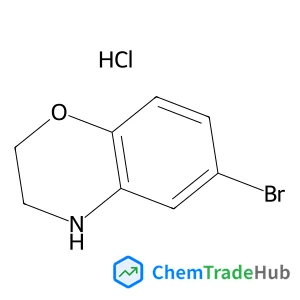
6-Bromo-3,4-dihydro-2H-1,4-benzoxazine hydrochloride (1:1)
CAS Number:
1260803-10-8
Molecular Formula:
C8H9BrClNO
Recommended Suppliers





Disclaimer
This page provides academic journal information for reference and research purposes only. We are not affiliated with any journal publishers and do not handle publication submissions. For publication-related inquiries, please contact the respective journal publishers directly.
If you notice any inaccuracies in the information displayed, please contact us at support@chemtradehub.com. We will promptly review and address your concerns.