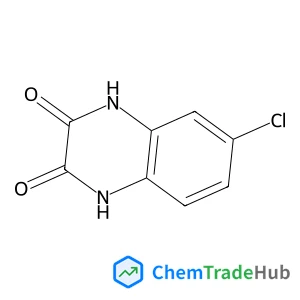
6-CHLORO-2,3-DIOXO-1,2,3,4-TETRAHYDROQUINOXALINE, 97
CAS Number:
169-14-2
Molecular Formula:
C8H5ClN2O2
We investigated the mechanism of the intrinsic persistent luminescence of Er2O3 in the A-type lattice based on first-principles calculations. We found that the native point defects were engaged in mutual subtle interactions in the form of chemical reactions between different charge states. The release of energy related to lattice distortion facilitates the conversion of energy for electrons to be transported between the valence band and the trap levels or even between the deep trap levels so as to generate persistent luminescence. The defect transitions that take place along the zero-phonon line release energy to enable optical transitions, with the exact amount of negative effective correlation energy determined by the lattice distortions. Our calculations on the thermodynamic transition levels confirm that both the visible and NIR experimentally observed intrinsic persistent luminescence (phosphor or afterglow) are related to the thermodynamic transition levels of oxygen-related defects, and the thermodynamic transition levels within different charge states for these defects are independent of the chemical potentials of the given species. Lattice distortion defects such as anion Frenkel (a-Fr) pair defects play an important role in transporting O-related defects between different lattice sites. To obtain red persistent luminescence that matches the biological therapeutic window, it is suggested to increase the electron transition levels between high-coordinated O vacancies and related metastable a-Fr defects; a close-packed core–shell structure is required to quench low-coordinated O-related defects so as to reduce the green band luminescence. We further established a conversed chain reaction (CCR) model to interpret the energy conversion process of persistent luminescence in terms of the inter-reactions of native point defects between different charge states. It is advantageous to use the study of defect levels combined with formation energies to suggest limits to doping energy and explain photostimulated luminescence in terms of native point defects.
Yonaton N. Heit, Dumitru-Claudiu Sergentu, Jochen Autschbach
DOI: 10.1039/C8CP07849A
Yang Wang, Shiwei Cao, Fangli Fan, Jie Yang, Hiromitsu Haba, Yukiko Komori, Takuya Yokokita, Kouji Morimoto, Daiya Kaji, Andreas Türler
DOI: 10.1039/C8CP07844K
Karen J. Edler, Stephen C. Parker
DOI: 10.1039/C9CP00203K
Pablo Quijano Velasco, Kyriakos Porfyrakis
DOI: 10.1039/C8CP07411A
Steffen Bornemann, Marius Herzog, Roland Winter
DOI: 10.1039/C8CP07413E
Daniel Silva
DOI: 10.1039/C8CP07721E
Zhihui Zhang, Yan Zhang, Zifeng Xie, Xing Wei, Tingting Guo, Jibin Fan, Lei Ni, Ye Tian, Jian Liu, Li Duan
DOI: 10.1039/C8CP07407K
4-Nitrophenyl phosphate disodium salt hexahydrate is primarily used as a substra...
2-(Trifluoromethyl)-1,3-oxazole-4-carboxylic Acid (CAS: 1060816-01-4) is widely ...
2-Fluoro-4-biphenylcarboxylic acid should be stored in a cool, dry place at room...
Prednisolone-21-Carboxylic Acid is primarily used in the pharmaceutical industry...
4-(Hydrazinomethyl)-1,2,3-benzenetriol (CAS: 3614-72-0) should be stored in a co...
4-Amino-1-methyl-1H-pyrazole-5-carboxylic acid hydrochloride (CAS: 92534-70-8) i...
Dehydropachymic acid (CAS: 77012-31-8) is regulated by various agencies. It fall...
The market and research trends for 6-[(2,2-Dimethylpropanoyl)amino]nicotinic aci...
1,10-Phenanthroline-2,9-dicarbaldehyde should be stored in a cool, dry place awa...
5-Carbamoyl-11-oxo-10,11-dihydro-5H-dibenzo[b,f]azepin-10-yl acetate can be synt...

Physical Chemistry Chemical Physics (PCCP) is an international journal co-owned by 19 physical chemistry and physics societies from around the world. This journal publishes original, cutting-edge research in physical chemistry, chemical physics and biophysical chemistry. To be suitable for publication in PCCP, articles must include significant innovation and/or insight into physical chemistry; this is the most important criterion that reviewers and Editors will judge against when evaluating submissions. The journal has a broad scope and welcomes contributions spanning experiment, theory, computation and data science. Topical coverage includes spectroscopy, dynamics, kinetics, statistical mechanics, thermodynamics, electrochemistry, catalysis, surface science, quantum mechanics, quantum computing and machine learning. Interdisciplinary research areas such as polymers and soft matter, materials, nanoscience, energy, surfaces/interfaces, and biophysical chemistry are welcomed if they demonstrate significant innovation and/or insight into physical chemistry. Joined experimental/theoretical studies are particularly appreciated when complementary and based on up-to-date approaches.