


Extending the plasmonic lifetime of tip-enhanced Raman spectroscopy probes
Literature Information
Publication Date
2016-05-03
DOI
10.1039/C6CP01641C
Impact Factor
3.676
Authors
Steve J. Spencer, Dario Imbraguglio, Andrea M. Rossi, Andrew J. Wain, Bert M. Weckhuysen, Debdulal Roy
View Original
Abstract
Tip-enhanced Raman spectroscopy (TERS) is an emerging technique for simultaneous mapping of chemical composition and topography of a surface at the nanoscale. However, rapid degradation of TERS probes, especially those coated with silver, is a major bottleneck to the widespread uptake of this technique and severely prohibits the success of many TERS experiments. In this work, we carry out a systematic time-series study of the plasmonic degradation of Ag-coated TERS probes under different environmental conditions and demonstrate that a low oxygen (<1 ppm) and a low moisture (<1 ppm) environment can significantly improve the plasmonic lifetime of TERS probes from a few hours to a few months. Furthermore, using X-ray photoelectron spectroscopy (XPS) measurements on Ag nanoparticles we show that the rapid plasmonic degradation of Ag-coated TERS probes can be correlated to surface oxide formation. Finally, we present practical guidelines for the effective use and storage of TERS probes to improve their plasmonic lifetime based on the results of this study.
Recommended Journals

Russian Journal of General Chemistry

Drug Discovery Today

Current Opinion in Colloid & Interface Science

Russian Journal of Coordination Chemistry

Russian Chemical Bulletin

Saudi Pharmaceutical Journal

Journal of Peptide Science

Current Opinion in Solid State & Materials Science

Journal of Natural Medicines

Nature Medicine
Related Literature
The structure of the water–hydrogen peroxide complex. A matrix isolation study
Anders Engdahl, Bengt Nelander
2000-08-29
Paper
DOI: 10.1039/B005861K
Self-healing hydrophobic POSS-functionalized fluorinated copolymers via RAFT polymerization and dynamic Diels–Alder reaction
Prantik Mondal, Thomas Becker, Richard Hoogenboom, Andrew B. Lowe, Nikhil K. Singha
2020-12-28
Paper
DOI: 10.1039/D0PY01522A
Titration microcalorimetry of micelle formation in aqueous solutions containing alkylpolyoxyethylene glycol ethers, C12H25(OCH2CH2)mOH where m=3, 4 and 5, and octadecyltrimethylammonium bromide
Jan B. F. N. Engberts, Jan Kevelam
2000-09-06
Paper
DOI: 10.1039/B004501M
Production, characterization and scattering of a sulfur atom beam: Interatomic potentials for the rare-gas sulfides, RS (R=Ne, Ar, Kr, Xe)
Vincenzo Aquilanti, Daniela Ascenzi, Elisabetta Braca
2000-05-17
Paper
DOI: 10.1039/B001696I
Phase behaviour of carbon dioxide–benzene–water ternary mixtures at high pressures and temperatures up to 300 MPa and 600 K
Eckhardt Brandt, E. Ulrich Franck, Ya Song Wei, Richard J. Sadus
2000-08-24
Paper
DOI: 10.1039/B004198J
Noble gas–metal chemical bonding: the microwave spectra, structures and hyperfine constants of Ar–AuF and Ar–AuBr
Corey J. Evans, Daryl S. Rubinoff, Michael C. L. Gerry
2000-08-31
Paper
DOI: 10.1039/B004352O
Sedimentation of colloidal particles near a wall: Stokesian dynamics simulations
Paper
DOI: 10.1039/A809571J
You might also like
Compound Q&A
What are the main uses of 4-Nitrophenyl phosphate disodium salt hexahydrate (CAS: 333338-18-4)?
4-Nitrophenyl phosphate disodium salt hexahydrate is primarily used as a substra...
333338-18-44-Nitrophenyl phosph...
Compound Q&A
What are the main uses of 2-(Trifluoromethyl)-1,3-oxazole-4-carboxylic Acid (CAS: 1060816-01-4)?
2-(Trifluoromethyl)-1,3-oxazole-4-carboxylic Acid (CAS: 1060816-01-4) is widely ...
1060816-01-42-(Trifluoromethyl)-...
Compound Q&A
How should 2-Fluoro-4-biphenylcarboxylic acid (CAS: 137045-30-8) be stored?
2-Fluoro-4-biphenylcarboxylic acid should be stored in a cool, dry place at room...
137045-30-82-Fluoro-4-biphenylc...
Compound Q&A
What industries use Prednisolone-21-Carboxylic Acid (CAS: 61549-70-0)?
Prednisolone-21-Carboxylic Acid is primarily used in the pharmaceutical industry...
61549-70-0Prednisolone-21-Carb...
Compound Q&A
How should 4-(Hydrazinomethyl)-1,2,3-benzenetriol (CAS: 3614-72-0) be stored?
4-(Hydrazinomethyl)-1,2,3-benzenetriol (CAS: 3614-72-0) should be stored in a co...
3614-72-04-(Hydrazinomethyl)-...
Compound Q&A
What industries use 4-Amino-1-methyl-1H-pyrazole-5-carboxylic acid hydrochloride (CAS: 92534-70-8)?
4-Amino-1-methyl-1H-pyrazole-5-carboxylic acid hydrochloride (CAS: 92534-70-8) i...
92534-70-84-Amino-1-methyl-1H-...
Compound Q&A
What regulatory guidelines apply to dehydropachymic acid (CAS: 77012-31-8)?
Dehydropachymic acid (CAS: 77012-31-8) is regulated by various agencies. It fall...
77012-31-8Dehydropachymic acid
Compound Q&A
What is the market or research trend for 6-[(2,2-Dimethylpropanoyl)amino]nicotinic acid (CAS: 898561-66-5)?
The market and research trends for 6-[(2,2-Dimethylpropanoyl)amino]nicotinic aci...
898561-66-56-[(2,2-Dimethylprop...
Compound Q&A
How should 1,10-Phenanthroline-2,9-dicarbaldehyde (CAS: 57709-62-3) be stored?
1,10-Phenanthroline-2,9-dicarbaldehyde should be stored in a cool, dry place awa...
57709-62-31,10-Phenanthroline-...
Compound Q&A
How is 5-Carbamoyl-11-oxo-10,11-dihydro-5H-dibenzo[b,f]azepin-10-yl acetate (CAS: 113952-21-9) typically synthesized?
5-Carbamoyl-11-oxo-10,11-dihydro-5H-dibenzo[b,f]azepin-10-yl acetate can be synt...
113952-21-95-Carbamoyl-11-oxo-1...
Source Journal
Physical Chemistry Chemical Physics

CiteScore:
5.5
Self-citation Rate:
10.3%
Articles per Year:
3036
Physical Chemistry Chemical Physics (PCCP) is an international journal co-owned by 19 physical chemistry and physics societies from around the world. This journal publishes original, cutting-edge research in physical chemistry, chemical physics and biophysical chemistry. To be suitable for publication in PCCP, articles must include significant innovation and/or insight into physical chemistry; this is the most important criterion that reviewers and Editors will judge against when evaluating submissions. The journal has a broad scope and welcomes contributions spanning experiment, theory, computation and data science. Topical coverage includes spectroscopy, dynamics, kinetics, statistical mechanics, thermodynamics, electrochemistry, catalysis, surface science, quantum mechanics, quantum computing and machine learning. Interdisciplinary research areas such as polymers and soft matter, materials, nanoscience, energy, surfaces/interfaces, and biophysical chemistry are welcomed if they demonstrate significant innovation and/or insight into physical chemistry. Joined experimental/theoretical studies are particularly appreciated when complementary and based on up-to-date approaches.
Recommended Compounds
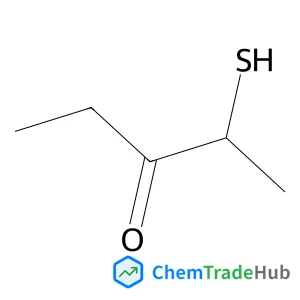

![S-[2,3-Bis(palmitoyloxy)propyl]-N-[(9H-fluoren-9-ylmethoxy)(hydroxy)methylene]cysteine structure](https://static.chemtradehub.com/structs/210/210532-98-2-f6a7.webp "S-[2,3-Bis(palmitoyloxy)propyl]-N-[(9H-fluoren-9-ylmethoxy)(hydroxy)methylene]cysteine structure")
S-[2,3-Bis(palmitoyloxy)propyl]-N-[(9H-fluoren-9-ylmethoxy)(hydroxy)methylene]cysteine
CAS Number:
210532-98-2
Molecular Formula:
C53H83NO8S
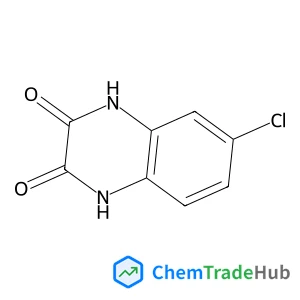
6-CHLORO-2,3-DIOXO-1,2,3,4-TETRAHYDROQUINOXALINE, 97
CAS Number:
169-14-2
Molecular Formula:
C8H5ClN2O2
Recommended Suppliers





Disclaimer
This page provides academic journal information for reference and research purposes only. We are not affiliated with any journal publishers and do not handle publication submissions. For publication-related inquiries, please contact the respective journal publishers directly.
If you notice any inaccuracies in the information displayed, please contact us at support@chemtradehub.com. We will promptly review and address your concerns.