












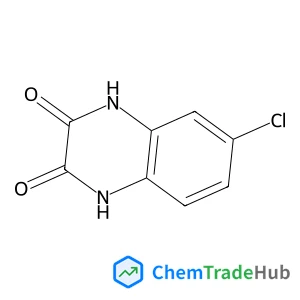
6-CHLORO-2,3-DIOXO-1,2,3,4-TETRAHYDROQUINOXALINE, 97
CAS Number:
169-14-2
Molecular Formula:
C8H5ClN2O2
Mamilla Rathaiah, Pamuluri Haritha, Antonio Diego Lozano-Gorrín, Palamandala Babu, Chalicheemalapalli Kulala Jayasankar, Ulises Ruyman Rodríguez-Mendoza, Victor Lavín, Vemula Venkatramu
Nanocrystalline Lu3Ga5O12 garnets doped with Tm3+/Yb3+ ions have been synthesized by a low cost and environmentally benign sol–gel technique and characterized for their structural, Stokes and anti-Stokes luminescence properties. The diffuse reflectance spectra of doped Lu3Ga5O12 nano-garnets have been measured to derive the partial energy level structure of Tm3+ and Yb3+ ions and possible energy transfer channels between them. Upon laser excitation at 473 nm, weak red and intense near-infrared Stokes emissions have been observed in the nano-garnets. The decay curves of 3H4 and 1G4 levels of Tm3+ ions and the 2F5/2 level of Yb3+ ions have been measured upon resonant laser excitation and are found to be non-exponential in nature due to multipolar interactions. In order to know the kind of multipolar interaction among optically active ions, the decay curves are analyzed through the generalized Yokota–Tanimoto model. Moreover, under 970 nm laser excitation, intense blue anti-Stokes emission is observed by the naked eye in Tm3+–Yb3+ co-doped Lu3Ga5O12 nano-garnets. The results show that as-synthesized nano-garnets may be useful in the field of phosphors and photonics.
G. Opletal, B. Sun, T. C. Petersen, S. P. Russo, A. S. Barnard
DOI: 10.1039/C8CP06649C
Bérenger Gans, Gustavo A. Garcia, Séverine Boyé-Péronne, Stephen T. Pratt, Jean-Claude Guillemin, Alfredo Aguado, Octavio Roncero, Jean-Christophe Loison
DOI: 10.1039/C8CP07737A
Anawat Thivasasith, Thana Maihom, Sitthiphong Pengpanich, Jumras Limtrakul, Chularat Wattanakit
DOI: 10.1039/C8CP05864D
Robert C. Sinclair, James L. Suter, Peter V. Coveney
DOI: 10.1039/C8CP07796G
Zhi-Hao Zhao, Yejing Dai
DOI: 10.1039/C9CP00415G
Guangbao Wu, Jiyu Zhou, Rui Meng, Baoda Xue, Huiqiong Zhou, Zhiyong Tang, Yuan Zhang
DOI: 10.1039/C8CP07271J
Matthew Kusinski, Rebecca A. Jockusch
DOI: 10.1039/C8CP05731A
Rudramani Pokhrel, Elumalai Pavadai
DOI: 10.1039/C8CP07323F
Indre Urbanaviciute, Subham Bhattacharjee, Michal Biler, Jody A. M. Lugger, Tim D. Cornelissen, Patrick Norman, Rint P. Sijbesma, Martijn Kemerink
DOI: 10.1039/C8CP06315J
David Ibáñez, Alejandro Pérez-Junquera, María Begoña González-García, David Hernández-Santos, Pablo Fanjul-Bolado
DOI: 10.1039/C9CP00484J
4-Nitrophenyl phosphate disodium salt hexahydrate is primarily used as a substra...
2-(Trifluoromethyl)-1,3-oxazole-4-carboxylic Acid (CAS: 1060816-01-4) is widely ...
2-Fluoro-4-biphenylcarboxylic acid should be stored in a cool, dry place at room...
Prednisolone-21-Carboxylic Acid is primarily used in the pharmaceutical industry...
4-(Hydrazinomethyl)-1,2,3-benzenetriol (CAS: 3614-72-0) should be stored in a co...
4-Amino-1-methyl-1H-pyrazole-5-carboxylic acid hydrochloride (CAS: 92534-70-8) i...
Dehydropachymic acid (CAS: 77012-31-8) is regulated by various agencies. It fall...
The market and research trends for 6-[(2,2-Dimethylpropanoyl)amino]nicotinic aci...
1,10-Phenanthroline-2,9-dicarbaldehyde should be stored in a cool, dry place awa...
5-Carbamoyl-11-oxo-10,11-dihydro-5H-dibenzo[b,f]azepin-10-yl acetate can be synt...

Physical Chemistry Chemical Physics (PCCP) is an international journal co-owned by 19 physical chemistry and physics societies from around the world. This journal publishes original, cutting-edge research in physical chemistry, chemical physics and biophysical chemistry. To be suitable for publication in PCCP, articles must include significant innovation and/or insight into physical chemistry; this is the most important criterion that reviewers and Editors will judge against when evaluating submissions. The journal has a broad scope and welcomes contributions spanning experiment, theory, computation and data science. Topical coverage includes spectroscopy, dynamics, kinetics, statistical mechanics, thermodynamics, electrochemistry, catalysis, surface science, quantum mechanics, quantum computing and machine learning. Interdisciplinary research areas such as polymers and soft matter, materials, nanoscience, energy, surfaces/interfaces, and biophysical chemistry are welcomed if they demonstrate significant innovation and/or insight into physical chemistry. Joined experimental/theoretical studies are particularly appreciated when complementary and based on up-to-date approaches.

![[(1S,2S,3R,4S,7R,9S,10S,12R,15S)-4,12-Diacetyloxy-15-[(2R,3S)-3-benzamido-3-phenyl-2-(2,2,2-trichloroethoxycarbonyloxy)propanoyl]oxy-1,9-dihydroxy-10,14,17,17-tetramethyl-11-oxo-6-oxatetracyclo[11.3.1.03,10.04,7]heptadec-13-en-2-yl] benzoate structure](https://static.chemtradehub.com/structs/100/100431-55-8-7104.webp "[(1S,2S,3R,4S,7R,9S,10S,12R,15S)-4,12-Diacetyloxy-15-[(2R,3S)-3-benzamido-3-phenyl-2-(2,2,2-trichloroethoxycarbonyloxy)propanoyl]oxy-1,9-dihydroxy-10,14,17,17-tetramethyl-11-oxo-6-oxatetracyclo[11.3.1.03,10.04,7]heptadec-13-en-2-yl] benzoate structure")




