












Controlled rippling of graphene via irradiation and applied strain modify its mechanical properties: a nanoindentation simulation study
Literature Information
Publication Date
2016-04-20
DOI
10.1039/C6CP01487A
Impact Factor
3.676
Authors
J. Martinez-Asencio, C. J. Ruestes, E. M. Bringa, M. J. Caturla
View Original
Abstract
Ripples present in free standing graphene have an important influence on the mechanical behavior of this two-dimensional material. In this study, we show through nanoindentation simulations, how out-of-plane displacements can be modified by strain, resulting in softening of the membrane under compression and stiffening under tension. Irradiation also induces changes in the mechanical properties of graphene. Interestingly, compressed samples, irradiated at low doses are stiffened by the irradiation, whereas the samples under tensile strain do not show significant changes in their mechanical properties. These simulations indicate that vacancies produced by the energetic ions cannot be the ones directly responsible for this behavior. However, changes in roughness induced by the momentum transferred from the energetic ions to the membrane, can explain these differences. These results provide an alternative explanation to recent experimental observations of the stiffening of graphene under low dose irradiation, as well as the paths to tailor the mechanical properties of this material via applied strain and irradiation.
Recommended Journals
Related Literature
Lamb-dip millimeter-wave spectrum, structure and dipole moment of HCCCCF
Paper
DOI: 10.1039/A900920E
Evaporation rates of structured and non-structured liquid mixtures
Kate J. Beverley, John H. Clint, Paul D. I. Fletcher
2000-08-30
Paper
DOI: 10.1039/B005628F
Reactivity of pyrrhotite (Fe9S10) surfaces: Spectroscopic studies
Yuri Mikhlin, Vladimir Varnek, Igor Asanov, Yevgeni Tomashevich, Alexander Okotrub, Alexander Livshits, Gennady Selyutin, Gennady Pashkov
2000-09-14
Paper
DOI: 10.1039/B005372O
Phase behaviour of carbon dioxide–benzene–water ternary mixtures at high pressures and temperatures up to 300 MPa and 600 K
Eckhardt Brandt, E. Ulrich Franck, Ya Song Wei, Richard J. Sadus
2000-08-24
Paper
DOI: 10.1039/B004198J
Influence of the boundaries in the impedance of porous film electrodes
2000-08-31
Paper
DOI: 10.1039/B001708F
Experimental and theoretical study of the F, Cl and Br reactions with formaldehyde and acetaldehyde
J. A. Beukes, B. D'Anna, V. Bakken, C. J. Nielsen
2000-08-10
Paper
DOI: 10.1039/B004546M
Molecular dynamics simulations of the lithium coordination environment in phosphate glasses
Todd M. Alam, Jian-Jie Liang, Randall T. Cygan
2000-09-15
Paper
DOI: 10.1039/B004627M
Excited state proton and electron transfer reactions of acridinedione dyes with amines
Paper
DOI: 10.1039/A809070J
You might also like
Compound Q&A
What precautions should be taken when handling 4-Methyl-6-(trifluoromethyl)quinoline (CAS: 40716-16-3)?
When handling 4-Methyl-6-(trifluoromethyl)quinoline (CAS: 40716-16-3), safety go...
40716-16-34-Methyl-6-(trifluor...
Compound Q&A
What is 4-(3,5-Difluorophenyl)aniline (CAS: 405058-00-6)?
4-(3,5-Difluorophenyl)aniline is an aromatic organic compound with the CAS numbe...
405058-00-64-(3,5-Difluoropheny...
Compound Q&A
How is 5-{[4-(Trifluoromethyl)phenyl]sulfanyl}-1,2,3-thiadiazole-4-carboxylic acid (CAS: 338982-07-3) typically synthesized?
5-{[4-(Trifluoromethyl)phenyl]sulfanyl}-1,2,3-thiadiazole-4-carboxylic acid can ...
338982-07-35-{[4-(Trifluorometh...
Compound Q&A
What is the market or research trend for 4-Benzylaniline hydrochloride (CAS: 6317-57-3)?
The market for 4-Benzylaniline hydrochloride (CAS: 6317-57-3) is steadily growin...
6317-57-34-Benzylaniline hydr...
Compound Q&A
Is [3-(Diethylsulfamoyl)phenyl]boronic acid (CAS: 871329-58-7) safe?
[3-(Diethylsulfamoyl)phenyl]boronic acid is generally considered safe when handl...
871329-58-7[3-(Diethylsulfamoyl...
Compound Q&A
What are the main uses of 3-Bromo-2,5-dimethoxyaniline (CAS: 115929-62-9)?
3-Bromo-2,5-dimethoxyaniline is mainly used in the pharmaceutical and chemical i...
115929-62-93-Bromo-2,5-dimethox...
Compound Q&A
What regulatory guidelines apply to N-Methyl-1-(5-methyl-1H-indol-3-yl)methanamine (CAS: 915922-67-7)?
N-Methyl-1-(5-methyl-1H-indol-3-yl)methanamine (CAS: 915922-67-7) is subject to ...
915922-67-7N-Methyl-1-(5-methyl...
Compound Q&A
What industries use Carbamic acid, N-[(5S)-5,6-diamino-6-oxohexyl]-, 1,1-dimethylethyl ester (CAS: 24828-96-4)?
This compound is primarily used in the pharmaceutical industry for the synthesis...
24828-96-4Carbamic acid, N-[(5...
Compound Q&A
How should 2-Methyl-2-propanyl [(1S,3R)-3-aminocyclohexyl]carbamate (CAS: 1298101-47-9) be stored?
2-Methyl-2-propanyl [(1S,3R)-3-aminocyclohexyl]carbamate (CAS: 1298101-47-9) sho...
1298101-47-92-Methyl-2-propanyl ...
Compound Q&A
What industries use Ethyl 2-bromo-4,4,4-trifluorobutanoate (CAS: 367-33-9)?
Ethyl 2-bromo-4,4,4-trifluorobutanoate (CAS: 367-33-9) is utilized in the pharma...
367-33-9Ethyl 2-bromo-4,4,4-...
Source Journal
Physical Chemistry Chemical Physics

CiteScore:
5.5
Self-citation Rate:
10.3%
Articles per Year:
3036
Physical Chemistry Chemical Physics (PCCP) is an international journal co-owned by 19 physical chemistry and physics societies from around the world. This journal publishes original, cutting-edge research in physical chemistry, chemical physics and biophysical chemistry. To be suitable for publication in PCCP, articles must include significant innovation and/or insight into physical chemistry; this is the most important criterion that reviewers and Editors will judge against when evaluating submissions. The journal has a broad scope and welcomes contributions spanning experiment, theory, computation and data science. Topical coverage includes spectroscopy, dynamics, kinetics, statistical mechanics, thermodynamics, electrochemistry, catalysis, surface science, quantum mechanics, quantum computing and machine learning. Interdisciplinary research areas such as polymers and soft matter, materials, nanoscience, energy, surfaces/interfaces, and biophysical chemistry are welcomed if they demonstrate significant innovation and/or insight into physical chemistry. Joined experimental/theoretical studies are particularly appreciated when complementary and based on up-to-date approaches.
Recommended Compounds

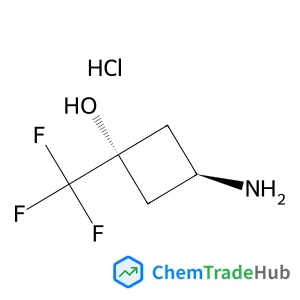
cis-3-Amino-1-(trifluoromethyl)cyclobutanol hydrochloride (1:1)
CAS Number:
1408075-16-0
Molecular Formula:
C5H9ClF3NO
Recommended Suppliers







Disclaimer
This page provides academic journal information for reference and research purposes only. We are not affiliated with any journal publishers and do not handle publication submissions. For publication-related inquiries, please contact the respective journal publishers directly.
If you notice any inaccuracies in the information displayed, please contact us at support@chemtradehub.com. We will promptly review and address your concerns.