












Influence of vibration in the reactive scattering of D + MuH: the effect of dynamical bonding
Literature Information
Publication Date
2016-04-15
DOI
10.1039/C6CP01305H
Impact Factor
3.676
Authors
V. Sáez-Rábanos, J. E. Verdasco, F. J. Aoiz, V. J. Herrero
View Original
Abstract
The dynamics of the D + MuH(v = 1) reaction has been investigated using time-independent quantum mechanical calculations. The total reaction cross sections and rate coefficients have been calculated for the two exit channels of the reaction leading, respectively, to DMu + H and DH + Mu. Over the 100–1000 K temperature range investigated the rate coefficients for the DMu + H channel are of the order of 10−10 cm3 s−1 and those for the DH + Mu channel vary between 1 × 10⁻¹² and 8 × 10⁻¹¹ cm3 s−1. These results point to a virtually barrierless reaction for the DMu + H channel and to the presence of a comparatively small barrier for the DH + Mu channel and are consistent with the profiles of their respective collinear vibrationally adiabatic potentials (VAPs). The effective barrier in the VAP of the DH + Mu channel is located in the reactant valley and, consequently, translation is found to be more efficient than vibration for the promotion of the reaction over a large energy interval in the post threshold region. Below this barrier, the DH + Mu channel can be accessible through an indirect mechanism implying crossing from the DMu + H pathway. The most salient feature found in the present study is revealed in the total reaction cross section for the DMu + H channel, which shows a sharp resonance caused by the presence of a deep well in the vibrationally adiabatic potential. This well has a dynamical origin, reminiscent of that found recently in the vibrationally bonded BrMuBr complex [Fleming, et al., Angew. Chem., Int. Ed., 2014, 53, 1], and is due to the stabilizing effect of the light Mu atom oscillating between the heavier H and D isotopes and to the bond softening associated with vibrational excitation of MuH.
Related Literature
Origin band of the first photoionizing transition of hydrogen isocyanide
Bérenger Gans, Gustavo A. Garcia, Séverine Boyé-Péronne, Stephen T. Pratt, Jean-Claude Guillemin, Alfredo Aguado, Octavio Roncero, Jean-Christophe Loison
2019-01-10
Paper
DOI: 10.1039/C8CP07737A
A comparison between hydrogen and halogen bonding: the hypohalous acid–water dimers, HOX⋯H2O (X = F, Cl, Br)
Mark E. Wolf, Boyi Zhang, Justin M. Turney, Henry F. Schaefer, III
2019-02-20
Paper
DOI: 10.1039/C9CP00422J
Excited state dynamics of aniline homoclusters
Raúl Montero, Iker Lamas, Iker León, José A. Fernández, Asier Longarte
2019-01-14
Paper
DOI: 10.1039/C8CP06416D
Monitoring solvent dynamics and ion associations in the formation of cubic octamer polyanion in tetramethylammonium silicate solutions
Ying Chen, Nancy M. Washton, Robert P. Young, Abhijeet J. Karkamkar, James J. De Yoreo, Karl T. Mueller
2019-02-12
Communication
DOI: 10.1039/C8CP07521B
Building intermixed donor–acceptor architectures for water-processable organic photovoltaics
Melissa Marks, Natalie P. Holmes, Xun Pan, Riku Chowdhury, Matthew G. Barr, Coralie Fenn, Matthew J. Griffith, A. L. David Kilcoyne, David A. Lewis, Mats R. Andersson, Warwick J. Belcher, Paul C. Dastoor
2019-02-19
Paper
DOI: 10.1039/C8CP07137C
The band structure and optical absorption of hematite (α-Fe2O3): a first-principles GW-BSE study
2019-01-16
Paper
DOI: 10.1039/C8CP07132B
Stabilizing amorphous Sb by adding alien seeds for durable memory materials
Meng Xu, Bowen Li, Kailang Xu, Hao Tong, Xiaomin Cheng, Ming Xu, Xiangshui Miao
2019-01-29
Paper
DOI: 10.1039/C8CP07446A
A study on the comprehension of differences in specific kinetic energy of TKX-50 and HMX from the perspective of gas products
Chuande Zhao, Yu Chi, Qiang Peng, Fang Yang, Jianhua Zhou, Xinfeng Wang, Kun Yu, Guijuan Fan, Jie Sun
2019-02-25
Paper
DOI: 10.1039/C8CP07487A
How intermolecular interactions influence electronic absorption spectra: insights from the molecular packing of uracil in condensed phases
Fangjia Fu, Kang Liao, Jing Ma, Zheng Cheng, Dong Zheng, Liuzhou Gao, Chungen Liu, Shuhua Li, Wei Li
2019-01-16
Paper
DOI: 10.1039/C8CP06152A
You might also like
Compound Q&A
What are the main uses of 4-Nitrophenyl phosphate disodium salt hexahydrate (CAS: 333338-18-4)?
4-Nitrophenyl phosphate disodium salt hexahydrate is primarily used as a substra...
333338-18-44-Nitrophenyl phosph...
Compound Q&A
What are the main uses of 2-(Trifluoromethyl)-1,3-oxazole-4-carboxylic Acid (CAS: 1060816-01-4)?
2-(Trifluoromethyl)-1,3-oxazole-4-carboxylic Acid (CAS: 1060816-01-4) is widely ...
1060816-01-42-(Trifluoromethyl)-...
Compound Q&A
How should 2-Fluoro-4-biphenylcarboxylic acid (CAS: 137045-30-8) be stored?
2-Fluoro-4-biphenylcarboxylic acid should be stored in a cool, dry place at room...
137045-30-82-Fluoro-4-biphenylc...
Compound Q&A
What industries use Prednisolone-21-Carboxylic Acid (CAS: 61549-70-0)?
Prednisolone-21-Carboxylic Acid is primarily used in the pharmaceutical industry...
61549-70-0Prednisolone-21-Carb...
Compound Q&A
How should 4-(Hydrazinomethyl)-1,2,3-benzenetriol (CAS: 3614-72-0) be stored?
4-(Hydrazinomethyl)-1,2,3-benzenetriol (CAS: 3614-72-0) should be stored in a co...
3614-72-04-(Hydrazinomethyl)-...
Compound Q&A
What industries use 4-Amino-1-methyl-1H-pyrazole-5-carboxylic acid hydrochloride (CAS: 92534-70-8)?
4-Amino-1-methyl-1H-pyrazole-5-carboxylic acid hydrochloride (CAS: 92534-70-8) i...
92534-70-84-Amino-1-methyl-1H-...
Compound Q&A
What regulatory guidelines apply to dehydropachymic acid (CAS: 77012-31-8)?
Dehydropachymic acid (CAS: 77012-31-8) is regulated by various agencies. It fall...
77012-31-8Dehydropachymic acid
Compound Q&A
What is the market or research trend for 6-[(2,2-Dimethylpropanoyl)amino]nicotinic acid (CAS: 898561-66-5)?
The market and research trends for 6-[(2,2-Dimethylpropanoyl)amino]nicotinic aci...
898561-66-56-[(2,2-Dimethylprop...
Compound Q&A
How should 1,10-Phenanthroline-2,9-dicarbaldehyde (CAS: 57709-62-3) be stored?
1,10-Phenanthroline-2,9-dicarbaldehyde should be stored in a cool, dry place awa...
57709-62-31,10-Phenanthroline-...
Compound Q&A
How is 5-Carbamoyl-11-oxo-10,11-dihydro-5H-dibenzo[b,f]azepin-10-yl acetate (CAS: 113952-21-9) typically synthesized?
5-Carbamoyl-11-oxo-10,11-dihydro-5H-dibenzo[b,f]azepin-10-yl acetate can be synt...
113952-21-95-Carbamoyl-11-oxo-1...
Source Journal
Physical Chemistry Chemical Physics

CiteScore:
5.5
Self-citation Rate:
10.3%
Articles per Year:
3036
Physical Chemistry Chemical Physics (PCCP) is an international journal co-owned by 19 physical chemistry and physics societies from around the world. This journal publishes original, cutting-edge research in physical chemistry, chemical physics and biophysical chemistry. To be suitable for publication in PCCP, articles must include significant innovation and/or insight into physical chemistry; this is the most important criterion that reviewers and Editors will judge against when evaluating submissions. The journal has a broad scope and welcomes contributions spanning experiment, theory, computation and data science. Topical coverage includes spectroscopy, dynamics, kinetics, statistical mechanics, thermodynamics, electrochemistry, catalysis, surface science, quantum mechanics, quantum computing and machine learning. Interdisciplinary research areas such as polymers and soft matter, materials, nanoscience, energy, surfaces/interfaces, and biophysical chemistry are welcomed if they demonstrate significant innovation and/or insight into physical chemistry. Joined experimental/theoretical studies are particularly appreciated when complementary and based on up-to-date approaches.
Recommended Compounds

cis-3-Amino-1-(trifluoromethyl)cyclobutanol hydrochloride (1:1)
CAS Number:
1408075-16-0
Molecular Formula:
C5H9ClF3NO
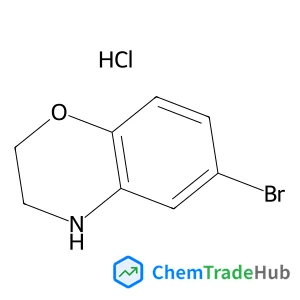
6-Bromo-3,4-dihydro-2H-1,4-benzoxazine hydrochloride (1:1)
CAS Number:
1260803-10-8
Molecular Formula:
C8H9BrClNO

Recommended Suppliers




Disclaimer
This page provides academic journal information for reference and research purposes only. We are not affiliated with any journal publishers and do not handle publication submissions. For publication-related inquiries, please contact the respective journal publishers directly.
If you notice any inaccuracies in the information displayed, please contact us at support@chemtradehub.com. We will promptly review and address your concerns.