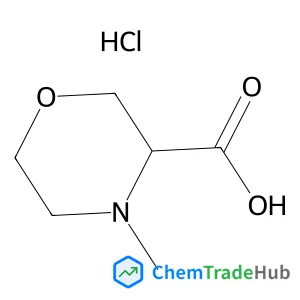
4-Methyl-3-morpholinecarboxylic acid hydrochloride (1:1)
CAS Number:
1240518-90-4
Molecular Formula:
C6H12ClNO3
Sebastiano Guerra, Thibault Dutronc, Emmanuel Terazzi, Laure Guénée, Claude Piguet
Chemical programming of the temperature domains of existence of liquid crystals is greatly desired by both academic workers and industrial partners. This contribution proposes to combine empirical approaches, which rely on systematic chemical substitutions of mesogenic molecules followed by thermal characterizations, with a rational thermodynamic assessment of the effects induced by chemical perturbations. Taking into account the similarities which exist between temperature-dependent cohesive Gibbs free energy densities (CFEDs) and pressure–temperature phase diagrams modeled with the Clapeyron equation, chemical perturbations are considered as pressure increments along phase boundaries, which control the thermotropic liquid crystalline properties. Taking the familiar calamitic amphiphilic cyanobiphenyl-type mesogens as models, the consequences of (i) methyl substitution of the aromatic polar heads and (ii) connections of bulky silyl groups at the termini of the apolar flexible alkyl chain on the melting and clearing temperatures are quantitatively analyzed. Particular efforts were focused on the translation of the thermodynamic rationalization into a predictive tool accessible to synthetic chemists mainly interested in designing liquid crystals with specific technological applications.
Shirin Behyan, Dimitrios Gritzalis, Eskedar Kebede
DOI: 10.1039/C8CP07186A
Mark E. Wolf, Boyi Zhang, Justin M. Turney, Henry F. Schaefer, III
DOI: 10.1039/C9CP00422J
Isabel del Carmen Sáenz-Tavera, Victor M. Rosas-García
DOI: 10.1039/C8CP06353B
Matus E. Diveky, Sandra Roy, Johannes W. Cremer, Grégory David, Ruth Signorell
DOI: 10.1039/C8CP06980H
Andreas Erbs Hillers-Bendtsen, Mia Harring Hansen, Kurt V. Mikkelsen
DOI: 10.1039/C8CP06539J
Anagh Bhaumik, Jagdish Narayan
DOI: 10.1039/C8CP04592E
Aditi Chandrasekar, Tapan K. Ghanty, C. V. S. Brahmmananda Rao, Mahesh Sundararajan, N. Sivaraman
DOI: 10.1039/C9CP00479C
Pablo Quijano Velasco, Kyriakos Porfyrakis
DOI: 10.1039/C8CP07411A
Yang Wang, Shiwei Cao, Fangli Fan, Jie Yang, Hiromitsu Haba, Yukiko Komori, Takuya Yokokita, Kouji Morimoto, Daiya Kaji, Andreas Türler
DOI: 10.1039/C8CP07844K
Zhihui Zhang, Yan Zhang, Zifeng Xie, Xing Wei, Tingting Guo, Jibin Fan, Lei Ni, Ye Tian, Jian Liu, Li Duan
DOI: 10.1039/C8CP07407K
4-Nitrophenyl phosphate disodium salt hexahydrate is primarily used as a substra...
2-(Trifluoromethyl)-1,3-oxazole-4-carboxylic Acid (CAS: 1060816-01-4) is widely ...
2-Fluoro-4-biphenylcarboxylic acid should be stored in a cool, dry place at room...
Prednisolone-21-Carboxylic Acid is primarily used in the pharmaceutical industry...
4-(Hydrazinomethyl)-1,2,3-benzenetriol (CAS: 3614-72-0) should be stored in a co...
4-Amino-1-methyl-1H-pyrazole-5-carboxylic acid hydrochloride (CAS: 92534-70-8) i...
Dehydropachymic acid (CAS: 77012-31-8) is regulated by various agencies. It fall...
The market and research trends for 6-[(2,2-Dimethylpropanoyl)amino]nicotinic aci...
1,10-Phenanthroline-2,9-dicarbaldehyde should be stored in a cool, dry place awa...
5-Carbamoyl-11-oxo-10,11-dihydro-5H-dibenzo[b,f]azepin-10-yl acetate can be synt...

Physical Chemistry Chemical Physics (PCCP) is an international journal co-owned by 19 physical chemistry and physics societies from around the world. This journal publishes original, cutting-edge research in physical chemistry, chemical physics and biophysical chemistry. To be suitable for publication in PCCP, articles must include significant innovation and/or insight into physical chemistry; this is the most important criterion that reviewers and Editors will judge against when evaluating submissions. The journal has a broad scope and welcomes contributions spanning experiment, theory, computation and data science. Topical coverage includes spectroscopy, dynamics, kinetics, statistical mechanics, thermodynamics, electrochemistry, catalysis, surface science, quantum mechanics, quantum computing and machine learning. Interdisciplinary research areas such as polymers and soft matter, materials, nanoscience, energy, surfaces/interfaces, and biophysical chemistry are welcomed if they demonstrate significant innovation and/or insight into physical chemistry. Joined experimental/theoretical studies are particularly appreciated when complementary and based on up-to-date approaches.