












Energy-resolved collision-induced dissociation of non-covalent ions: charge- and guest-dependence of decomplexation reaction efficiencies
Literature Information
Publication Date
2016-03-31
DOI
10.1039/C6CP01026A
Impact Factor
3.676
Authors
Vincent Lemaur, Julien De Winter, Lyle Isaacs, Edwin De Pauw, Jérôme Cornil, Pascal Gerbaux
View Original
Abstract
Supramolecular chemistry, and especially host–guest chemistry, has been the subject of great interest in the past few decades leading to the synthesis of host cage molecules such as calixarenes, cyclodextrins and more recently cucurbiturils. Mass spectrometry methods are increasingly used to decipher at the molecular level the non-covalent interactions between the different associated molecules. The present article illustrates that the association between mass spectrometry and computational chemistry techniques proves very complementary to depict the gas-phase dissociation processes of ionic non-covalent complexes when subjected to collisional activation. The selected system associates a nor-seco-cucurbit[10]uril bitopic receptor with different amino compounds (adamantylamine, para-xylylenediamine, and para-phenylenediamine). When subjected to CID experiments, the ternary complexes undergo fragmentation via dissociation of non-covalently bound partners. Interestingly, depending on their charge state, the collisionally excited complexes can selectively expel either a neutral guest molecule or a protonated guest molecule. Moreover, based on energy-resolved CID experiments, it is possible to evaluate the guest molecule dependence on the gas phase dissociation efficiency. We observed that the relative order of gas phase dissociation is charge state dependent, with the adamantylamine-containing complexes being the weakest when triply charged and the strongest when doubly charged. The energetics of the gas-phase dissociation reactions have been estimated by density functional theory (DFT) calculations. We succeeded in theoretically rationalizing the experimental collision-induced dissociation results with a special emphasis on: (i) the charge state of the expelled guest molecule and (ii) the nature of the guest molecule.
Related Literature
Modelling potential energy surfaces for small clusters using Shepard interpolation with Gaussian-form nodal functions
Haina Wang, Ryan P. A. Bettens
2019-02-04
Paper
DOI: 10.1039/C8CP07640E
Suppressing depolarization by tail substitution in an organic supramolecular ferroelectric
Indre Urbanaviciute, Subham Bhattacharjee, Michal Biler, Jody A. M. Lugger, Tim D. Cornelissen, Patrick Norman, Rint P. Sijbesma, Martijn Kemerink
2019-01-02
Paper
DOI: 10.1039/C8CP06315J
Reaction of chloride anion with atomic oxygen in aqueous solutions: can cold plasma help in chemistry research?
Yury Gorbanev, Jonas Van der Paal, Wilma Van Boxem, Sylvia Dewilde, Annemie Bogaerts
2019-01-30
Communication
DOI: 10.1039/C8CP07550F
Stability and behaviour in aqueous solutions of the anionic cubic silsesquioxane substituted with tetramethylammonium
Emelie J. Nilsson, Marina Huber, Göran Carlström, Olle Söderman, Daniel T. Bowron, Viveka Alfredsson
2019-03-04
Paper
DOI: 10.1039/C8CP05682J
Micromechanical exfoliation of graphene on the atomistic scale‡
Robert C. Sinclair, James L. Suter, Peter V. Coveney
2019-02-25
Paper
DOI: 10.1039/C8CP07796G
Phonon transport and thermoelectric properties of semiconducting Bi2Te2X (X = S, Se, Te) monolayers
Wu Li
2019-02-12
Paper
DOI: 10.1039/C8CP05793A
Dithiafulvene derivatized donor–acceptor norbornadienes with redshifted absorption
Martin Drøhse Kilde, Sandeep Kumar Singh, Paul Erhart, Kasper Moth-Poulsen, Mogens Brøndsted Nielsen
2019-01-10
Paper
DOI: 10.1039/C8CP07744D
Ab initio calculations and reduced density gradient analyses of the structure and energetics of hydrated calcium fluoride and calcium carbonate
Isabel del Carmen Sáenz-Tavera, Victor M. Rosas-García
2019-02-13
Paper
DOI: 10.1039/C8CP06353B
Bayesian determination of the effect of a deep eutectic solvent on the structure of lipid monolayers
Karen J. Edler, Stephen C. Parker
2019-02-22
Paper
DOI: 10.1039/C9CP00203K
You might also like
Compound Q&A
What are the main uses of 4-Nitrophenyl phosphate disodium salt hexahydrate (CAS: 333338-18-4)?
4-Nitrophenyl phosphate disodium salt hexahydrate is primarily used as a substra...
333338-18-44-Nitrophenyl phosph...
Compound Q&A
What are the main uses of 2-(Trifluoromethyl)-1,3-oxazole-4-carboxylic Acid (CAS: 1060816-01-4)?
2-(Trifluoromethyl)-1,3-oxazole-4-carboxylic Acid (CAS: 1060816-01-4) is widely ...
1060816-01-42-(Trifluoromethyl)-...
Compound Q&A
How should 2-Fluoro-4-biphenylcarboxylic acid (CAS: 137045-30-8) be stored?
2-Fluoro-4-biphenylcarboxylic acid should be stored in a cool, dry place at room...
137045-30-82-Fluoro-4-biphenylc...
Compound Q&A
What industries use Prednisolone-21-Carboxylic Acid (CAS: 61549-70-0)?
Prednisolone-21-Carboxylic Acid is primarily used in the pharmaceutical industry...
61549-70-0Prednisolone-21-Carb...
Compound Q&A
How should 4-(Hydrazinomethyl)-1,2,3-benzenetriol (CAS: 3614-72-0) be stored?
4-(Hydrazinomethyl)-1,2,3-benzenetriol (CAS: 3614-72-0) should be stored in a co...
3614-72-04-(Hydrazinomethyl)-...
Compound Q&A
What industries use 4-Amino-1-methyl-1H-pyrazole-5-carboxylic acid hydrochloride (CAS: 92534-70-8)?
4-Amino-1-methyl-1H-pyrazole-5-carboxylic acid hydrochloride (CAS: 92534-70-8) i...
92534-70-84-Amino-1-methyl-1H-...
Compound Q&A
What regulatory guidelines apply to dehydropachymic acid (CAS: 77012-31-8)?
Dehydropachymic acid (CAS: 77012-31-8) is regulated by various agencies. It fall...
77012-31-8Dehydropachymic acid
Compound Q&A
What is the market or research trend for 6-[(2,2-Dimethylpropanoyl)amino]nicotinic acid (CAS: 898561-66-5)?
The market and research trends for 6-[(2,2-Dimethylpropanoyl)amino]nicotinic aci...
898561-66-56-[(2,2-Dimethylprop...
Compound Q&A
How should 1,10-Phenanthroline-2,9-dicarbaldehyde (CAS: 57709-62-3) be stored?
1,10-Phenanthroline-2,9-dicarbaldehyde should be stored in a cool, dry place awa...
57709-62-31,10-Phenanthroline-...
Compound Q&A
How is 5-Carbamoyl-11-oxo-10,11-dihydro-5H-dibenzo[b,f]azepin-10-yl acetate (CAS: 113952-21-9) typically synthesized?
5-Carbamoyl-11-oxo-10,11-dihydro-5H-dibenzo[b,f]azepin-10-yl acetate can be synt...
113952-21-95-Carbamoyl-11-oxo-1...
Source Journal
Physical Chemistry Chemical Physics

CiteScore:
5.5
Self-citation Rate:
10.3%
Articles per Year:
3036
Physical Chemistry Chemical Physics (PCCP) is an international journal co-owned by 19 physical chemistry and physics societies from around the world. This journal publishes original, cutting-edge research in physical chemistry, chemical physics and biophysical chemistry. To be suitable for publication in PCCP, articles must include significant innovation and/or insight into physical chemistry; this is the most important criterion that reviewers and Editors will judge against when evaluating submissions. The journal has a broad scope and welcomes contributions spanning experiment, theory, computation and data science. Topical coverage includes spectroscopy, dynamics, kinetics, statistical mechanics, thermodynamics, electrochemistry, catalysis, surface science, quantum mechanics, quantum computing and machine learning. Interdisciplinary research areas such as polymers and soft matter, materials, nanoscience, energy, surfaces/interfaces, and biophysical chemistry are welcomed if they demonstrate significant innovation and/or insight into physical chemistry. Joined experimental/theoretical studies are particularly appreciated when complementary and based on up-to-date approaches.
Recommended Compounds
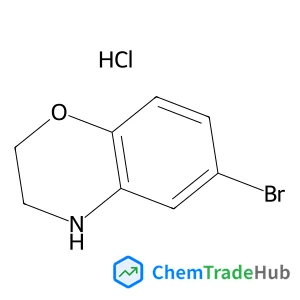
6-Bromo-3,4-dihydro-2H-1,4-benzoxazine hydrochloride (1:1)
CAS Number:
1260803-10-8
Molecular Formula:
C8H9BrClNO
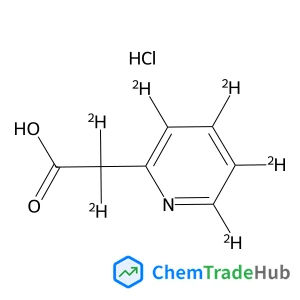
2,2-dideuterio-2-(3,4,5,6-tetradeuterio-2-pyridyl)acetic acid;hydrochloride
CAS Number:
1329799-67-8
Molecular Formula:
C7H2ClD6NO2
Recommended Suppliers






Disclaimer
This page provides academic journal information for reference and research purposes only. We are not affiliated with any journal publishers and do not handle publication submissions. For publication-related inquiries, please contact the respective journal publishers directly.
If you notice any inaccuracies in the information displayed, please contact us at support@chemtradehub.com. We will promptly review and address your concerns.