



Moisture effects on the electrochemical reaction and resistance switching at Ag/molybdenum oxide interfaces
Literature Information
Publication Date
2016-03-08
DOI
10.1039/C6CP00823B
Impact Factor
3.676
Authors
Chuan-Sen Yang, Da-Shan Shang, Yi-Sheng Chai, Li-Qin Yan, Bao-Gen Shen, Young Sun
View Original
Abstract
An important potential application of solid state electrochemical reactions is in redox-based resistive switching memory devices. Based on the fundamental switching mechanisms, the memory has been classified into two modes, electrochemical metallization memory (ECM) and valence change memory (VCM). In this work, we have investigated a solid state electrochemical cell with a simple Ag/MoO3−x/fluorine-doped tin oxide (FTO) sandwich structure, which shows a normal ECM switching mode after an electroforming process. While in the lower voltage sweep range, the switching behavior changes to VCM-like mode with the opposite switching polarity to the ECM mode. By current–voltage measurements under different ambient atmospheres and X-ray photoemission spectroscopy analysis, electrochemical anodic passivation of the Ag electrode and valence change of molybdenum ions during resistance switching have been demonstrated. The crucial role of moisture adsorption in the switching mode transition has been clarified based on the Pourbaix diagram for the Ag–H2O system for the first time. These results provide a fundamental insight into the resistance switching mechanism model in solid state electrochemical cells.
Recommended Journals

New Journal of Chemistry

Journal of Natural Medicines

Russian Journal of Coordination Chemistry

Journal of Peptide Science

Crystallography Reports

Organic Process Research & Development

Nature Medicine

Current Opinion in Solid State & Materials Science

Acta Materialia

Current Opinion in Colloid & Interface Science
Related Literature
Caging and excited state emission of ICN trapped in cryogenic matrices: experiment and theory
Jan Helbing, Majed Chergui, Sebastian Fernandez-Alberti, Julian Echave, Nadine Halberstadt, J. Alberto Beswick
2000-07-13
Paper
DOI: 10.1039/B003181J
A quantitative study of the rapid shrinking kinetics of sub-millimetre N-isopropylacrylamide gels
Paper
DOI: 10.1039/A809794A
Ni–Ar complex studied by laser spectroscopy
Yasunobu Kawamoto, Kenji Honma
2000-08-21
Paper
DOI: 10.1039/B004714G
Self-healing hydrophobic POSS-functionalized fluorinated copolymers via RAFT polymerization and dynamic Diels–Alder reaction
Prantik Mondal, Thomas Becker, Richard Hoogenboom, Andrew B. Lowe, Nikhil K. Singha
2020-12-28
Paper
DOI: 10.1039/D0PY01522A
Noble gas–metal chemical bonding: the microwave spectra, structures and hyperfine constants of Ar–AuF and Ar–AuBr
Corey J. Evans, Daryl S. Rubinoff, Michael C. L. Gerry
2000-08-31
Paper
DOI: 10.1039/B004352O
Direct electrochemical characterization of the interaction between haemoglobin and nitric oxide
Chunhai Fan, Xiaocheng Chen, Genxi Li, Jianqin Zhu, Dexu Zhu, Hugo Scheer
2000-09-07
Paper
DOI: 10.1039/B005527L
Upper limit for the rate coefficient for the reaction of OH with N2O5
2000-08-21
Paper
DOI: 10.1039/B004184J
Effects of carboxylic acid adsorbates on CO adsorption and crotonaldehyde hydrogenation over Cu/Al2O3 catalyst
Halim A. Abdullah, Colin H. Rochester, James A. Anderson, Jillian E. Bailie, Neville V. Richardson, Graham J. Hutchings
2000-08-04
Paper
DOI: 10.1039/B003429K
You might also like
Compound Q&A
What are the main uses of 4-Nitrophenyl phosphate disodium salt hexahydrate (CAS: 333338-18-4)?
4-Nitrophenyl phosphate disodium salt hexahydrate is primarily used as a substra...
333338-18-44-Nitrophenyl phosph...
Compound Q&A
What are the main uses of 2-(Trifluoromethyl)-1,3-oxazole-4-carboxylic Acid (CAS: 1060816-01-4)?
2-(Trifluoromethyl)-1,3-oxazole-4-carboxylic Acid (CAS: 1060816-01-4) is widely ...
1060816-01-42-(Trifluoromethyl)-...
Compound Q&A
How should 2-Fluoro-4-biphenylcarboxylic acid (CAS: 137045-30-8) be stored?
2-Fluoro-4-biphenylcarboxylic acid should be stored in a cool, dry place at room...
137045-30-82-Fluoro-4-biphenylc...
Compound Q&A
What industries use Prednisolone-21-Carboxylic Acid (CAS: 61549-70-0)?
Prednisolone-21-Carboxylic Acid is primarily used in the pharmaceutical industry...
61549-70-0Prednisolone-21-Carb...
Compound Q&A
How should 4-(Hydrazinomethyl)-1,2,3-benzenetriol (CAS: 3614-72-0) be stored?
4-(Hydrazinomethyl)-1,2,3-benzenetriol (CAS: 3614-72-0) should be stored in a co...
3614-72-04-(Hydrazinomethyl)-...
Compound Q&A
What industries use 4-Amino-1-methyl-1H-pyrazole-5-carboxylic acid hydrochloride (CAS: 92534-70-8)?
4-Amino-1-methyl-1H-pyrazole-5-carboxylic acid hydrochloride (CAS: 92534-70-8) i...
92534-70-84-Amino-1-methyl-1H-...
Compound Q&A
What regulatory guidelines apply to dehydropachymic acid (CAS: 77012-31-8)?
Dehydropachymic acid (CAS: 77012-31-8) is regulated by various agencies. It fall...
77012-31-8Dehydropachymic acid
Compound Q&A
What is the market or research trend for 6-[(2,2-Dimethylpropanoyl)amino]nicotinic acid (CAS: 898561-66-5)?
The market and research trends for 6-[(2,2-Dimethylpropanoyl)amino]nicotinic aci...
898561-66-56-[(2,2-Dimethylprop...
Compound Q&A
How should 1,10-Phenanthroline-2,9-dicarbaldehyde (CAS: 57709-62-3) be stored?
1,10-Phenanthroline-2,9-dicarbaldehyde should be stored in a cool, dry place awa...
57709-62-31,10-Phenanthroline-...
Compound Q&A
How is 5-Carbamoyl-11-oxo-10,11-dihydro-5H-dibenzo[b,f]azepin-10-yl acetate (CAS: 113952-21-9) typically synthesized?
5-Carbamoyl-11-oxo-10,11-dihydro-5H-dibenzo[b,f]azepin-10-yl acetate can be synt...
113952-21-95-Carbamoyl-11-oxo-1...
Source Journal
Physical Chemistry Chemical Physics

CiteScore:
5.5
Self-citation Rate:
10.3%
Articles per Year:
3036
Physical Chemistry Chemical Physics (PCCP) is an international journal co-owned by 19 physical chemistry and physics societies from around the world. This journal publishes original, cutting-edge research in physical chemistry, chemical physics and biophysical chemistry. To be suitable for publication in PCCP, articles must include significant innovation and/or insight into physical chemistry; this is the most important criterion that reviewers and Editors will judge against when evaluating submissions. The journal has a broad scope and welcomes contributions spanning experiment, theory, computation and data science. Topical coverage includes spectroscopy, dynamics, kinetics, statistical mechanics, thermodynamics, electrochemistry, catalysis, surface science, quantum mechanics, quantum computing and machine learning. Interdisciplinary research areas such as polymers and soft matter, materials, nanoscience, energy, surfaces/interfaces, and biophysical chemistry are welcomed if they demonstrate significant innovation and/or insight into physical chemistry. Joined experimental/theoretical studies are particularly appreciated when complementary and based on up-to-date approaches.
Recommended Compounds
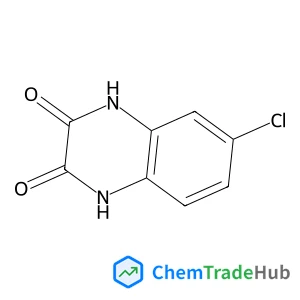
6-CHLORO-2,3-DIOXO-1,2,3,4-TETRAHYDROQUINOXALINE, 97
CAS Number:
169-14-2
Molecular Formula:
C8H5ClN2O2
Recommended Suppliers






Disclaimer
This page provides academic journal information for reference and research purposes only. We are not affiliated with any journal publishers and do not handle publication submissions. For publication-related inquiries, please contact the respective journal publishers directly.
If you notice any inaccuracies in the information displayed, please contact us at support@chemtradehub.com. We will promptly review and address your concerns.