


The methyl- and aza-substituent effects on nonradiative decay mechanisms of uracil in water: a transient absorption study in the UV region
Literature Information
Publication Date
2016-04-22
DOI
10.1039/C6CP00732E
Impact Factor
3.676
Authors
LinQiang Hua, XiaoJun Liu
View Original
Abstract
The nonradiative decay dynamics of photo-excited uracil (Ura) and its derivatives, i.e., thymine (5-methyluracil, Thy), 6-methyluracil (6-MU) and 6-azauracil (6-AU) in water, has been studied using a femtosecond transient absorption method. The molecules are populated in the lowest 1ππ* state by a pump pulse at 266 nm, and a broadband continuum in the deep UV region is then employed as the probe. The extension of the continuous UV probe down to 250 nm enables us to investigate comprehensively the population dynamics of the ground states for those molecules and to uncover the substituent effects on nonradiative decay dynamics of uracil. Vibrational cooling in the ground states of Ura, Thy and 6-MU has been directly observed for the first time, providing solid evidence of the ultrafast 1ππ* → S0 decay. In combination with the ground state bleaching signals, it is consolidated that their lowest 1ππ* state decays via two parallel pathways, i.e., 1ππ* → S0 and 1ππ* → 1nπ*. Moreover, the contribution of the 1ππ* → 1nπ* channel is found to be much smaller for Thy or 6-MU than for Ura. Different from methyl-substitution, the initial 1ππ* state of the aza-substituent 6-AU decays primarily to the 1nπ* state, while the 1ππ* → S0 channel can be negligible. Our study provides a comprehensive understanding of the substituent effects on the excited-state dynamics of uracil in water.
Recommended Journals

New Journal of Chemistry

Russian Journal of Coordination Chemistry

Russian Journal of Applied Chemistry

Current Opinion in Solid State & Materials Science

Russian Journal of Bioorganic Chemistry

Crystallography Reports

Russian Journal of General Chemistry

Drug Discovery Today

Journal of Peptide Science

Chemical Communications
Related Literature
Charge carrier transport in poly(p-phenylenevinylene) light-emitting devices
Paper
DOI: 10.1039/A808614A
An inelastic neutron scattering spectroscopic investigation of the adsorption of ethene and propene on carbon
David Lennon, John McNamara, Jon R. Phillips, Richard M. Ibberson, Stewart F. Parker
2000-09-06
Paper
DOI: 10.1039/B005144F
Chloroform encapsulated in p-tert-butylcalix[4]arene: Structure and dynamics
2000-08-25
Paper
DOI: 10.1039/B004924G
Reactivity of pyrrhotite (Fe9S10) surfaces: Spectroscopic studies
Yuri Mikhlin, Vladimir Varnek, Igor Asanov, Yevgeni Tomashevich, Alexander Okotrub, Alexander Livshits, Gennady Selyutin, Gennady Pashkov
2000-09-14
Paper
DOI: 10.1039/B005372O
Theoretical study of methane adsorption on Zn(II) zeolites
Luis A. M. M. Barbosa, Georgii M. Zhidomirov, Rutger A. van Santen
2000-08-15
Paper
DOI: 10.1039/B004090H
Single crystal Raman microscopic study of the asbestos mineral chrysotile
Paper
DOI: 10.1039/A809238I
Molecular dynamics simulations of the lithium coordination environment in phosphate glasses
Todd M. Alam, Jian-Jie Liang, Randall T. Cygan
2000-09-15
Paper
DOI: 10.1039/B004627M
Photodissociation of p-ethyl- and p-(α-hydroxyethyl)toluene in solution
M. Fujiwara, K. Mishima
2000-08-09
Paper
DOI: 10.1039/B004079G
Concentration fluctuations and nonlinear nonequilibrium thermodynamics
2000-08-23
Paper
DOI: 10.1039/B002358M
51V magic angle spinning solid state NMR studies of Bi4V2O11 in oxidized and reduced states
F. Delmaire, M. Rigole, E. A. Zhilinskaya, A. Aboukaïs, R. Hubaut, G. Mairesse
2000-09-14
Paper
DOI: 10.1039/B003644G
You might also like
Compound Q&A
What are the main uses of 4-Nitrophenyl phosphate disodium salt hexahydrate (CAS: 333338-18-4)?
4-Nitrophenyl phosphate disodium salt hexahydrate is primarily used as a substra...
333338-18-44-Nitrophenyl phosph...
Compound Q&A
What are the main uses of 2-(Trifluoromethyl)-1,3-oxazole-4-carboxylic Acid (CAS: 1060816-01-4)?
2-(Trifluoromethyl)-1,3-oxazole-4-carboxylic Acid (CAS: 1060816-01-4) is widely ...
1060816-01-42-(Trifluoromethyl)-...
Compound Q&A
How should 2-Fluoro-4-biphenylcarboxylic acid (CAS: 137045-30-8) be stored?
2-Fluoro-4-biphenylcarboxylic acid should be stored in a cool, dry place at room...
137045-30-82-Fluoro-4-biphenylc...
Compound Q&A
What industries use Prednisolone-21-Carboxylic Acid (CAS: 61549-70-0)?
Prednisolone-21-Carboxylic Acid is primarily used in the pharmaceutical industry...
61549-70-0Prednisolone-21-Carb...
Compound Q&A
How should 4-(Hydrazinomethyl)-1,2,3-benzenetriol (CAS: 3614-72-0) be stored?
4-(Hydrazinomethyl)-1,2,3-benzenetriol (CAS: 3614-72-0) should be stored in a co...
3614-72-04-(Hydrazinomethyl)-...
Compound Q&A
What industries use 4-Amino-1-methyl-1H-pyrazole-5-carboxylic acid hydrochloride (CAS: 92534-70-8)?
4-Amino-1-methyl-1H-pyrazole-5-carboxylic acid hydrochloride (CAS: 92534-70-8) i...
92534-70-84-Amino-1-methyl-1H-...
Compound Q&A
What regulatory guidelines apply to dehydropachymic acid (CAS: 77012-31-8)?
Dehydropachymic acid (CAS: 77012-31-8) is regulated by various agencies. It fall...
77012-31-8Dehydropachymic acid
Compound Q&A
What is the market or research trend for 6-[(2,2-Dimethylpropanoyl)amino]nicotinic acid (CAS: 898561-66-5)?
The market and research trends for 6-[(2,2-Dimethylpropanoyl)amino]nicotinic aci...
898561-66-56-[(2,2-Dimethylprop...
Compound Q&A
How should 1,10-Phenanthroline-2,9-dicarbaldehyde (CAS: 57709-62-3) be stored?
1,10-Phenanthroline-2,9-dicarbaldehyde should be stored in a cool, dry place awa...
57709-62-31,10-Phenanthroline-...
Compound Q&A
How is 5-Carbamoyl-11-oxo-10,11-dihydro-5H-dibenzo[b,f]azepin-10-yl acetate (CAS: 113952-21-9) typically synthesized?
5-Carbamoyl-11-oxo-10,11-dihydro-5H-dibenzo[b,f]azepin-10-yl acetate can be synt...
113952-21-95-Carbamoyl-11-oxo-1...
Source Journal
Physical Chemistry Chemical Physics

CiteScore:
5.5
Self-citation Rate:
10.3%
Articles per Year:
3036
Physical Chemistry Chemical Physics (PCCP) is an international journal co-owned by 19 physical chemistry and physics societies from around the world. This journal publishes original, cutting-edge research in physical chemistry, chemical physics and biophysical chemistry. To be suitable for publication in PCCP, articles must include significant innovation and/or insight into physical chemistry; this is the most important criterion that reviewers and Editors will judge against when evaluating submissions. The journal has a broad scope and welcomes contributions spanning experiment, theory, computation and data science. Topical coverage includes spectroscopy, dynamics, kinetics, statistical mechanics, thermodynamics, electrochemistry, catalysis, surface science, quantum mechanics, quantum computing and machine learning. Interdisciplinary research areas such as polymers and soft matter, materials, nanoscience, energy, surfaces/interfaces, and biophysical chemistry are welcomed if they demonstrate significant innovation and/or insight into physical chemistry. Joined experimental/theoretical studies are particularly appreciated when complementary and based on up-to-date approaches.
Recommended Compounds
![1-[(4-Methylphenyl)sulfonyl]-3-(4,4,5,5-tetramethyl-1,3,2-dioxaborolan-2-yl)-1H-pyrrolo[2,3-b]pyridine-5-carbonitrile structure](https://static.chemtradehub.com/structs/143/1434747-57-5-fc0d.webp "1-[(4-Methylphenyl)sulfonyl]-3-(4,4,5,5-tetramethyl-1,3,2-dioxaborolan-2-yl)-1H-pyrrolo[2,3-b]pyridine-5-carbonitrile structure")
1-[(4-Methylphenyl)sulfonyl]-3-(4,4,5,5-tetramethyl-1,3,2-dioxaborolan-2-yl)-1H-pyrrolo[2,3-b]pyridine-5-carbonitrile
CAS Number:
1434747-57-5
Molecular Formula:
C21H22BN3O4S
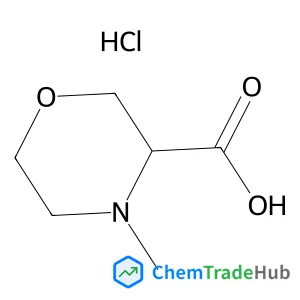
4-Methyl-3-morpholinecarboxylic acid hydrochloride (1:1)
CAS Number:
1240518-90-4
Molecular Formula:
C6H12ClNO3
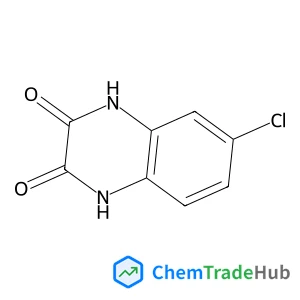
6-CHLORO-2,3-DIOXO-1,2,3,4-TETRAHYDROQUINOXALINE, 97
CAS Number:
169-14-2
Molecular Formula:
C8H5ClN2O2
Recommended Suppliers




Disclaimer
This page provides academic journal information for reference and research purposes only. We are not affiliated with any journal publishers and do not handle publication submissions. For publication-related inquiries, please contact the respective journal publishers directly.
If you notice any inaccuracies in the information displayed, please contact us at support@chemtradehub.com. We will promptly review and address your concerns.