












Compression icing of room-temperature NaX solutions (X = F, Cl, Br, I)
Literature Information
Publication Date
2016-04-25
DOI
10.1039/C6CP00648E
Impact Factor
3.676
Authors
Qingxin Zeng, Tingting Yan, Kai Wang, Yinyan Gong, Yong Zhou, Yongli Huang, Chang Q. Sun, Bo Zou
View Original
Abstract
In situ Raman spectroscopy revealed that transiting H2O/NaX (∼64) solutions into an ice VI phase and then into an ice VII phase at a temperature of 298 K requires excessive pressures with respect to pure water. The increase of the critical pressures varies with the solute type in the Hofmeister series order: X = I > Br > Cl > F ∼ 0. The results suggest that the solute hydration creates electric fields that lengthen and soften the O:H nonbond and meanwhile shorten and stiffen the H–O bond through O–O Coulomb repulsion. Compression, however, does the opposite to solute electrification upon the O:H–O bond relaxation. Therefore, compression of the aqueous solutions recovers the electrification-deformed O:H–O bond first and then proceeds to the phase transitions, which requires excessive energy for the same sequence of phase transitions. Ice exclusion of solute disperses the frequencies of characteristic phonons and the critical pressures with unlikely new bond formation.
Recommended Journals
Related Literature
Highly localized H2O librational motion as a far-infrared spectroscopic probe for microsolvation of organic molecules
D. Mihrin, J. Andersen, P. W. Jakobsen, R. Wugt Larsen
2019-01-09
Paper
DOI: 10.1039/C8CP05985C
Complete catalog of ground-state diagrams for the general three-state lattice-gas model with nearest-neighbor interactions on a square lattice
Daniel Silva
2019-02-22
Paper
DOI: 10.1039/C8CP07721E
Carrier dynamics in highly excited TlInS2: evidence of 2D electron–hole charge separation at parallel layers
Vytautas Grivickas, Patrik Ščajev, Vitalijus Bikbajevas, Olga V. Korolik, Alexander V. Mazanik
2018-12-21
Paper
DOI: 10.1039/C8CP06209A
Which types of clay minerals fix cesium ions effectively? the “cavity-charge matching effect”
Takahiro Yamamoto, Tomoaki Takigawa, Takuya Fujimura, Tetsuya Shimada, Tamao Ishida, Haruo Inoue, Shinsuke Takagi
2019-04-01
Paper
DOI: 10.1039/C9CP00457B
Insights into the reaction mechanism of n-hexane dehydroaromatization to benzene over gallium embedded HZSM-5: effect of H2 incorporated on active sites
Anawat Thivasasith, Thana Maihom, Sitthiphong Pengpanich, Jumras Limtrakul, Chularat Wattanakit
2018-11-19
Paper
DOI: 10.1039/C8CP05864D
Equilibrium structures of the tetramezine diastereomers and their ratio: joint analysis of gas phase electron diffraction, quantum chemistry, and spectroscopic data
Leonid S. Khaikin, Igor V. Kochikov, Anatoliy N. Rykov, Olga E. Grikina, Georgiy G. Ageev, Igor F. Shishkov, Vladimir V. Kuznetsov, Nina N. Makhova
2019-02-08
Paper
DOI: 10.1039/C8CP07607C
You might also like
Compound Q&A
What are the main uses of 4-Nitrophenyl phosphate disodium salt hexahydrate (CAS: 333338-18-4)?
4-Nitrophenyl phosphate disodium salt hexahydrate is primarily used as a substra...
333338-18-44-Nitrophenyl phosph...
Compound Q&A
What are the main uses of 2-(Trifluoromethyl)-1,3-oxazole-4-carboxylic Acid (CAS: 1060816-01-4)?
2-(Trifluoromethyl)-1,3-oxazole-4-carboxylic Acid (CAS: 1060816-01-4) is widely ...
1060816-01-42-(Trifluoromethyl)-...
Compound Q&A
How should 2-Fluoro-4-biphenylcarboxylic acid (CAS: 137045-30-8) be stored?
2-Fluoro-4-biphenylcarboxylic acid should be stored in a cool, dry place at room...
137045-30-82-Fluoro-4-biphenylc...
Compound Q&A
What industries use Prednisolone-21-Carboxylic Acid (CAS: 61549-70-0)?
Prednisolone-21-Carboxylic Acid is primarily used in the pharmaceutical industry...
61549-70-0Prednisolone-21-Carb...
Compound Q&A
How should 4-(Hydrazinomethyl)-1,2,3-benzenetriol (CAS: 3614-72-0) be stored?
4-(Hydrazinomethyl)-1,2,3-benzenetriol (CAS: 3614-72-0) should be stored in a co...
3614-72-04-(Hydrazinomethyl)-...
Compound Q&A
What industries use 4-Amino-1-methyl-1H-pyrazole-5-carboxylic acid hydrochloride (CAS: 92534-70-8)?
4-Amino-1-methyl-1H-pyrazole-5-carboxylic acid hydrochloride (CAS: 92534-70-8) i...
92534-70-84-Amino-1-methyl-1H-...
Compound Q&A
What regulatory guidelines apply to dehydropachymic acid (CAS: 77012-31-8)?
Dehydropachymic acid (CAS: 77012-31-8) is regulated by various agencies. It fall...
77012-31-8Dehydropachymic acid
Compound Q&A
What is the market or research trend for 6-[(2,2-Dimethylpropanoyl)amino]nicotinic acid (CAS: 898561-66-5)?
The market and research trends for 6-[(2,2-Dimethylpropanoyl)amino]nicotinic aci...
898561-66-56-[(2,2-Dimethylprop...
Compound Q&A
How should 1,10-Phenanthroline-2,9-dicarbaldehyde (CAS: 57709-62-3) be stored?
1,10-Phenanthroline-2,9-dicarbaldehyde should be stored in a cool, dry place awa...
57709-62-31,10-Phenanthroline-...
Compound Q&A
How is 5-Carbamoyl-11-oxo-10,11-dihydro-5H-dibenzo[b,f]azepin-10-yl acetate (CAS: 113952-21-9) typically synthesized?
5-Carbamoyl-11-oxo-10,11-dihydro-5H-dibenzo[b,f]azepin-10-yl acetate can be synt...
113952-21-95-Carbamoyl-11-oxo-1...
Source Journal
Physical Chemistry Chemical Physics

CiteScore:
5.5
Self-citation Rate:
10.3%
Articles per Year:
3036
Physical Chemistry Chemical Physics (PCCP) is an international journal co-owned by 19 physical chemistry and physics societies from around the world. This journal publishes original, cutting-edge research in physical chemistry, chemical physics and biophysical chemistry. To be suitable for publication in PCCP, articles must include significant innovation and/or insight into physical chemistry; this is the most important criterion that reviewers and Editors will judge against when evaluating submissions. The journal has a broad scope and welcomes contributions spanning experiment, theory, computation and data science. Topical coverage includes spectroscopy, dynamics, kinetics, statistical mechanics, thermodynamics, electrochemistry, catalysis, surface science, quantum mechanics, quantum computing and machine learning. Interdisciplinary research areas such as polymers and soft matter, materials, nanoscience, energy, surfaces/interfaces, and biophysical chemistry are welcomed if they demonstrate significant innovation and/or insight into physical chemistry. Joined experimental/theoretical studies are particularly appreciated when complementary and based on up-to-date approaches.
Recommended Compounds
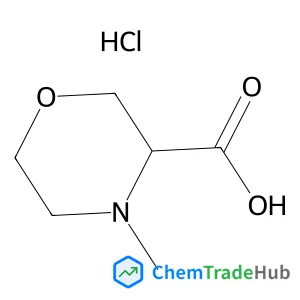
4-Methyl-3-morpholinecarboxylic acid hydrochloride (1:1)
CAS Number:
1240518-90-4
Molecular Formula:
C6H12ClNO3
Recommended Suppliers





Disclaimer
This page provides academic journal information for reference and research purposes only. We are not affiliated with any journal publishers and do not handle publication submissions. For publication-related inquiries, please contact the respective journal publishers directly.
If you notice any inaccuracies in the information displayed, please contact us at support@chemtradehub.com. We will promptly review and address your concerns.